

The European Commission presents the European Care Strategy to ensure quality, affordable and accessible care services across the European Union and improve the situation for both care receivers and the people caring for them, professionally or informally. The Strategy is accompanied by two Recommendations for Member States on the revision of the Barcelona targets on early childhood education and care, and on access to affordable high-quality long-term care.
High-quality, affordable and accessible care services with better working conditions and work-life balance for carers
Affordable and accessible care services of high quality offer clear benefits for all ages. Participation in early childhood education has a positive impact on a child’s development and helps reduce the risk of social exclusion and poverty, also later in life. Long-term care empowers people, who as a result of old age, illness and/or disability depend on help for daily activities, to maintain their autonomy and live with dignity. However, for many people these services are still not affordable, available or accessible.
Investing in care is important to attract and retain talents in the care sector, which is often characterised by difficult working conditions and low wages, as well as to address labour shortages and fulfil the sector’s economic and job creation potential.
Investing in high-quality care also means improving women’s participation in the labour market and gender equality, in particular gender pay and pension gaps. Women still bear the main brunt of care responsibilities, with 90% of the formal care workforce made up of women, and 7.7 million women out of employment because of care responsibilities.
To address these issues, the Commission is proposing concrete actions to support Member States in increasing access to high-quality and affordable care services, while improving working conditions and work-life balance for carers.
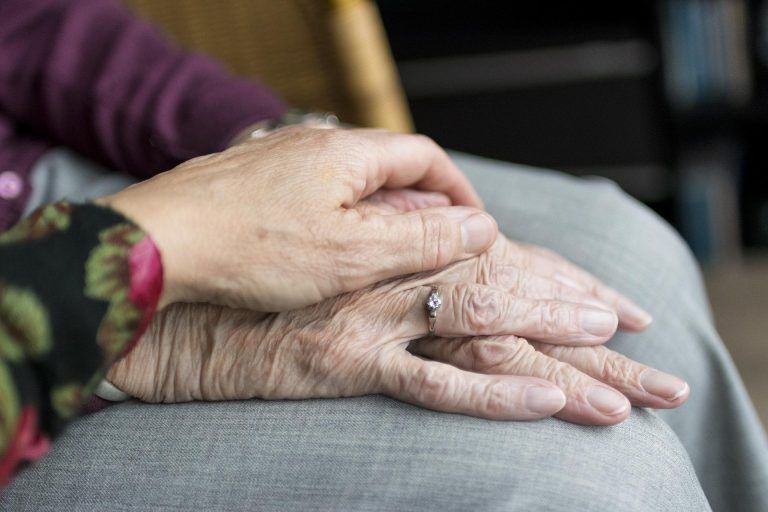
Three steps forward towards an equal sharing of unpaid care |
Early childhood education and care
The Commission is proposing that Member States revise the targets on early childhood education and care to enhance women’s labour market participation, also called ‘the Barcelona Targets’, set in 2002. The current targets call on Member States to provide childcare to 33% of children under 3 and to 90% of children from age 3 until mandatory school age. The Commission proposes to set new ambitious yet realistic targets so that by 2030 at least:
- 50% of children below the age of 3 are in early childhood education and care;
- 96% of children between the age of 3 and the starting age for compulsory primary education are in early childhood education and care, as already agreed in the European Education Area framework.
The Commission also recommends that, among others, Member States:
- Ensure that childcare services are affordable, accessible and of high quality, available in urban as well as rural or disadvantaged areas;
- Introduce a legal entitlement to early childhood education and care, ideally with no gap between the end of paid family leave and the legal entitlement; Have targeted measures in place to enable and increase participation of children from disadvantaged backgrounds, with disabilities or with special needs in education and care, to close the gap with the overall population of children;
- Look at the number of hours children spend in childcare (‘time-intensity’) and ensure that childcare is available for a duration that allows parents to engage meaningfully in paid work; and
- Encourage equal sharing of childcare between parents by combating gender stereotypes and support family-friendly working-time arrangements.
Long-term care
The Commission recommends that Member States draw up national action plans to make care in the EU more available, accessible and of better quality for all, for instance by:
- Ensuring that long-term care is timely, comprehensive and affordable, allowing a decent standard of living for people with long-term care needs;
- Increasing the offer and mix of professional long-term care services (homecare, community-based care and residential care), close territorial gaps in the access to long-term care, roll-out accessible digital solutions in the provision of care services, and ensure that long-term care services and facilities are accessible to people with disabilities;
- Ensuring high-quality criteria and standards for long-term care providers;
- Supporting informal carers, who are often women and relatives of care receivers, through training, counselling, psychological and financial support; and
- Mobilising adequate and sustainable funding for long-term care, including by using EU funds.
Fair working conditions and training for care staff
To improve working conditions and attract more people – in particular men – to the care sector, Member States are recommended to:
- Promote collective bargaining and social dialogue with a view to improving wages and working conditions;
- Ensure the highest standards of occupational health and safety;
- Design continuous education and training for care workers;
- Tackle gender stereotypes around care and launch communication campaigns;
- Ratify and implement ILO Convention 189 on domestic workers.
For its part, the Commission will:
- Explore the creation of a new sectoral social dialogue for social services at EU level;
- Promote the establishment of a skills partnership under the Pact for Skills for the long-term care sector;
- Fund projects and research to assess the social and economic value of work and working conditions in the care sector;
- Review the application of EU standards governing working conditions;
- Map the current admission conditions and rights of long-term care workers from non-EU countries and explore the feasibility of developing EU-level schemes to attract care workers; and
- Promote the opportunities available for early childhood education and care staff under the Erasmus+ programmes.
Background
The European Care Strategy will support the implementation of the principles enshrined in the European Pillar of Social Rights, in particular the principles on gender equality, work-life balance, childcare and support to children and long-term care. In March 2021, the European Pillar of Social Rights Action Plan announced an initiative on long-term care and the revision of the Barcelona targets for early childhood education and care. In her 2021 State of the Union Address, President Ursula von der Leyen announced a European Care Strategy to support women and men in finding the best care and work life balance for carers. This was later confirmed in the Commission Work Programme 2022.
The European Care Strategy will also contribute to achieving the three EU social headline targets on employment, skills and poverty reduction for 2030, welcomed by EU leaders at the Porto Summit in May 2021 and by the European Council. The Barcelona Targets Recommendation, as part of the 2020-2025 Gender Equality Strategy, builds on other EU initiatives such as the Recommendation on Early Childhood Education and Care, the EU Strategy on the Rights of the Child and the Recommendation on the European Child Guarantee.
Access to care services. Early childhood education and care, healthcare and long-term care |
More information
Publicaciones relacionadas:
 Commission proposes a progressive roll-out of the new In Vitro Diagnostic Medical Devices Regulation
 European Health Union: A European Health Data Space for people and science
 Three steps forward towards an equal sharing of unpaid care
 New project to improve biological detection, identification & monitoring equipment
 Coronavirus: Commission issues guidance to mitigate clinical trial disruption in the EU
Leave a Reply