
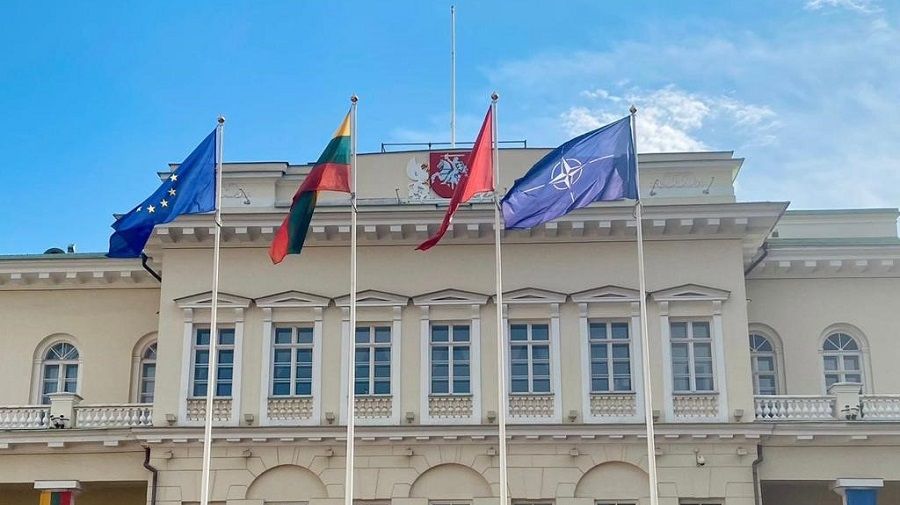
Next week a Summit of NATO (North Atlantic Treaty Organization) will take place in Vilnius, the city where the European Institute for Gender Equality (EIGE) is located. Amidst heightened regional tensions after Russia’s invasion of Ukraine, we are taking a look at the state of play of gender equality in the security sector. It’s a gloomy picture, but there are some bright spots.
Here are key numbers:
- Only 1 in 5 NATO Council representatives – those who have been politically appointed by Member States – are women.
- Women hold only 1 in 5 leadership positions amongst civilian staff at NATO.
- On the side of United Nations (UN) peacekeeping operations, women account for only 11% of commanders.
Gender inequalities along the corridors of power – Why does it matter?
The impact of security policies is not equal across different groups of people. And when diverse needs are not adequately considered, this leads to the entrenching of existing inequalities and worse outcomes for peace and security.
It is important to understand that women and men, and girls and boys experience conflict, insecurity and threats differently. Women and children face being displaced from their homes while men may be forced to fight in conflict, risking their lives.
Meanwhile, research shows a positive correlation between gender equality and long-term security and peace. To ensure conflict prevention, durable peace, and social resilience, women need to actively lead the process, alongside men.
The UN have recognised the links between gender equality and international peace and security for decades. In October 2000, the UN Security Council Resolution 1325 on Women, Peace and Security urged “Member States to ensure increased representation of women at all decision-making levels in national, regional and international institutions and mechanisms for the prevention, management, and resolution of conflict.”
More than 20 years later, however, women continue to remain on the sideline.
Post COVID-19 EU support funds: Will we see gender equality measures?
|
Still a way to go across the board
EIGE found that gender equality is absent across the board: in EU national governments in the areas of defence, migration and border control.
Within EU institutions and EU agencies dealing with security fields, women are underrepresented in vital decision-making positions. On the ground, there is a gender recruitment gap in the armed forces in Member States that are either members or partner nations of NATO. Women account for less than 1 in 5 full-time members of the armed forces.
Carlien Scheele, EIGE’s Director says: “Looking at gender and security with a broad lens, we see a persistent pattern. Simply put, the lower the rank – the more women occupy the roles. Whereas the higher the rank, less women are seen up top.”
Bridging the gaps for prosperity and stability
Some inroads have been made, however. Among principal officers in NATO, there is greater gender balance.
And the top roles in the European Commission in security and defence are split evenly among women and men.
Important commitments have also been made to see more women in decision making roles. We see this within the 2020-2025 EU gender equality strategy objectives as well as the EU strategic approach to women, peace and security agenda and its action plan (2019-2024).
The talk now needs to walk.
Amidst ongoing crises, it is more critical now than ever to look at factors that will help turn a reality of under-represented women in the security sector into an equal playing field. To build on progress made and consider further measures to increase gender balance in the sector. And to include diverse perspectives in key decision-making positions. This will help us build a stronger and more resilient Europe.
More information: EIGE
Publicaciones relacionadas:
 Covid-19 and gender-based violence: Has the pandemic taught us anything?
 Gender Equality Index 2021: Fragile gains, big losses
 How Spain and the EU can take steps forward for gender equality
 International Women’s Day 2020: Beijing Declaration 25 years after
 Impact of gender quotas on EU politics and business
Leave a Reply