
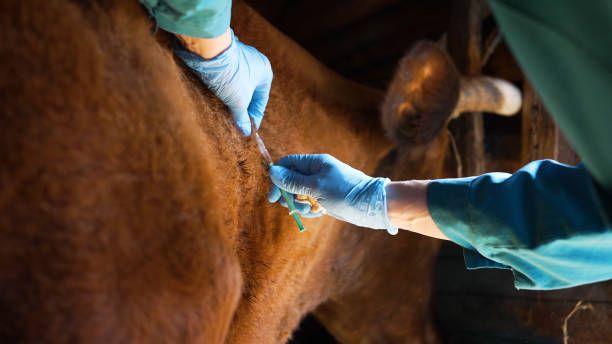
Ten years after its adoption, the European Commission has published an evaluation of EU legislation on animal health. The evaluation and the accompanying report highlight the positive impact the legislation has had on combating animal diseases, whilst also identifying areas for improvement. Animal diseases can have devastating consequences for livestock farmers and rural communities, and can affect public health, economies and trade. Animal health legislation has helped to reduce these impacts and control diseases, whilst providing a robust framework of risk-based preventive animal health measures across the EU. Maintaining high standards of animal health is one of the reasons why the EU is the world’s largest exporter of agricultural products.
The Commission has also identified certain areas where further work is needed to maximise the benefits of the legislation. These include more consistent application of the rules across all Member States, a disease categorisation system that is more adaptable to new and emerging threats, and, where appropriate, greater use of vaccination as a preventive tool.
The current animal health framework is based on the latest scientific knowledge and is continuously updated as and when necessary. The evaluation has been published ahead of the high-level conference to mark the tenth anniversary of the animal health legislation, which will take place in Brussels on 8 July and will be opened by Olivér Várhelyi, Commissioner for Animal Health and Welfare. This event will provide an opportunity to discuss its implementation, the framework’s achievements and future challenges. The conference can be followed online.
More information: European Commission
Publicaciones relacionadas:
 Commission consults on revision of farm animal welfare rules
 Commission approves Spain’s new “Río Negro” geographical indication
 Commission supports the EU wine sector
 EU welcomes tribunal’s final ruling in sandeel dispute with UK.
 Commission simplifies CAP to support farmers and enhance competitiveness
Leave a Reply