• Skip to primary navigation
  • Skip to main content
  • Skip to primary sidebar
  • Skip to footer
  • Bluesky
  • Facebook
  • Instagram
  • Twitter
  • YouTube
CDE Almería – Centro de Documentación Europea – Universidad de Almería

CDE Almería - Centro de Documentación Europea - Universidad de Almería

Centro de Documentación Europea de la Universidad de Almería

  • HOME
  • WHAT´S ON
    • EU NEWS
    • Activities
    • EU Calls and Awards
    • Radio Program «Europe with You»
  • DOCUMENTATION
    • EU Media Collection
      • Web Space
      • MEDIATHEQUE REPOSITORY
  • Europe on the net
    • Institutions
    • EU Representation in Spain
    • European information network of Andalusia
  • ABOUT US
    • Presentation
    • Services
    • People
    • Contact
  • Spanish
  • English

Two EU-funded researchers win 2023 Nobel Prize in Physics

Inicio » Noticias UE » Research and Innovation » Two EU-funded researchers win 2023 Nobel Prize in Physics

31 de October de 2023

Ferenc Krausz and Anne L’Huillier earn recognition for their pioneering work in the field of electron dynamics in matter, joining the growing list of EU-backed researchers to win a Nobel Prize.
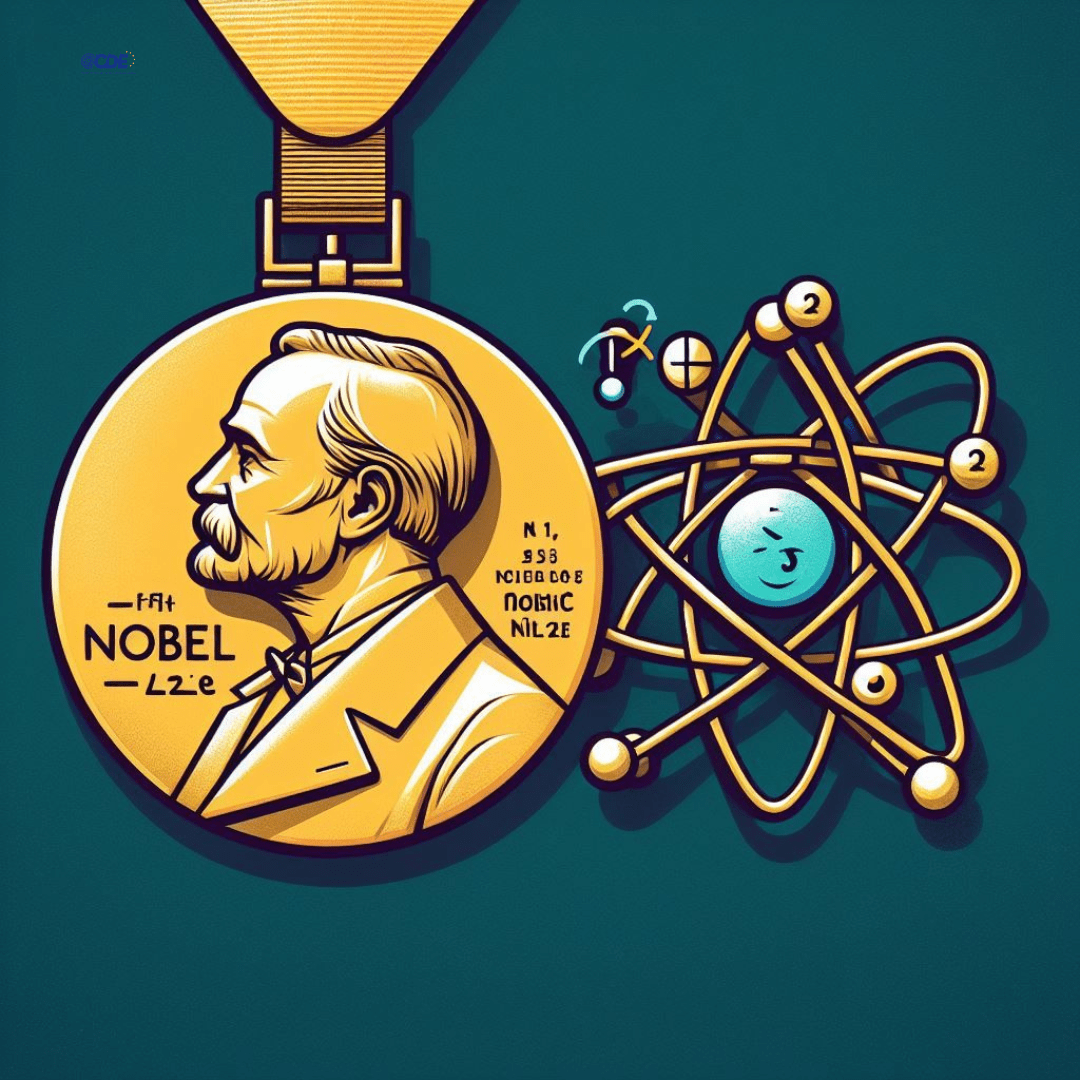
EU-funded scientists Prof. Dr Krausz and Prof. L’Huillier have won the 2023 Nobel Prize in Physics “for experimental methods that generate attosecond pulses of light for the study of electron dynamics in matter”. They share the award with Pierre Agostini, a third laureate who is based in the United States (US).

“Congratulations to this year’s laureates of the Nobel Prize in physics!” states European Commissioner for Innovation, Research, Culture, Education and Youth Iliana Ivanova in a news item posted on the European Research Council’s website. “I am really proud that the European Research Council has substantially funded these outstanding scientists in their revolutionary research. They have also been supported via numerous other EU research and innovation programmes, in particular Marie Skłodowska-Curie Actions. This showcases the importance of funding eminent researchers and giving them the resources they need to succeed in their scientific endeavours to the benefit of humankind.”
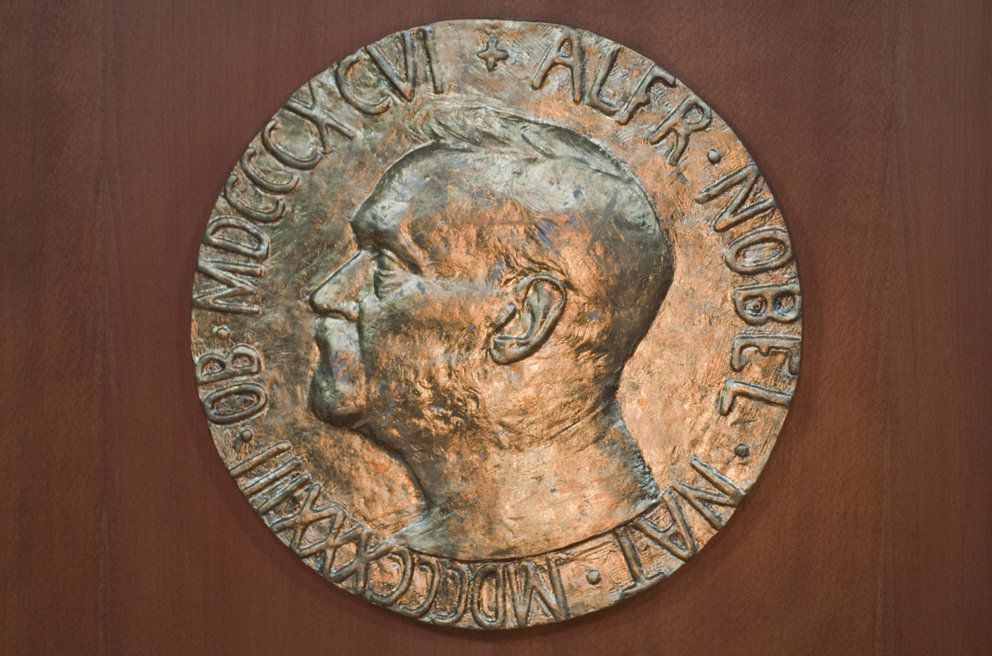
Meet the 2022 Nobel Prize Laureates

Capturing the most fleeting timescale

The Nobel laureates’ work focuses on studying the movement of electrons in atoms, molecules and matter in the condensed phase using attosecond spectroscopy. An attosecond, which is one quintillionth of a second, is the period of time in which the properties of an electron change. A true understanding of electrons is therefore only possible if we can study them at these timescales. Along with their US-based peer, Prof. Dr Krausz and Prof. L’Huillier have made this possible by demonstrating how to create pulses of light so short that they can be used to capture the rapid processes in which electrons move or change energy.

Lund University Prof. L’Huillier’s work focuses on the interaction between short and intense laser pulses and atoms. Supported over the past 15 years through the EU-funded projects ALMA, PALP, CLIAS, SISCAN, QPAP and SICEP, her research has shed valuable light on the dynamics of electrons within atomic systems. Prof. L’Huillier’s discoveries in the field of ultrafast laser technology have also paved the way for further scientific and commercial opportunities in this field.

Prof. Dr Krausz is a physicist at the Max Planck Institute of Quantum Optics and the Ludwig Maximilian University of Munich, Germany. For his research on 4D imaging of atomic and sub-atomic processes, he received EU backing through the 4D IMAGING project. He and his team succeeded in generating and measuring attosecond light pulses, which they used to capture the movement of electrons inside atoms.

The laureates’ work has made it possible to study processes so rapid they used to be impossible to follow. Their discoveries have opened up opportunities for applications in many different areas, ranging from electronics to medical diagnostics.

The projects ALMA (Attosecond Control of Light and Matter), PALP (Physics of Atoms with Attosecond Light Pulses), CLIAS (Measurement and Control of Light Fields for Application in Science and Technology), SISCAN (Single-shot dispersion-scan device for the characterization of ultrashort laser pulses) and 4D IMAGING (Towards 4D Imaging of Fundamental Processes on the Atomic and Sub-Atomic Scale) have ended. QPAP (Quantum Physics with Attosecond Pulses) and SICEP (Single-shot, high repetition rate detection of the Carrier-Envelope-Phase of ultrashort laser pulses) end in 2025.

More information: CORDIS
Publicaciones relacionadas:

Particle physics milestone achieved at CERN Particle physics milestone achieved at CERN premio nobel medallaMeet the 2021 Nobel Prize Laureates premio nobel medallaMeet the 2022 Nobel Prize Laureates New project to improve biological detection, identification & monitoring equipment

EU News,  Research and Innovation 4D IMAGING,  ALMA,  atom,  atomic,  attosecond,  CLIAS,  electrón,  light,  Nobel,  PALP,  Physics,  pulse,  QPAP,  SICEP,  SISCAN

“This is a space for debate. All comments, for or against publication, that are respectful and do not contain expressions that are discriminatory, defamatory or contrary to current legislation will be published”.

Reader Interactions

Leave a Reply Cancel reply

Your email address will not be published. Required fields are marked *

This site uses Akismet to reduce spam. Learn how your comment data is processed.

Primary Sidebar

Footer

  • CDE Almería
  • Biblioteca Nicolás Salmerón – Universidad de Almería
  • Planta: 1ª, Despacho: 1.05.0B.
  • Ctra. Sacramento s/n. Almería (Spain)
  • Teléfono: (+34) 950 015266

HOME
NEWS
DOCUMENTATION
EUROPE ON THE NET
ABOUT US

  • LEGAL NOTICE
  • PRIVACY POLICY
  • COOKIE POLICY
  • ACCESSIBILITY
  • SITEMAP

Copyright © 2026 CDE Almería · Creative Commons LicenseThis work is licensed under a Creative Commons Attribution-NonCommercial 4.0 International License.

<p>El Centro de Documentación Europea de la Universidad de Almería utiliza cookies propias y de terceros para facilitar al usuario la navegación en su página Web y el acceso a los distintos contenidos alojados en la misma. Asimismo, se utilizan cookies analíticas de terceros para medir la interacción de los usuarios con el sitio Web. Pinche el siguiente enlace si desea información sobre el uso de cookies y como deshabilitarlas. </p>

Politica de privacidad

El Centro de Documentación Europea de la Universidad de Almería utiliza cookies propias y de terceros para facilitar al usuario la navegación en su página Web y el acceso a los distintos contenidos alojados en la misma. Asimismo, se utilizan cookies analíticas de terceros para medir la interacción de los usuarios con el sitio Web. Pinche el siguiente enlace si desea información sobre el uso de cookies y como deshabilitarlas. <a href="/politica-de-cookies" rel="noopener" target="_blank">Más información</a>

Cookies estrictamente necesarias

Las cookies estrictamente necesarias tiene que activarse siempre para que podamos guardar tus preferencias de ajustes de cookies.

Básicamente la web no funcionara bien si no las activas.

Estas cookies son:

  • Comprobación de inicio de sesión.
  • Cookies de seguridad.
  • Aceptación/rechazo previo de cookies.
Cookies de terceros

Esta web utiliza Google Analytics, Google Tag Manager y Yandex Metrika para recopilar información anónima tal como el número de visitantes del sitio, o las páginas más populares.

Dejar estas cookies activas nos permite mejorar nuestra web.

Política de cookies

Pinche el siguiente enlace si desea información sobre el uso de cookies y como deshabilitarlas. Más información