
Turkey’s geopolitical and strategic importance does not justify its democratic drift, according to Parliament, which insists that the criteria for EU membership are non-negotiable.
In the current context, and despite the democratic and pro-European aspirations of a significant part of Turkish society, the process of Turkey’s accession to the European Union cannot be resumed, MEPs warn in a report adopted on Wednesday with 367 votes in favour, 74 against and 188 abstentions.
Parliament stresses that the Turkish government has failed to address democratic shortcomings. MEPs point to a “transition to a different framework of relations, which could come at the expense of the accession process”. MEPs urge the Turkish government, EU institutions and Member States to continue working towards a closer, more dynamic and strategic relationship, with a particular focus on climate action, energy security, counter-terrorism cooperation and regional stability.
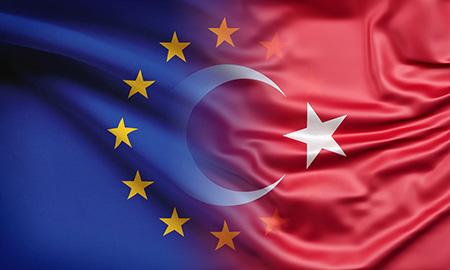
EU accession criteria are non-negotiable
MEPs express deep concern at the continuing deterioration of democratic principles in Turkey and the systematic repression of dissenting voices. They strongly condemn the violent response to recent peaceful mass demonstrations, as well as the prosecution of hundreds of participants in accelerated judicial proceedings without guarantees or evidence to support a criminal charge.
They also believe that the attacks against the mayor of Istanbul, Ekrem İmamoğlu, are politically motivated, with the aim of preventing the candidacy of a rival with a chance against President Erdoğan in the upcoming elections. In this way, the Turkish authorities are pushing the country further and further towards a completely authoritarian model of government.
The report recalls that EU membership requires full compliance with specific criteria, such as the existence of stable institutions guaranteeing democracy, the rule of law, human rights, protection of minorities, respect for international law, good relations with neighbouring countries and alignment with the EU’s common foreign and security policy. “These are absolute criteria and not matters subject to strategic considerations and compromise negotiations,” stresses the plenary.
MEPs also condemn President Erdoğan’s recent illegal visit to the occupied areas of the Republic of Cyprus and his “provocative statements”, which they describe as unilateral action amounting to illegitimate direct intervention contrary to the interests of the Greek and Turkish Cypriot communities.
They stress that the democratic and pro-European aspirations of the majority of Turkish society, in particular the youth, are a fundamental reason for keeping the accession process alive, even if it is frozen.
Closer cooperation in areas of common strategic interest
MEPs recognise Turkey’s strategic and geopolitical relevance and its growing influence in key international security regions such as the Black Sea, Ukraine and the Middle East. They underline that Turkey is a strategic partner, a NATO ally and a country with which the EU has close ties in the fields of security, trade, economy and migration management. In this context, they consider it essential to maintain a constructive dialogue and strengthen cooperation in areas of shared interest. However, they warn that democratic backsliding and lack of alignment with the EU’s common foreign and security policy make it difficult to move towards a deeper and more effective relationship.
More information: European Parliament
Publicaciones relacionadas:
 According to the latest Eurobarometer, citizens are aware of the impact of the EU on their lives
 Modernising the cohesion policy to meet current challenges
 CoR and Commission launch network for local and regional politicians
 Fourth State of Schengen report
 EU approves €58M for Luxembourg under NextGenerationEU
Leave a Reply