
The Commission published on 23 April its fourth report on the state of Schengen, reviewing developments over the past year and setting priorities for the year ahead.
40 years since its creation show that the Schengen area has brought profound benefits to the EU and its citizens. It is the backbone of the EU’s internal market and makes life easier for almost 450 million people. Last year, Schengen was once again the most visited destination in the world, welcoming more than 500 million visitors and boosting economic growth across the Union.
Over time, Schengen has developed into a robust and comprehensive system, where Member States, with the support of the EU, effectively manage external borders, security and migration in a coordinated manner.
The adopted report reviews the functioning of the Schengen area and is the Commission’s contribution ahead of the Schengen Council in June, which will celebrate 40 years since the signing of the Schengen Agreement.
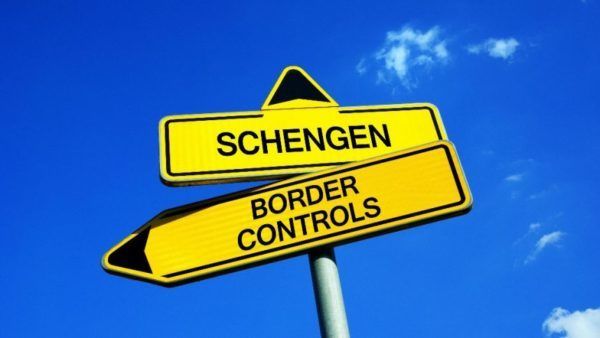
State of Schengen
The State of Schengen 2025 reports on achievements, challenges and developments in the Schengen area during the last cycle of 2024-2025. The full accession of Bulgaria and Romania to the Schengen area significantly strengthens the EU economy and is a proof that Member States are fully committed to further enhancing Schengen cooperation.
Moreover, Schengen requirements have become a crucial aspect of the EU enlargement process, as all candidate countries must have fully operational national Schengen governance systems in place by the time they are admitted to the EU. In addition, intensified EU efforts have led to a decrease in irregular crossings at the Schengen external borders, with around 240 000 detections, the lowest figure since 2021.
The report shows that the Schengen rules are well implemented and that work will continue in the following areas:
- Further strengthening political and operational governance. Sharing an area without internal borders is based on trust. This requires effective implementation of agreed rules and the use of common information tools, resources and infrastructure. The Commission will continue to monitor progress through the annual Schengen Scoreboard and further strengthen the Schengen evaluation and monitoring mechanism. This includes systems in both Schengen countries and EU candidate countries.
- Accelerate the implementation of the digitisation framework to prevent security risks. This is key in the upcoming deployment of the Entry/Exit System and the European Travel Information and Authorisation System (ETIAS). Continued investment in research and innovation is essential to secure the Schengen area using state-of-the-art European solutions in the future.
- A step towards an evolving security landscape with a common intelligence picture, joint operational actions and enhanced cooperation between law enforcement authorities, including in internal border regions. As announced in the European Internal Security Strategy – ProtectEU, the Commission will work towards setting up a High Level Group on the future of operational police cooperation across the Schengen area.
- Preparing well beyond our borders by deepening relations with partner countries in our neighbourhood and beyond. Europol and Member States have intensified work in recent years to improve the transmission and processing of information from key third countries. Frontex has also reinforced its support to candidate countries.
- Effective measures for the return of persons without a legal right to stay in the EU. In 2024 there has been an increase of almost 12% in returns of third-country nationals without the right to stay in the Schengen area, although the overall return rate still needs to be increased. To support Member States, the Commission carried out a Schengen evaluation last year which identified best practices for faster and more efficient returns.
- Coordinated action in the Schengen area: the rapid and efficient exchange of information between law enforcement authorities remains one of the most powerful tools to prevent and combat crime. The EU already has robust tools for situational awareness and risk analysis, such as EUROSUR and the Schengen Information System. The Commission, together with the Schengen coordinator, will continue to support Member States in effective operational cross-border law enforcement cooperation.
Next steps
Schengen will continue to evolve, adapting to new realities and responding to the changing geopolitical landscape. The Commission will work with Member States to unlock the full potential of Schengen by building a free movement area ready for the challenges ahead. To address the remaining challenges, the Schengen governance cycle 2025-2026 will focus on strengthening the governance framework to improve policy coordination, a structured and coherent approach to police cooperation, as well as accelerating the digitalisation of procedures and systems to enhance security.
The Commission invites the Schengen Council to discuss this State of Schengen 2025 report in June and to adopt the priorities for the Schengen cycle 2025-2026.
Background
The Commission has been evaluating the state of Schengen annually since 2022, when the Schengen Council, the Schengen cycle and the new Schengen evaluation framework were established. This exercise marks the continued fulfilment of the Commission’s initiative to strengthen the common governance of the Schengen area and ensure a structured, coordinated and common response to its challenges.
More information: European Commission
Publicaciones relacionadas:
 Bulgaria have joined euro area from 1 January
 CoR and Commission launch network for local and regional politicians
 23rd EU Week of Regions and Cities showcases cohesion policy’s impact
 Spain and Portugal celebrate 40 years in the European Union
 A new strategic vision for the outermost regions, strengthening the EU’s global reach
Leave a Reply