
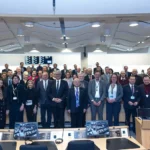
Regions and cities called for increased funding for research and innovation (R&I) and a unified research market during the meeting of the commission for Social Policy, Education, Employment, Research and Culture (SEDEC) on 6 March. They urged the EU and member states to meet the target of 3 % of GDP on R&I, ensuring a fair distribution of resources, especially to the poorest regions. The agenda also included debates on intergenerational fairness, women’s rights, youth dialogue, and the next Multiannual Financial Framework (MFF).

Building the European Research Area
The success of the European Research Area (ERA) depends on a more inclusive model that strengthens less developed regions, reduces inequalities, and maximises the impact of innovation, SEDEC members highlighted in a draft opinion adopted on 6 March. Local and regional leaders pointed out the creation of innovation hubs a solution to connect high and low-performing regions, fostering collaborative ecosystems and boosting local competitiveness. They called for stronger integration between cohesion policy and Horizon Europe to provide better support for underperforming regions. Members emphasised that local and regional authorities play a vital role in aligning local innovation with EU priorities to foster cohesion and inclusivity in ERA goals. They stressed the need for more transparent and regionalised monitoring of ERA initiatives to ensure equitable benefits.
Rapporteur Melanie Kühnemann-Grunow (DE/PES) said: “The European Research Area must be inclusive, ambitious, and well-funded. To bridge research gaps, empower local and regional authorities, and achieve the 3% GDP target for research & innovation, we need targeted investments, better synergies, and stronger European cooperation. Europe’s future in innovation depends on it.”
Intergenerational Fairness
Members exchanged views on a working document on intergenerational fairness stressing sustainable policies, economic equity, and the role of local and regional authorities in ensuring fair measures for youth and future generations.
Rapporteur Tine Radinja (SI/Greens) said: “Intergenerational fairness is not just a principle; it is a responsibility. Local and regional authorities have a duty to implement policies that safeguard resources, promote sustainability, and foster social cohesion-ensuring that future generations inherit a society that is just, resilient, and inclusive.”
Debate on the Roadmap for women’s rights
To mark the International Women’s Day on 8 March and the recent adoption of the European Commission Roadmap for Women’s Rights, local and regional leaders reaffirmed their commitment to gender equality. While progress has been made, gendered pay and pension gaps and other disparities persist. Members highlighted the importance of increasing the participation of women in politics, and the role of quotas in improving gender balance at all levels of government for a more equitable society. Local and regional leaders also called for targeted measures to ensure a better work-life balance, improve women’s health and well-being and combat gender-based violence, stressing that women’s rights are fundamental human rights.
SEDEC youth dialogue with youth representatives
In a dedicated youth dialogue with representatives of European youth organisations such as the European Youth Forum and the European Rural Youth, SEDEC members emphasised the value of strong connection between young people and the local authorities and reaffirmed their commitment to enhancing youth participation in local democracy. They agreed with the youth representatives on the need for quality public services, such as education and (mental) health care, underscoring that investment in education, infrastructure, and digitalisation are vital for inclusion and security. Local and regional leaders said the pursuit of a strong and democratic Europe requires listening to young people and involving them in decision-making.
The next Multiannual Financial Framework
Following the publication of the European Commission’s Communication on ‘The Road to the Next Multiannual Financial Framework, SEDEC members discussed key priorities ahead of the EC’s proposal for the post-2027 framework, expected in July 2025. They stressed that the EU budget cannot only be limited to economical an environmental transition but must also guarantee social rights for a fairer and more resilient Europe. While recognising the urgency for investments in defence, they emphasised that it should not come at the expense of other key areas. Local leaders stressed the need for strong Cohesion Policy, multilevel governance and place-based approach in the new MFF.
Members of SEDEC Commission also appointed three new rapporteurs:
- Yonnec Paulet (BE/PES), Member of Berchem-Sainte-Agathe Municipal Council, for the opinion on the “An EU anti-poverty strategy”;
- Emil Boc (RO/EPP), Mayor of Cluj-Napoca Municipality, Cluj Count, for the opinion on the “Union of Skills”;
- Carina Ohlsson (SE/PES) Member of Municipal Council, Lidköping Municipality, pre-appointed rapporteur for the opinion on “Roadmap for Women’s Right”.
More information: European Committee of the Regions.


Leave a Reply