
The European Labour Authority (ELA) supported a number of cross-border inspections in March 2025, of 107 companies across key sectors including construction, manufacturing, and the hotel, restaurant and catering (HORECA) industries. Particular focus was on ensuring compliance with EU and national rules on remuneration. More than 700 workers were interviewed during the inspections.
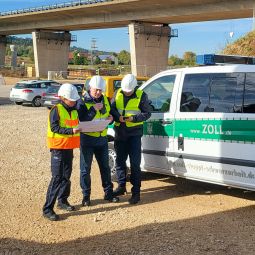
Twelve joint inspections took place in 10 Member States on 10-16 March in Cyprus, Czechia, Estonia, Lithuania, Latvia, the Netherlands, Poland, Slovenia, Spain and Slovakia. The inspections were carried out by labour inspectors from the Member States in close cooperation with enforcement officers from social security and tax authorities, as well as the police. Visiting inspectors from Austria, Belgium, Germany, Italy, the Netherlands and Poland also joined the joint inspections.
Key outcomes:
- 733 workers interviewed
- 107 companies checked
- 115 local inspectors involved
- 14 Member States participated in total
- 34 visiting inspectors involved from other Member States and 13 ELA staff
Following these joint and concerted inspections, investigations have been launched in several areas, including undeclared work, illegal employment of third-country nationals, working time, remuneration (underpayment, missing records, etc.), occupational safety and health violations and posting (e.g. missing posting notifications).
In Barcelona, Spain, three broad targeted joint inspections were conducted across multiple sectors, including retail, manufacturing, and meat processing. Nine companies were inspected and fines are expected to exceed EUR 130,000.
Commitment to fair pay and combating social fraud
“Ensuring that all workers receive a fair and timely remuneration is not just a legal obligation, but also a fundamental aspect of our daily duties to tackle all sorts of social fraud,” said Claudia Kogel and Elisabet Puigjaner, Spanish Labour and Social Security Inspectors who coordinated the joint action supported by ELA in cooperation with the National Police and visiting inspectors from Italy, Germany and Belgium.
“Posted workers and third-country nationals are particularly more likely to become victims of unlawful working conditions as they often lack information about their rights, in particular those stemming from relevant collective agreements”, Claudia Kogel and Elisabet Puigjaner added.
Background information
These joint inspections were to date the second EU-wide large scale enforcement action on compliance with remuneration rules. The first action was carried out at the initiative of the German Federal Ministry of Finance and German Customs together with the Federal Ministry of Labour and Social Affairs in October 2024 with 21 MSs participating.
More information: European Labour Authority.
Publicaciones relacionadas:
 Parliament adopts new rules on adequate minimum wages for all workers in the EU
 More than 3742 European Labour Authority inspections carried out recently
 Creative sectors: ELA study reveals precarious working conditions and undeclared labour
 Coronavirus: seasonal workers included in new guidelines to ensure free movement of critical workers
 SURE: Questions and answers
Leave a Reply