
The 24th meeting of the Accession Conference with Montenegro last December 16 provisionally closed accession negotiations on chapters 3 (right of establishment and freedom to provide services), 4 (free movement of capital), 6 (company law), 11 (agriculture and rural development) and 13 (fisheries). If necessary, the EU will revert to these chapters in due course. […]

Fishing opportunities for 2026 in EU and non-EU waters: Council secures agreement
Fisheries ministers have reached a political agreement on fishing opportunities in the Atlantic, the North Sea, the Mediterranean, the Black Sea and other waters for 2026 and for certain stocks for 2027 and 2028. The deal, reached following two days of negotiations, sets out fishing catch limits, known as ‘total allowable catches’ (TACs), and fishing effort […]
Critical medicines act: Council agrees its position on new rules to tackle shortages
The Council has agreed its position on a new regulation that seeks to strengthen the EU’s resilience in the face of ongoing challenges to security of supply of critical medicines in Europe. The critical medicines act (CMA) aims to tackle shortages in key medicines such as antibiotics, insulin and painkillers by improving security of supply and availability in the […]
EU and Tajikistan held 11th Cooperation Council meeting in Brussels
The European Union (EU) and the Republic of Tajikistan held its eleventh Cooperation Council meeting on 19 November, in Brussels. The meeting was chaired by Sirojiddin Muhriddin, Minister for Foreign Affairs of Tajikistan and by Constantinos Kombos, Minister for Foreign Affairs of Cyprus, on behalf of Kaja Kallas, the EU High Representative for Foreign Affairs […]

Council adopts position on new EU digital travel application law
Last November 19, the member states’ representatives (Coreper) approved the Council’s negotiating mandate for an EU law that will allow for the launch of an EU digital travel application. The regulation establishes rules on the (voluntary) creation of digital travel credentials and how to use them when crossing external borders. The EU digital travel application […]

EU agrees on rules to improve management and use of rail infrastructure
Council and Parliament negotiators reached today a provisional agreement to harmonise, simplify and rationalise the management of the available capacity for trains on the EU’s rail network, both within and across member states. This new approach will allow for more frequent and reliable passenger and freight rail services. To improve the capacity planning of trains […]
Council agrees position to incentivise defence-related investments in the EU budget
Member states’ representatives approved yesterday the Council’s position on a proposal aiming to incentivise defence-related investments in the EU budget to implement the so-called ReArm Europe plan, an EU initiative to increase defence spending and strengthen the EU’s military capabilities. With a view to facilitating faster, more flexible and coordinated investments in the European defence technological and industrial base (EDTIB), the […]

Council approves simplification of EU carbon leakage instrument
The Council adopted on 29 September, as part of the so-called “Omnibus I” legislative package, a regulation simplifying and strengthening the EU’s Border Carbon Adjustment Mechanism (BAM). This Regulation aims to simplify the EU’s EU-ETS and introduce improvements to make compliance economically efficient. The main objective is to reduce the regulatory and administrative burden and […]
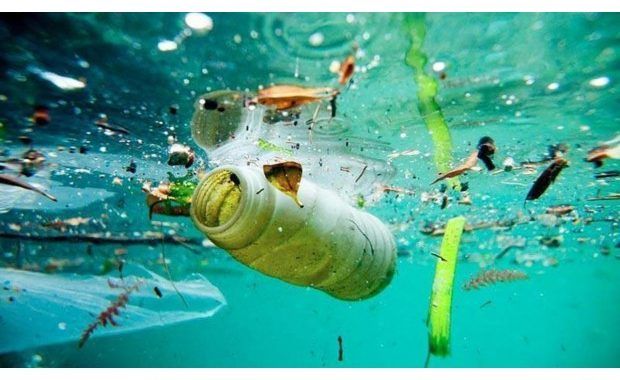
Council signs off regulation to reduce pollution from microplastics
Today, the Council adopted the regulation on preventing the loss of plastic pellets into the environment, following a provisional agreement with the European Parliament. The new regulation aims to reduce microplastic pollution by strengthening controls and management of plastic pellets, a key industrial raw material, throughout the supply chain. Main elements of the regulation The new rules focus on […]