• Skip to primary navigation
  • Skip to main content
  • Skip to primary sidebar
  • Skip to footer
  • Bluesky
  • Facebook
  • Instagram
  • Twitter
  • YouTube
CDE Almería – Centro de Documentación Europea – Universidad de Almería

CDE Almería - Centro de Documentación Europea - Universidad de Almería

Centro de Documentación Europea de la Universidad de Almería

  • HOME
  • WHAT´S ON
    • EU NEWS
    • Activities
    • EU Calls and Awards
    • Radio Program «Europe with You»
  • DOCUMENTATION
    • EU Media Collection
      • Web Space
      • MEDIATHEQUE REPOSITORY
  • Europe on the net
    • Institutions
    • EU Representation in Spain
    • European information network of Andalusia
  • ABOUT US
    • Presentation
    • Services
    • People
    • Contact
  • Spanish
  • English

Products made with forced labour: Council adopts ban

Inicio » EU News » Social Affairs » Products made with forced labour: Council adopts ban

20 de November de 2024

The Council has today adopted a regulation prohibiting products in the Union market that are made using forced labour. The text forbids the placing and making available on the Union market, or the export from the Union market, of any product made using forced labour. This is the last step in the decision-making procedure.

Investigating and combating forced labour

This regulation creates the necessary framework on which to base legal action targeting products made with forced labour on the internal market. The Commission will create a database of forced labour risk areas or products to support the work of competent authorities in assessing possible violations of this regulation. Based on an assessment of possible risks, the Commission (in the case of the use of forced labour outside the EU) or member state authorities (in the case of the use of forced labour within their territory) may initiate an investigation.

Member state authorities should share information with other member states if they suspect that violations of the regulation occur in other parts of the European Union, or share information with the Commission, if they suspect the use of forced labour in a third country. The final decision (i.e. to ban, withdraw and dispose of a product made using forced labour) will be taken by the authority that led the investigation. The decision taken by a national authority will apply in all other member states, based on the principle of mutual recognition.

Next steps

Following the Council’s approval today, the legislative act has been adopted.

After being signed by the President of the European Parliament and the President of the Council, the regulation will be published in the Official Journal of the European Union and will enter into force on the day following its publication. It will apply 3 years after the date of entry into force.

Background

Approximately 27.6 million people work in forced labour conditions around the world, in many industries and in every continent. Most forced labour takes place in the private sector, while some is imposed by public authorities.

The Commission proposed the regulation to prohibit products made using forced labour in the EU on 14 September 2022. The Council adopted its negotiating position on 26 January 2024. The two co-legislators (Council and Parliament) reached a provisional agreement on 5 March 2024.

More information: Council of the European Union.

Publicaciones relacionadas:
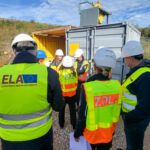
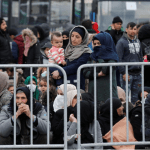
More than 3742 European Labour Authority inspections carried out recently Día Internacional de la mujerInternational Women’s Day 2020: Beijing Declaration 25 years after Coronavirus: seasonal workers included in new guidelines to ensure free movement of critical workers Measures to prevent Covid19 crisis in refugee camps SURE: Questions and answers

EU News,  Social Affairs Council of EU,  LABOUR EXPLOTAITION,  slavery

“This is a space for debate. All comments, for or against publication, that are respectful and do not contain expressions that are discriminatory, defamatory or contrary to current legislation will be published”.

Reader Interactions

Leave a Reply Cancel reply

Your email address will not be published. Required fields are marked *

This site uses Akismet to reduce spam. Learn how your comment data is processed.

Primary Sidebar

Footer

  • CDE Almería
  • Biblioteca Nicolás Salmerón – Universidad de Almería
  • Planta: 1ª, Despacho: 1.05.0B.
  • Ctra. Sacramento s/n. Almería (Spain)
  • Teléfono: (+34) 950 015266

HOME
NEWS
DOCUMENTATION
EUROPE ON THE NET
ABOUT US

  • LEGAL NOTICE
  • PRIVACY POLICY
  • COOKIE POLICY
  • ACCESSIBILITY
  • SITEMAP

Copyright © 2026 CDE Almería · Creative Commons LicenseThis work is licensed under a Creative Commons Attribution-NonCommercial 4.0 International License.

<p>El Centro de Documentación Europea de la Universidad de Almería utiliza cookies propias y de terceros para facilitar al usuario la navegación en su página Web y el acceso a los distintos contenidos alojados en la misma. Asimismo, se utilizan cookies analíticas de terceros para medir la interacción de los usuarios con el sitio Web. Pinche el siguiente enlace si desea información sobre el uso de cookies y como deshabilitarlas. </p>

Politica de privacidad

El Centro de Documentación Europea de la Universidad de Almería utiliza cookies propias y de terceros para facilitar al usuario la navegación en su página Web y el acceso a los distintos contenidos alojados en la misma. Asimismo, se utilizan cookies analíticas de terceros para medir la interacción de los usuarios con el sitio Web. Pinche el siguiente enlace si desea información sobre el uso de cookies y como deshabilitarlas. <a href="/politica-de-cookies" rel="noopener" target="_blank">Más información</a>

Cookies estrictamente necesarias

Las cookies estrictamente necesarias tiene que activarse siempre para que podamos guardar tus preferencias de ajustes de cookies.

Básicamente la web no funcionara bien si no las activas.

Estas cookies son:

  • Comprobación de inicio de sesión.
  • Cookies de seguridad.
  • Aceptación/rechazo previo de cookies.
Cookies de terceros

Esta web utiliza Google Analytics, Google Tag Manager y Yandex Metrika para recopilar información anónima tal como el número de visitantes del sitio, o las páginas más populares.

Dejar estas cookies activas nos permite mejorar nuestra web.

Política de cookies

Pinche el siguiente enlace si desea información sobre el uso de cookies y como deshabilitarlas. Más información