
The Plenary adopted its priorities for the Commission’s forthcoming anti-corruption strategy, aimed at strengthening prevention, enforcement and integrity across the EU.
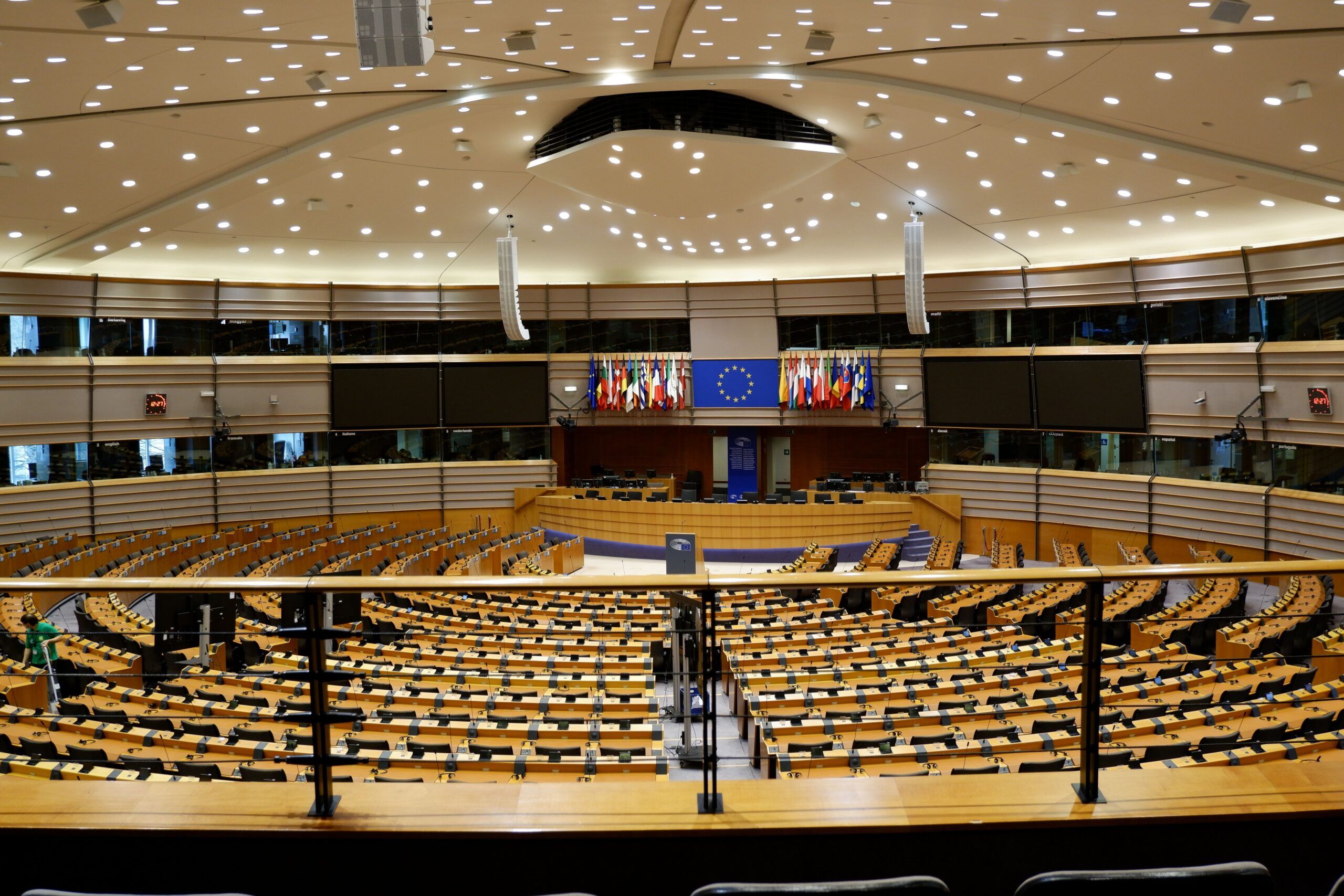
In a resolution adopted by a show of hands, Parliament states that the anti-corruption strategy must address the evolving risks of corruption linked to organised crime and new technologies, following the entry into force of the Anti-Corruption Directive in May 2026.
Corruption erodes citizens’ trust, undermines democracy and the rule of law, distorts economic activity and opens the door to organised crime and hostile actors. MEPs warn that the perception of impunity can be just as damaging to democratic legitimacy as corruption itself.
Prevention and integrity
Parliament calls for a mapping of corruption risks based on verified data, training and stricter rules on public procurement, grants and transparency. MEPs also call for greater harmonisation regarding conflicts of interest, gifts, sponsored travel, asset declarations and the revolving door, as well as clearer rules to regulate lobbyists. They also call for common rules on political funding and transparency regarding political foundations and intermediaries.
The text emphasises that EU institutions must meet the highest standards in the fight against corruption and be subject to regular review by other EU institutions and to changes where necessary.
Enforcement and cross-border action
Cooperation and the exchange of data between national authorities and EU bodies, such as Europol, Eurojust, the European Public Prosecutor’s Office and the European Anti-Fraud Office (OLAF), are key. Anti-corruption bodies must be independent and adequately resourced, whilst the European Public Prosecutor’s Office must be given more resources to tackle serious cross-border corruption, the text states, whilst also encouraging Member States that have not yet joined the Office to do so.
Parliament links corruption to organised crime, money laundering and the concealment of assets, and calls for more effective measures to trace, freeze, confiscate and recover the proceeds of crime. It also highlights the risks associated with crypto-assets, opaque ownership structures and digital tools, whilst reiterating its call to phase out residence-for-investment schemes (‘golden visas’).
The role of watchdogs
MEPs call for civil society and anti-corruption watchdog organisations to be involved at every stage of the strategy, for greater protection for whistleblowers and investigative journalists, and for genuinely independent judicial and anti-corruption authorities. Parliament also calls for the Union’s full membership of the Council of Europe’s Group of States against Corruption (GRECO), so that EU institutions are subject to the same scrutiny as national authorities.
Follow-up
The House calls for common indicators to assess anti-corruption policies and for more specific and measurable recommendations in the Commission’s annual reports on the rule of law. It also calls for greater conditionality regarding the principles of the rule of law in the EU’s next long-term budget and, where appropriate, anti-corruption targets in EU-funded programmes.
Background
The potential benefits of new EU measures to combat corruption amount, according to some estimates, to €58.5 billion per year. A special Eurobarometer survey from 2025 found that 69 per cent of Europeans believe corruption is widespread in their country. According to Europol, almost 60 per cent of criminal networks have links to corruption.
More information: European Parliament
Publicaciones relacionadas:
 Commission welcomes deal on compulsory licensing to boost EU crisis readiness.
 Commission acts to enforce timely EU directive transposition
 Commission launches whistleblowing tool under the AI Regulation
45% of the laws passed in Spain in 2025 derive from European directives and decisions.
Commission launches whistleblowing tool under the AI Regulation
45% of the laws passed in Spain in 2025 derive from European directives and decisions.
 EU supports digital connectivity with simpler and harmonised rules in Digital Networks Act
Leave a Reply