
According to the annual report published by the European Parliament Office in Spain, 45% of the laws passed by the Spanish Parliament in 2025 originated in European institutions.
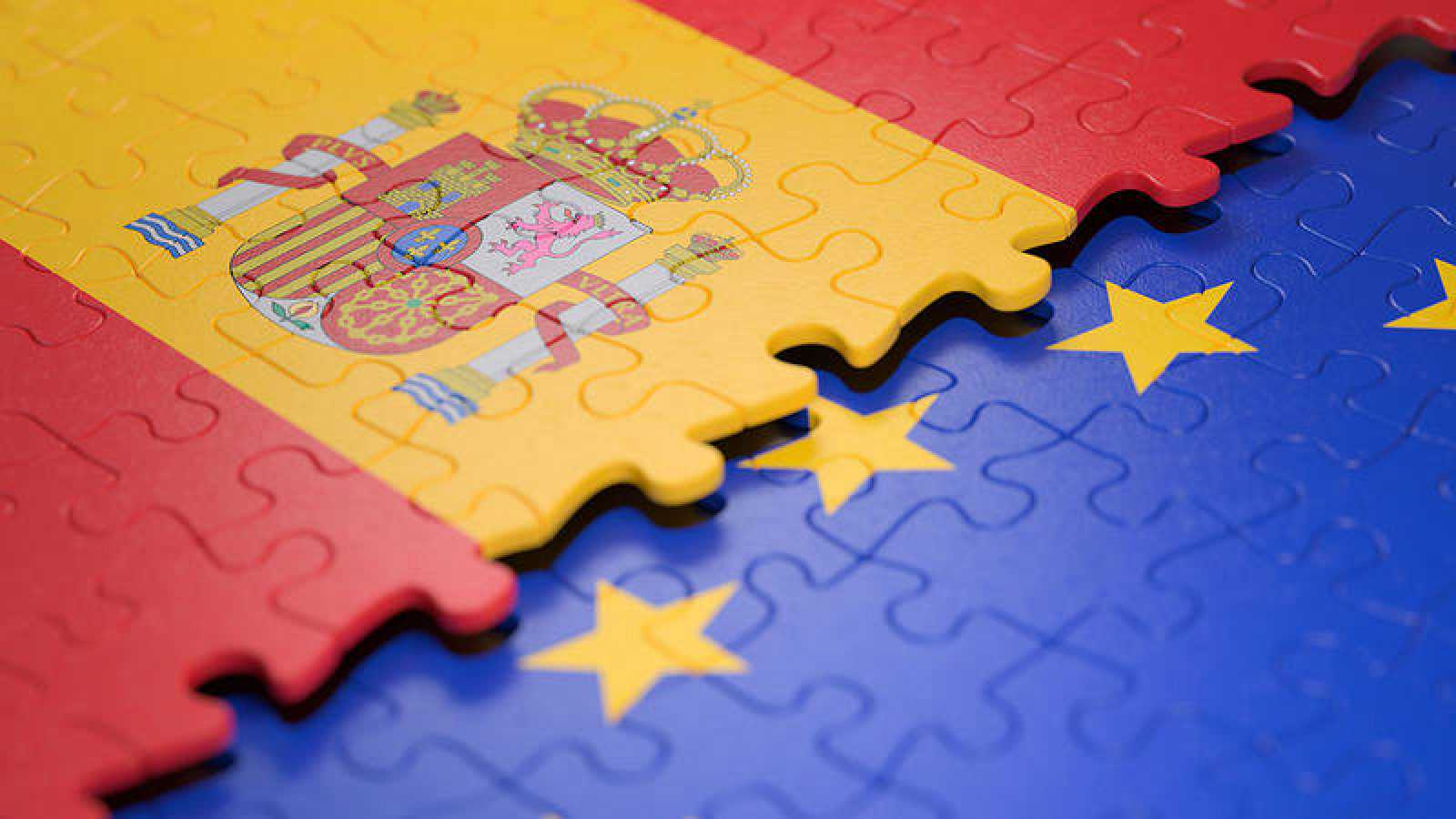
This year, the Congress and Senatepassed a total of 29 laws. Of these, 13 regulations govern aspects that follow the line set by EU institutions, i.e. they derive from Community directives or regulations or fall within the regulatory framework established by European institutions.
Of these 13 regulations of European origin, five transpose European directives intoSpanish lawor adapt to European regulations.
These include the law on motor insurance, which transposes a European directive on civil liability for vehicles such as electric scooters; the law on aviation safety, which speeds up compensation for passengers in the event of flight cancellations or delays; the Royal Decree-Law completing the transposition of the Directive on work-life balance; the Organic Law on the efficiency of the Public Justice Service, which transposes a European directive aimed at protecting the collective interests of consumers; and the Law on the agreement with the Autonomous Community of Navarre, which includes the 15% tax on multinationals derived from a European directive.
The other eight laws passed in 2025 contain references to or are based on European provisions, i.e. they follow the line set by the European Union institutions, even though they do not directly respond to a transposition mandate.
Looking ahead to 2026, another 52 legislative initiatives are still being processed, 23 of which are intended to transpose directives or adapt to regulations.
More transpositions in infra-legal regulations
In 2025, although slightly down, the level of influence of European decisions in Spain remains unchanged from previous years, with figures typically around 50%. However, compared to 2024, the number of royal decrees – sub-legislative rules that do not require parliamentary processing – transposing directives or adapting to European regulations has almost doubled.
In total, 48 non-statutory regulations were approved by the Council of Ministers to incorporate European decisions, such as the creation of the Carbon Fund for a Sustainable Economy, the “Breakfast Directive”, new regulations on the National Identity Document, and new requirements regulating the useful life of tyres to comply with obligations on waste and contaminated soil.
Nearly 7,000 European laws in 40 years in the EU
Since joining the EU in 1986,Spain has incorporated a total of 6,747 European regulations, transposed into national law through various legal formulas or infra-legal regulations.
From the outset, Spain automatically incorporated the Community legal acquis necessary to participate in the EU and, since then, has continued to incorporate new initiatives every year, from the Single European Act, which laid the foundations for the European single market, to the most recent laws on Digital Services and Artificial Intelligence.
In four decades, Spanish citizens have evolved hand in hand with the major legal changes approved by Europe, which have enabled, among other historic advances: the possibility of living, travelling or working in another European Union country; benefiting from rights as air passengers; avoiding extra costs for using mobile phones in any EU country, thanks to the end of roaming charges; ensuring the protection of our data; protecting the environment and health by limiting single-use plastics; and enforcing the law on equality between men and women.
Pending incorporation
The body of European regulations continued to grow in 2025, with the arrival of 48 new regulations to be immediately incorporated into Spanish law. The Official Journal of the EU also included 19 new directives – such as the one on new measures on driving licences and the one facilitating active and passive voting rights in the EU – which Spain must incorporate within an average period of two years through national legislation.
In total, according to data from November 2025 from the Ministry of Foreign Affairs, European Union and Cooperation, the number of European directives pending transposition in Spain stands at 101. Of these, 51 are still within the transposition deadline, while the remaining 50 have already passed the deadline.
More information: European Parliament
Publicaciones relacionadas:
 Commission acts to enforce timely EU directive transposition
 Commission launches whistleblowing tool under the AI Regulation
 Final vote on the Digital Services Act and the Digital Markets Act
 European Commission publishes April infringement proceedings package for Spain
 Council adopts position on new EU digital travel application law
Leave a Reply