
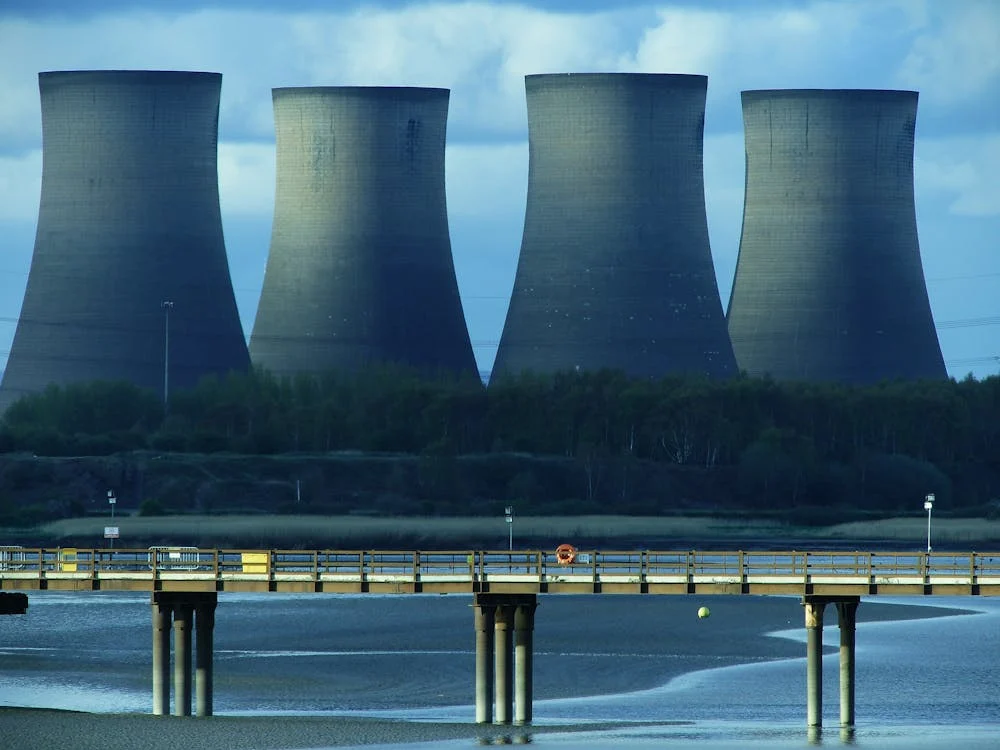
The EU must take action to strengthen the competitiveness of energy-intensive industries and help them make the transition to clean industrial processes.
In a resolution adopted on Thursday, the plenary notes that energy-intensive industries, such as those involved in the production of chemicals, steel, paper, cement and glass, are crucial to the EU economy and to decarbonisation efforts. These sectors are vital for job creation and for Europe’s strategic autonomy, but face major challenges in the transition to cleaner technologies. The resolution stresses the need to use a variety of technologies to reduce energy prices and avoid lock-in effects, with electrification as a key strategy.
The text identifies several obstacles to the EU’s industrial competitiveness, including energy price disparities with global competitors and volatile fossil fuel prices. An incomplete energy union, regulatory burdens and complex financing mechanisms further hamper progress, especially for small and medium-sized enterprises. The ETS is also under pressure from market shifts and uneven use of revenues across member states, making it difficult to adequately support the decarbonisation of industry, say MEPs.
Streamlining permitting and tackling unfair competition
To address these challenges, MEPs call for faster permitting of clean energy projects and enforcement of electricity market design legislation, a better integrated energy system and more investment in grid infrastructure. They also propose to explore other ways of decoupling fossil fuel prices from electricity prices. MEPs add that analysis of short-term markets should be taken forward to 2025 with a view to considering alternative market design options.
Simpler rules and the availability of key and secondary raw materials are essential to attract private investment and support decarbonisation, while reducing dependence on other countries outside the EU, says the text.
Parliament stresses the need to tackle unfair global competition through the effective implementation of the EU’s Carbon Capture and Storage Mechanism (CCAM) and to create lead markets for clean European products. MEPs also want to support the workers and regions affected, ensuring that EU industry remains globally competitive while decarbonising.
Declaration
“We have no time to lose: we must act to ensure that European industry protects and safeguards its jobs. The technological innovation needed to accelerate the decarbonisation of energy-intensive industries requires substantial investments, which the EU has a responsibility to accompany with public resources,” said Giorgio Gori MEP (S&D, IT), who led the negotiation on the text in the EP Industry Committee. “In the meantime, these industries must be protected: against dumping, tariffs, unfair competition and subsidy-based overcapacity from other countries, to avoid carbon leakage and relocation of companies outside Europe,” he added.
The resolution was adopted by a show of hands.
Background
The resolution builds on several previous reports and communications, including the Draghi report, the Letta report and the Commission’s proposals for a Clean Industry Pact and an Affordable Energy Action Plan, with the aim of devising a comprehensive strategy for the decarbonisation of energy-intensive industries in the EU.
More information: European Parliament
Publicaciones relacionadas:
 Commission approves €5 billion German State aid scheme to help industries decarbonise production processes
 15 EU-funded projects showcase renewable fuel technologies
 European Parliament approves law on sustainable marine fuels
 European Parliament back plans to boost use of renewable energy
 European Comission approves Spanish state aid scheme for energy storage and the transition to a zero-emission econom
Leave a Reply