
-
Third-country nationals with a return decision will be required to cooperate with the return authorities in order to leave the EU territory.
-
Returns to a third country may take place on the basis of an agreement between the Member States and the EU and a third country.
-
Returnees could be detained for up to 24 months if they do not cooperate or present a flight risk.
-
Stricter rules are established for persons who pose a security risk
-
Financial and operational support from the EU and its agencies
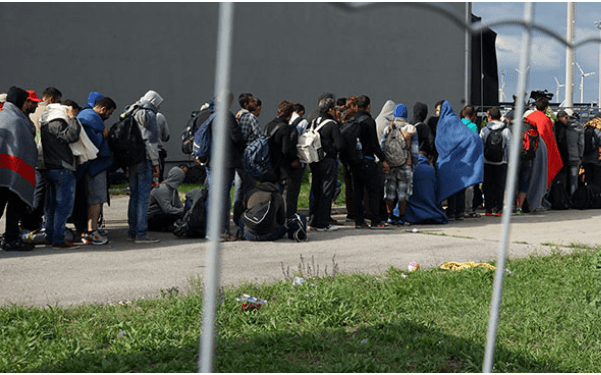
On Monday, the Civil Liberties Committee adopted its position on the proposed changes to EU policy on the return of non-EU nationals who are illegally present in the EU.
With 41 votes in favour, 32 against and 1 abstention, MEPs on the Civil Liberties Committee approved their amendments to theCommission’s proposal to revise EU return procedures, presented in March 2025.
Under the draft legislation, the competent national authorities will have to issue a return decision to any EU Member State national who is illegally present in that Member State, imposing an obligation to leave that Member State.
Return decisions would be included in the so-called “European return order” and would be available, through theSchengen Information System, throughout the Schengen area. Any EU country must recognise and enforce return decisions and expulsion orders issued by another EU country before 1 July 2027, as proposed by the Commission. The EU country in whose territory the third-country national is staying illegally will be responsible for ensuring their return.
MEPs insist that this regulation must respect the essential functions of national responsibility, such as ensuring territorial integrity, maintaining law and order and safeguarding national security.
MEPs removed a provision from the original proposal that would have required Member State governments to implement measures to detect non-EU citizens who are in their country illegally.
Obligation to cooperate
Third-country nationals subject to a return decision must cooperate with the authorities and may be offered the possibility of voluntary return. In order to prepare for their effective and timely return, third-country nationals may be detained, for example, if they do not cooperate, present a flight risk, pose a security risk or for any other relevant factor that prevents timely removal. The grounds for detention shall be laid down in national law and shall be ordered by administrative or judicial authorities. Detention may also be ordered for unaccompanied minors and families with children, as a measure of last resort, for the shortest possible period and taking into account the best interests of the child. The period of detention may be up to 24 months.
Member States may also offer alternatives to detention, including regular reporting, the obligation to reside in a designated place, a financial guarantee or electronic monitoring.
Agreement with countries outside the EU to accept returnees
The choice of country of return would vary depending on the situation of the returnee, taking into account the country of origin, the country through which they transited on their way to the EU and the existence of asafe third country. This Regulation would also allow for the possibility of returning to a country that accepts the person under an agreement concluded with an EU Member State or with the EU. Unaccompanied minors may not be transferred under such agreements.
Entry ban
If a third-country national has not complied with a return decision within the time limit set for voluntary return, is subject to expulsion or poses a security risk, they must be issued with an entry ban to the EU. The duration of the ban depends on the individual circumstances of each case and may be permanent if the person is considered to pose a security risk.
Independent monitoring mechanism
MEPs support independent monitoring of respect for fundamental rights during expulsion operations, including through existing relevant mechanisms.
Quote
Malik Azmani (Renew, Netherlands), rapporteur, said after the vote: “Today, the Civil Liberties Committee has adopted its position. As rapporteur, I have always aimed to achieve an efficient and workable Regulation in a timely manner. This result lays the groundwork for the next steps, and we will now move forward to the trilogue negotiations.”
Next steps
The decision to start interinstitutional negotiations must be endorsed by the whole Parliament before negotiations with the Council on the final form of the law can begin.
More information: European Parliament.
Publicaciones relacionadas:
 EP and Council reach a deal to update safe third country rules
 Commission proposes Action Plan to address challenges
 Visit of MEPs to El Hierro focused on irregular migration
 Commission launches first Annual Migration Management Cycle under the Pact on Migration and Asylum
 Commission proposes a Resettlement and Humanitarian Admission Plan for 2026-2027
Leave a Reply