
Meeting on Tuesday, leading members of the European Parliament and of the Ukrainian Verkhovna Rada signalled their strong support for Ukraine’s EU accession process.
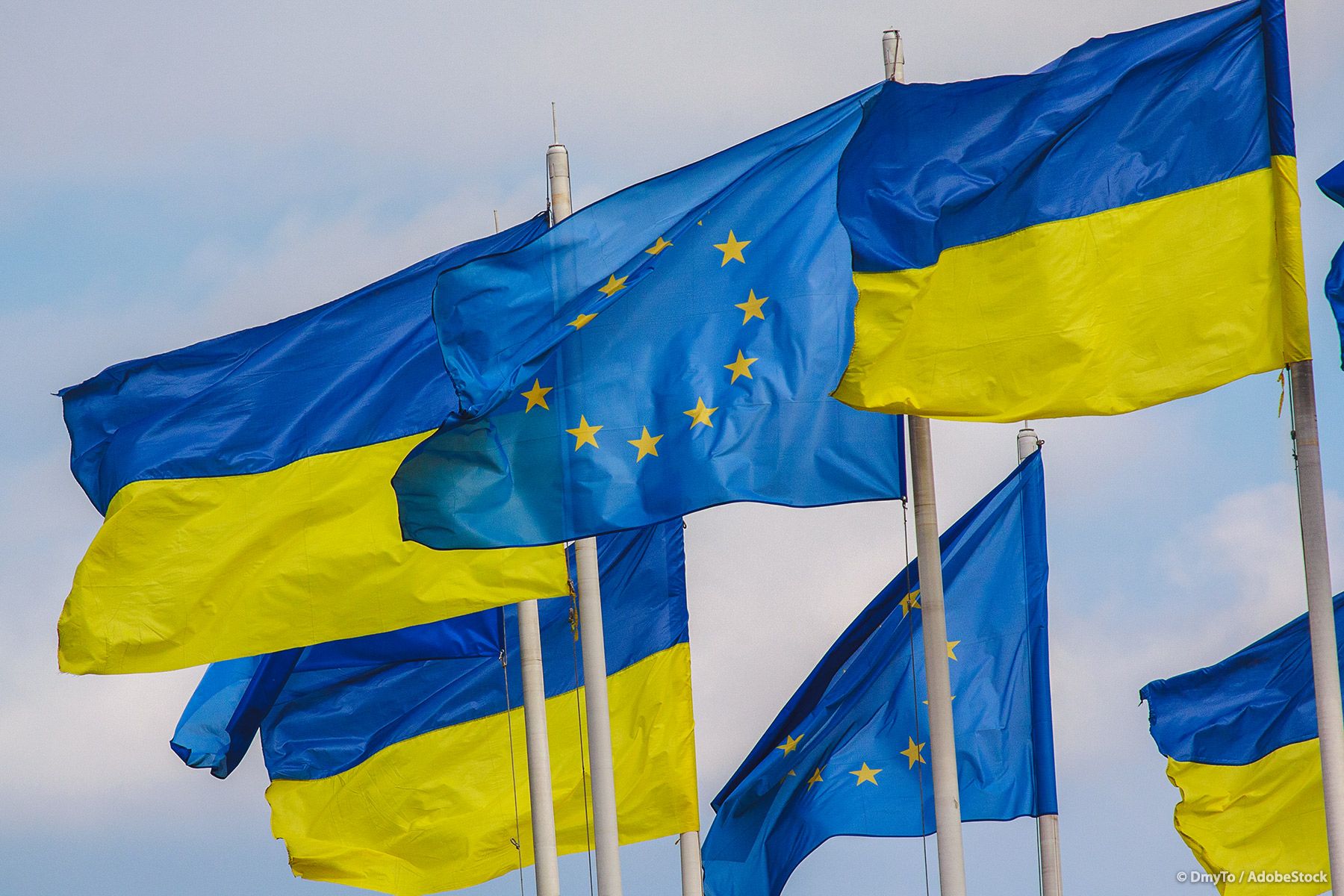
At their second meeting, held remotely on Tuesday, European Parliament and Verkhovna Rada parliamentary committee chairs, MEPs and Ukrainian parliamentarians discussed the ongoing cooperation between the two institutions to prepare Ukraine for future EU accession. Committee chairs from both parliaments reaffirmed their strong commitment to Ukraine’s resilience and democracy, and to a common European future. They also took stock of ongoing policy cooperation and pledged to step up their engagement going forward.
In a video address to those gathered, European Parliament President Roberta Metsola said: “Ukraine’s rightful place is in the European family. Ukraine has proven with significant progress on reforms that they are ready for these accelerated accession talks to move further, and our Parliament’s response is equally clear: our Union must continue to move ahead with even more resolve and action.”
The speaker of the Verkhovna Rada, Ruslan Stefanchuk, thanked the EU and in particular the European Parliament for its leadership and support to Ukraine ever since Russia launched its full-scale invasion in February 2022. He also pointed to Ukraine’s determined efforts to make progress on its European integration path, adding: “We are fully committed to the reform process”.
During the meeting, MEPs and their Ukrainian counterparts stressed the significance of the mutually reinforcing relationship between Ukraine and the EU, with many highlighting the importance for Ukraine of continuing to reform its laws and economy as it moves towards EU membership. They also stressed that their shared future rests on defending the values of democracy and rule of law.
Touching on topics ranging from post-war economic recovery, infrastructure and energy to sanctions, nature restoration and justice, many participants on the Ukrainian side expressed gratitude for the European Parliament’s support for the Verkhovna Rada and called on the EU to continue to stand firmly by Ukraine, stressing that the country’s ultimate goal is to become a full EU member. They asked the European Union to continue to provide assistance, including through the confiscation of frozen Russian assets, and to ensure justice for Russian war crimes. Some MEPs also called for Europe to contribute to credible security guarantees for Ukraine to be able to deter future Russian aggression. Finally, participants on both sides committed to maintain close ties and exchange best practices.
Background
Since the first Inter-Committee Meeting, on 12 April 2023, the relevant European Parliament standing committees have held a series of bilateral meetings with their Rada counterparts, ensuring comprehensive sectoral cooperation between the two institutions. The European Parliament has kept up its cross-cutting political and administrative support for the Verkhovna Rada and for Ukraine’s European integration process.
The EU formally opened accession negotiations with Ukraine at the first Intergovernmental Conference in June 2024. Work is underway to prepare talks in specific areas, based on the negotiating framework, which outlines the underlying procedure and principles.
More information: European Parliament
Publicaciones relacionadas:
 Third payment of close €3.5 billion to Ukraine has been approved by the Council
 Parliament calls for an EU crackdown on Russia’s ’shadow fleet’
 EU launches call for EU companies to invest in Ukraine recovery and reconstruction
 More military support for Ukraine amid the involvement of China and North Korea
New €148 million EU humanitarian aid package for Ukraine
More military support for Ukraine amid the involvement of China and North Korea
New €148 million EU humanitarian aid package for Ukraine
Leave a Reply