
The European Union and the World Health Organisation (WHO) are stepping up their cooperation to support national authorities in responding to the Ebola outbreaks currently occurring in the Democratic Republic of the Congo (DRC) and Uganda, with the aim of rapidly containing transmission, protecting communities and strengthening preparedness in the region, ultimately saving lives.
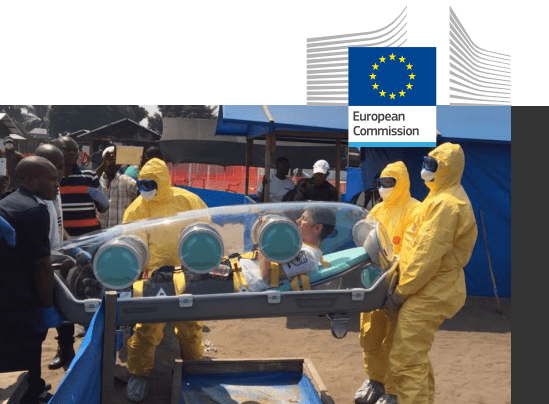
Thanks to support from the European Union, the WHO is stepping up coordinated action on surveillance, infection prevention and control, community engagement and the continuity of essential health services, in close collaboration with national authorities and their partners.
This approach reflects the European Union’s commitment to supporting partner countries in times of crisis, whilst reducing risks to the European population through early and collective action.
As Commissioner Hadja Lahbib has repeatedly emphasised, investing in preparedness, rapid response and multilateral cooperation is both a humanitarian imperative and a strategic necessity.
“The Ebola outbreak in the Democratic Republic of the Congo and Uganda calls for decisive international action. The EU is supporting the response through humanitarian aid, preparedness measures and close cooperation with the WHO, the Africa CDC, national authorities and partners on the ground. This includes support for epidemiological surveillance and research into diagnostics and vaccines. The EU stands in solidarity with the affected communities and remains committed to helping stop the spread of the virus,”said CommissionerLahbib.”
In response to the Ebola outbreak affecting the Democratic Republic of the Congo and Uganda, the EU is allocating €15 million – of which €5 million is earmarked for the WHO – in humanitarian funding to support emergency operations in the affected areas, as well as preparedness and prevention efforts in the Democratic Republic of the Congo’s and Uganda’s neighbouring countries. In addition, the EU launched its Humanitarian Air Bridge operation to deliver 100 tonnes of emergency supplies to eastern Democratic Republic of the Congo, including medicines, protective equipment, infection control materials, tents and operational equipment for frontline teams.
Furthermore, through co-financing of €1.5 million to the WHO Regional Emergency Centre for Africa in Dakar, the Commission has already supported the deployment of 6.3 tonnes of medical supplies to the Democratic Republic of the Congo, including sample collection kits, viral haemorrhagic fever kits (specialised personal protective equipment), medicines and the strengthening of the response capacity of expert teams on the ground.
“Viruses know no borders, and neither does our partnership,” said Dr Hans Henri P. Kluge, WHO Regional Director for Europe. “The European Union’s partnership with the WHO for rapid response, the exchange of expertise, investment in surveillance, genomic sequencing and vaccine research, and the rapid delivery of supplies on the ground, is a clear example of effective multilateral action. I would like to personally thank the EU for its solidarity with the people of the Democratic Republic of the Congo and Uganda at this critical time. This also demonstrates what Europe and Africa can achieve when we work together as true partners.”
“Thank you, Commissioner Lahbib, for your support for Africa in our response to the Ebola outbreak in the Democratic Republic of the Congo and Uganda,” said Dr Mohamed Yakub Janabi, WHO Regional Director for Africa. “The EU’s rapid support will make a real difference on the ground. This support – swift, concrete and based on genuine solidarity – is essential to keep our teams and laboratories operational and to ensure the safety of our frontline workers.”
This cooperation forms part of a broader package of financial support from the EU to tackle the Ebola crisis in both countries.
This programme brings together the European Commission’s capabilities in humanitarian and health emergencies to support both immediate response efforts and preparedness measures, including diagnostics and medical countermeasures. The support is channelled through the WHO to strengthen the regional action coordinated by the WHO on the ground.
This cooperation reflects the shared conviction that health threats know no borders and that supporting the response to outbreaks at their source is fundamental to global and European health security. It also gives concrete form to the European Union’s recently published Global Health Resilience Initiative, which translates political commitment into concrete actions through robust multilateral collaboration, with the WHO at its core.
The joint response is based on the leadership of the WHO Regional Directors for Africa and Europe, Dr Janabi and Dr Kluge, who have actively promoted greater interregional collaboration as the cornerstone of effective preparedness and response to health emergencies in a changing multilateral landscape.
The EU and the WHO reaffirm their commitment to continue working together to control outbreaks and strengthen the capacity to respond to future health emergencies.
More information: European Commission.
Publicaciones relacionadas:
 Parliament calls for the EU to continue taking action to combat cancer
 Antimicrobial resistance in the EU: infections with foodborne bacteria becoming harder to treat
 COVID-19 evolution in Europe
 Statistics: COVID-19 evolution in Europe – May
Coronavirus Present situation in Europe. Russia 816.680 cases
Statistics: COVID-19 evolution in Europe – May
Coronavirus Present situation in Europe. Russia 816.680 cases
Leave a Reply