• Skip to primary navigation
  • Skip to main content
  • Skip to primary sidebar
  • Skip to footer
  • Bluesky
  • Facebook
  • Instagram
  • Twitter
  • YouTube
CDE Almería – Centro de Documentación Europea – Universidad de Almería

CDE Almería - Centro de Documentación Europea - Universidad de Almería

Centro de Documentación Europea de la Universidad de Almería

  • HOME
  • WHAT´S ON
    • EU NEWS
    • Activities
    • EU Calls and Awards
    • Radio Program «Europe with You»
  • DOCUMENTATION
    • EU Media Collection
      • Web Space
      • MEDIATHEQUE REPOSITORY
  • Europe on the net
    • Institutions
    • EU Representation in Spain
    • European information network of Andalusia
  • ABOUT US
    • Presentation
    • Services
    • People
    • Contact
  • Spanish
  • English

The EU will provide €20 million in humanitarian aid for vulnerable refugees and host communities in Turkey in 2026

Inicio » Noticias UE » Asuntos Sociales » Derechos Humanos » The EU will provide €20 million in humanitarian aid for vulnerable refugees and host communities in Turkey in 2026

13 de May de 2026

The European Union has allocated €20 million in humanitarian aid to support the most vulnerable refugees and host communities in Turkey in 2026. 
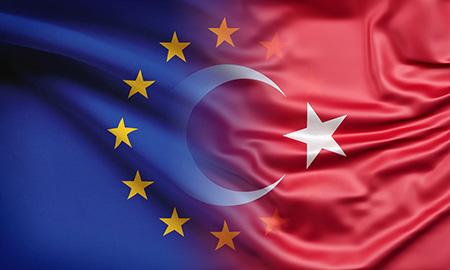
Turkey continues to host around 2.3 million registered refugees, mainly from Syria, as well as from Afghanistan, Iraq and Iran, and remains one of the countries hosting the most refugees in the world. 

Whilst many refugees have access to basic services, hundreds of thousands still face significant obstacles due to socio-economic vulnerability, limited access to national systems and the lingering impact of the 2023 earthquakes.

EU humanitarian assistance in 2026 will prioritise the most vulnerable groups, including those with limited or no access to essential services. Funding will focus on protection, assistance to meet basic needs, health and education, thereby complementing the EU’s long-term support aimed at fostering self-reliance and inclusion within national systems.

Funding will be channelled through the EU’s humanitarian partners, who will work in close coordination with national authorities to address urgent needs such as protection, healthcare and education in emergency situations.

The Commissioner for Crisis Preparedness and Management, HadjaLahbib, said:

The EU continues to support people in need in Turkey with robust humanitarian assistance. And we are not forgetting the communities hosting refugees. They cannot bear this burden alone. Since 2012, the EU has provided over €3.5 billion in humanitarian aid in the country, supporting a wide range of programmes implemented by our humanitarian partners. With this new funding of €20 million, we are renewing our humanitarian support to continue providing vital assistance, helping the most vulnerable people to access essential services and maintain their dignity.

More information:European Commission. 

Publicaciones relacionadas:

EU announces over €81 million in humanitarian aid to eastern Democratic Republic of Congo Commission adds €3 billion for the Pact on Migration and Ukrainian refugees. Nagorno-KarabakhEU allocates over €123 million in humanitarian aid for Latin America and Caribbean in 2026 EU announces €36 million in humanitarian aid to Mozambique and neighbouring countries in Southern Africa Labour migration: an EU Talent Pool to facilitate international recruitment



EU News,  Social Affairs actualidad,  European Commision,  European Union,  Humanitarian Aid,  humanitarian ssistance,  needs,  News,  Refugees,  Syria,  turkey,  vulnerability

“This is a space for debate. All comments, for or against publication, that are respectful and do not contain expressions that are discriminatory, defamatory or contrary to current legislation will be published”.

Reader Interactions

Leave a Reply Cancel reply

Your email address will not be published. Required fields are marked *

This site uses Akismet to reduce spam. Learn how your comment data is processed.

Primary Sidebar

Footer

  • CDE Almería
  • Biblioteca Nicolás Salmerón – Universidad de Almería
  • Planta: 1ª, Despacho: 1.05.0B.
  • Ctra. Sacramento s/n. Almería (Spain)
  • Teléfono: (+34) 950 015266

HOME
NEWS
DOCUMENTATION
EUROPE ON THE NET
ABOUT US

  • LEGAL NOTICE
  • PRIVACY POLICY
  • COOKIE POLICY
  • ACCESSIBILITY
  • SITEMAP

Copyright © 2026 CDE Almería · Creative Commons LicenseThis work is licensed under a Creative Commons Attribution-NonCommercial 4.0 International License.

<p>El Centro de Documentación Europea de la Universidad de Almería utiliza cookies propias y de terceros para facilitar al usuario la navegación en su página Web y el acceso a los distintos contenidos alojados en la misma. Asimismo, se utilizan cookies analíticas de terceros para medir la interacción de los usuarios con el sitio Web. Pinche el siguiente enlace si desea información sobre el uso de cookies y como deshabilitarlas. </p>

Politica de privacidad

El Centro de Documentación Europea de la Universidad de Almería utiliza cookies propias y de terceros para facilitar al usuario la navegación en su página Web y el acceso a los distintos contenidos alojados en la misma. Asimismo, se utilizan cookies analíticas de terceros para medir la interacción de los usuarios con el sitio Web. Pinche el siguiente enlace si desea información sobre el uso de cookies y como deshabilitarlas. <a href="/politica-de-cookies" rel="noopener" target="_blank">Más información</a>

Cookies estrictamente necesarias

Las cookies estrictamente necesarias tiene que activarse siempre para que podamos guardar tus preferencias de ajustes de cookies.

Básicamente la web no funcionara bien si no las activas.

Estas cookies son:

  • Comprobación de inicio de sesión.
  • Cookies de seguridad.
  • Aceptación/rechazo previo de cookies.
Cookies de terceros

Esta web utiliza Google Analytics, Google Tag Manager y Yandex Metrika para recopilar información anónima tal como el número de visitantes del sitio, o las páginas más populares.

Dejar estas cookies activas nos permite mejorar nuestra web.

Política de cookies

Pinche el siguiente enlace si desea información sobre el uso de cookies y como deshabilitarlas. Más información