
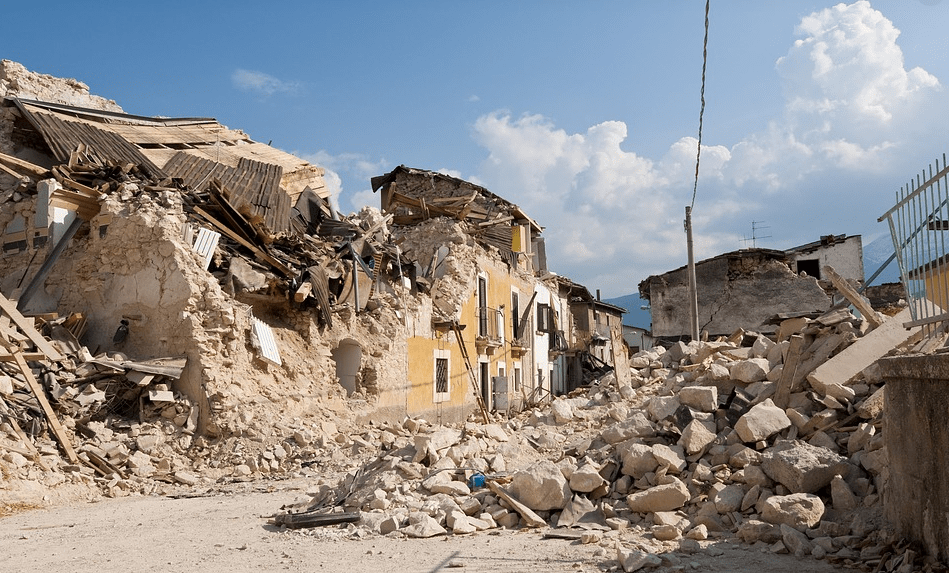
The European Commission is deploying rescue teams and other forms of emergency aid to Venezuela following the two powerful earthquakes on 24 June, which have claimed numerous lives. To date, eight Member States (the Czech Republic, Spain, Italy, France, Luxembourg, Germany, Portugal and the Netherlands) are sending aid through the European Union Civil Protection Mechanism.
President Ursula von der Leyen said: “At this time of great tragedy and disaster, we stand with the people of Venezuela. I thank all Member States for their solidarity and swift action in sending firefighters, rescue dogs, medical staff and other forms of aid. Venezuela is not alone.”
To date, more than 520 personnel from the eight Member States have been mobilised as part of this deployment. Italy is also sending a medical team, and Luxembourg is mobilising supplies for shelters, as well as telecommunications and energy equipment.
To support this response, the EU’s Copernicussatellite service has been activated in emergency mapping mode. The mapping component of the Copernicus Emergency Management Service (CES mapping) uses satellite imagery and other geospatial data to provide a free mapping service in the event of natural or man-made disasters worldwide.
The EU stands ready to provide further assistance as needs on the ground evolve.
In October 2001, the Commission established the Union Civil Protection Mechanism to improve disaster prevention, preparedness and response worldwide. Any country affected by a disaster, whether in Europe or elsewhere, can request emergency assistance through the mechanism. The Commission plays a key role in coordinating the response to disasters and in contributing to the operational and transport costs of deployments.
Venezuela is one of the main recipients of European humanitarian aid in Latin America. This year, the EU has allocated up to €52 million to address the humanitarian consequences of the socio-economic crisis in Venezuela. EU humanitarian aid is channelled exclusively through humanitarian partners, such as United Nations agencies and international NGOs, which work alongside local partners.
More information: European Commission.
Publicaciones relacionadas:
 The EU’s crisis reserve is assisting Cyprus in its response to foot-and-mouth disease
 The Commission is providing an additional €189 million under the Reform and Growth Facility for Moldova
 The EU is strengthening space cooperation with Norway and Iceland through a secure connectivity agreement
 The EU and the WHO are stepping up their efforts to respond to the Ebola outbreak in the Democratic Republic of the Congo and Uganda
 The Commission is stepping up its efforts to manage migration along the Channel route
Leave a Reply