
Despite public opinion and EU policies promoting forest management for multiple ecosystem services, income from sources other than timber production remains limited. This imbalance could persist without specific interventions.
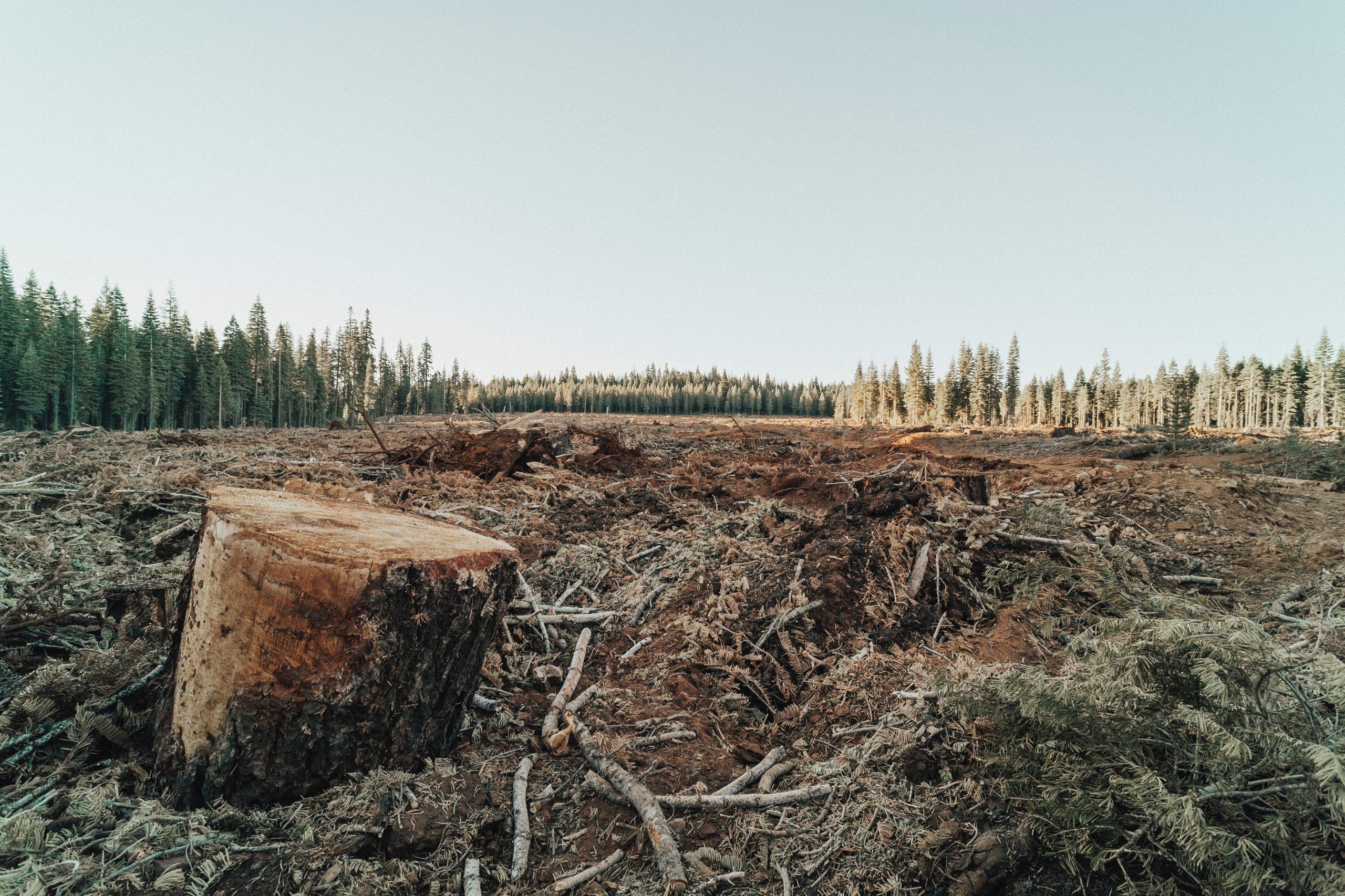
Forests provide a variety of ecosystem services, generally divided into three categories:
- Provisioning: providing natural resources such as wood (e.g. for timber or fuel), food (e.g. game meat or fruit) and others (e.g. non-wood construction materials).
- Regulation: moderation of environmental conditions and processes such as water flow, air quality, atmospheric carbon and nutrient recycling.
- Cultural: providing individual or social benefits, such as recreational and educational opportunities, spiritual and cultural values, health and emotional support.
Historically, forests in Europe have been valued for their provisioning services, particularly the supply of wood. However, several EU policy instruments emphasise the importance of regulating and cultural services. These include theEuropean Green Deal, which calls for improved regulating services; theForest Strategy, which establishes the importance of climate and biodiversity regulating services; theBiodiversity Strategy, which also highlights regulating services; andRegulation 2024/2034on European environmental economic accounts, which requires Member States to report annually on forest stocks and changes therein. In addition,the Nature Credit Roadmap(launched in July 2025) seeks to incentivise private investment in actions that protect and preserve nature by rewarding positive actions for nature.
While these developments reflect a growing concern for the provision of all three types of ecosystem services, EU forests continue to be managed primarily for timber production, and large-scale data collection still focuses on provisioning services. Many European forests are privately owned and managed for profit, and public forests managed for multiple services often aim to generate income. Therefore, the potential to generate income from different ecosystem services is a key factor in determining forest management.
This study, funded through the EU’s Horizon 2020 and Horizon Europe programmes via theSINCERE,NOBEL,ForestValue2andCLEARINGHOUSEprojects, considers the income and profitability derived from the three types of ecosystem services in forests across the EU.
The researchers combined surveys and machine learning to assess forest income by ecosystem service group. As a starting point, they conducted an online survey of forest owners and managers, distributed through European forest management associations. Respondents indicated the location of their forest on a map and used a sliding scale (corresponding to a rating from 0 to 1) to estimate, for each type of service:
- The proportion of their income contributed by the type of service (from ‘none’ to ‘all’).
- Whether that level of income had increased or decreased over the past 20 years (from ‘strongly decreased’ to ‘strongly increased’).
- The profitability – considering related costs – of each type of service (from “nothing” to “highly profitable”).
The survey process generated 516 useful responses from 27 countries. In addition, the researchers compiled a continental geographic database on forest characteristics, such as rainfall, carbon storage, tree species composition, distance to cities, andNatura 2000status(a network of protected areas spanning all EU member states). They then developed a deep learning computer model that, based on the survey responses, assigned income and profitability scores to all forest areas on the map, extrapolating known forest locations to others based on geographical proximity and similarity of characteristics.
The results indicate that, across the continent, provisioning services contribute by far the most to forest income. This was observed in more than 80% of respondents, while regulating and cultural services each contributed less than 20% of forest income. In terms of profitability, respondents ranked provisioning services as the most important, followed by regulating services and, lastly, cultural services. However, in terms of the social perception of the importance of these services, the picture was reversed: most forest owners/managers reported a sudden increase in public demand for cultural and regulatory services and a lower appreciation of provisioning services (e.g., timber, game). This poses a significant challenge for European forestry, the researchers say; in the future, there may be a considerable mismatch between social demand and income from these types of services, and supply may not meet demand.
The researchers identified two distinct forest management profiles across the continent. One is timber-focused management, with high revenues and profitability from provisioning services, which is common in coniferous forests and in central, northern and north-eastern Europe; and multi-service management, which is common in deciduous forests, where provisioning accounts for a smaller share of income and profitability, in western, southern and south-eastern Europe, closer to cities and within Natura 2000 sites. The results also show that regulatory and cultural services provide a greater share of income and profitability in state-owned forests than in private forests.
Despite political intentions and social expectations, researchers report minimal or no overall increase in income from regulatory or cultural services over the past 20 years. They argue that this demonstrates the need for more effective regulatory and institutional reforms to optimise the financial benefits of non-service-related services. They highlighted the cases of Croatia and Serbia, which reported the highest levels of income from regulatory and cultural services, and which have both established strong fiscal or subsidy-based incentives.
The researchers acknowledge that not all forests are managed to maximise profitability. However, given that financial constraints are a key factor in many management decisions, they suggest that if the revenue constraints derived from non-provisioning services are not addressed, social and political ambitions in this area will remain a challenge.
The findings highlight the need for policies that consider and incentivise ecosystem services other than timber supply. To design effective policies in this area, mechanisms must simultaneously balance spatial differences across Europe, the gap between forest owners’ economic incentives to provide provisioning ecosystem services, and social demand for regulating and cultural ecosystem services. While payments for ecosystem services have been proposed as a mechanism to achieve this, a broader and more diverse mix of instruments will be needed in future EU forest policy to ensure that the supply of ecosystem services meets demand across the continent. In this context, instruments such as the aforementioned Nature Credit Roadmap, which aims to establish a robust framework that rewards nature-positive actions and practices across the EU, will play an important role.
More information: European Commission.
Publicaciones relacionadas:
 The Road to Green 23: How the EU is tackling the challenge of ‘forever chemicals’
 EU Green Week 2026: Investing in a nature-positive economy
 EU will import 58% of its energy by 2020
 What is carbon neutrality and how can it be achieved by 2050?
 Council agrees its position on rules to phase out Russian gas imports under REPowerEU
Leave a Reply