
European consumers, suppliers and retailers of household appliances, electronic devices and tyres will benefit from the simplified labelling rules proposed by the Commission.
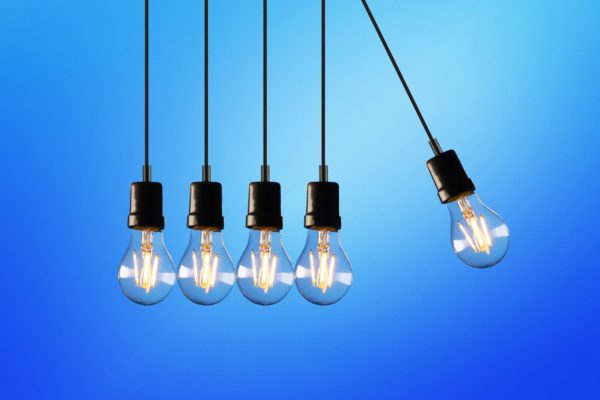
The simplified energy labelling and tyre labelling rules will make the requirements easier for suppliers and retailers to comply with, whilst ensuring that consumers receive the information they need when purchasing a product. This will encourage manufacturers and suppliers to develop and market better, more efficient appliances and tyres, thereby helping consumers (both businesses and households) to purchase more energy-efficient products. Over time, this will also enable consumers to reduce their energy bills and running costs. The latest labels, including those on smartphones, will also provide information on durability and ease of repair, so that consumers can choose products that last longer.
The energy sector is at a turning point: it is moving from a fossil fuel crisis towards a new era of electrification. To meet this challenge, a significant expansion of clean electricity generation is needed, but this electricity must also be used wisely. Energy efficiency therefore remains essential.
The energy labelling framework has already proven its effectiveness in reducing energy consumption and helping consumers make informed choices. Consequently, this framework should be retained and strengthened, and that is the aim of today’s proposal. The EU is committed to further streamlining the rules to facilitate their implementation, reduce costs and make them easier to apply, which would also reduce the administrative burden. Legislation on energy-related products can make a significant contribution to achieving a secure, efficient, electrified and self-sufficient energy system.
Proposed measures
The proposal does not alter the main objective of the framework, which is to provide consumers with clear and comparable information enabling them to make informed choices. The proposed changes would allow for greater flexibility in how labels are displayed depending on the product, whilst ensuring that consumers can see the information at the point of purchase. For example, electronic labels could be an alternative to paper labels for products sold in physical shops, but the current framework does not allow for them. There are cases where the printed label is not visible before the purchase is made, as is the case with products sold exclusively between businesses and not in physical shops, such as refrigerated display units in supermarkets or vending machines; in such cases, it may be more appropriate to include a QR code in the relevant documentation or on the product itself. Similarly, heating or cooling appliances and kitchen utensils are often sold by the fitter or installer without the consumer having seen the appliance on display in a physical shop in person. In such cases, the most important moment is when the customer receives the quote from the installer: this is when the label should be displayed, as part of the contractual offer. Again, other solutions might be appropriate for products sold in large quantities which may not be displayed on shelves but are instead stored in boxes on pallets.
Other proposed measures on energy labelling include those aimed at facilitating the updating of labels when energy classifications are revised. The measures also provide for clarification of the responsibilities of representatives of manufacturers based outside the EU, both for energy labelling and for tyre labelling. With regard to tyres, the proposed measures suggest removing the obligation for dealers to display tyre labels when selling a new vehicle, given that customers are rarely offered a choice in this context. Finally, the changes would help to simplify the legal process for updating tyre labels, improve public procurement procedures and facilitate market surveillance through the European Product Register for Energy Labelling (EPREL), for example, by ensuring that certain product data which is currently not included — but which, as experience has shown, is essential for public procurement officials, customers or market surveillance authorities — is made available in digital format.
These measures are expected to generate savings of up to 125 million euros per year for businesses and market surveillance authorities over the next ten years. They will also contribute to achieving savings of 18 400 million euros in administrative costs, bringing us closer to the EU’s broader target of reducing annual administrative costs by 37 500 million euros by 2029. In the specific case of energy labelling and tyres, this will also result in savings for market surveillance authorities.
Background
The energy products simplification initiative is the twelfth in a series of EU initiatives aimed at reducing red tape and boosting competitiveness. The Commission has set out a roadmap to simplify EU rules and make the Union’s economy more competitive and prosperous, with a clear objective of undertaking an unprecedented simplification effort by 2030, achieving a minimum 25 per cent reduction in administrative burdens, with a minimum of 35 per cent for SMEs. In the specific case of energy labelling and tyres, market surveillance authorities will benefit from a reduction in costs.
The proposal is based on extensive consultations, including a dialogue on its implementation, a call for data and a report assessing the current situation. It is also supported by two implementation reports which analyse in detail consumers’ understanding of energy labelling and tyre labels. These reports are based on recent studies, carried out in early 2025, on the use of tyre labels, the updated energy labelling scheme and the EPREL product database. The results confirmed the benefits of eco-design and labelling policies for consumers, as well as in terms of competitiveness and innovation. At the same time, they highlight that there are persistent problems relating to non-compliance and inadequate market surveillance, particularly in the case of online sales.
More information: European Commission.
Publicaciones relacionadas:
 New rules on integrity and transparency in the energy market
 The EU invests €650 million in cross-border energy infrastructure
 The Commission is urging EU countries to start preparing for winter amid energy disruptions in the Middle East
 235 key cross-border energy projects to boost Europe’s interconnectivity
 The Commission is awarding €400 million to European projects aimed at decarbonising heat production
Leave a Reply