• Skip to primary navigation
  • Skip to main content
  • Skip to primary sidebar
  • Skip to footer
  • Bluesky
  • Facebook
  • Instagram
  • Twitter
  • YouTube
CDE Almería – Centro de Documentación Europea – Universidad de Almería

CDE Almería - Centro de Documentación Europea - Universidad de Almería

Centro de Documentación Europea de la Universidad de Almería

  • HOME
  • WHAT´S ON
    • EU NEWS
    • Activities
    • EU Calls and Awards
    • Radio Program «Europe with You»
  • DOCUMENTATION
    • EU Media Collection
      • Web Space
      • MEDIATHEQUE REPOSITORY
  • Europe on the net
    • Institutions
    • EU Representation in Spain
    • European information network of Andalusia
  • ABOUT US
    • Presentation
    • Services
    • People
    • Contact
  • Spanish
  • English

Commission restricts use of chemicals “forever” in fire fighting foams

Inicio » Noticias UE » Medio Ambiente » Acción por el clima » Commission restricts use of chemicals «forever» in fire fighting foams

7 de October de 2025

The Commission adopted on 3 October new measures restricting the use of PFAS (perfluoroalkyl and polyfluoroalkyl substances) in fire fighting foams under the REACH Regulation, the EU’s chemicals legislation. This is an important measure that protects people and the environment from the risks posed by PFASs.
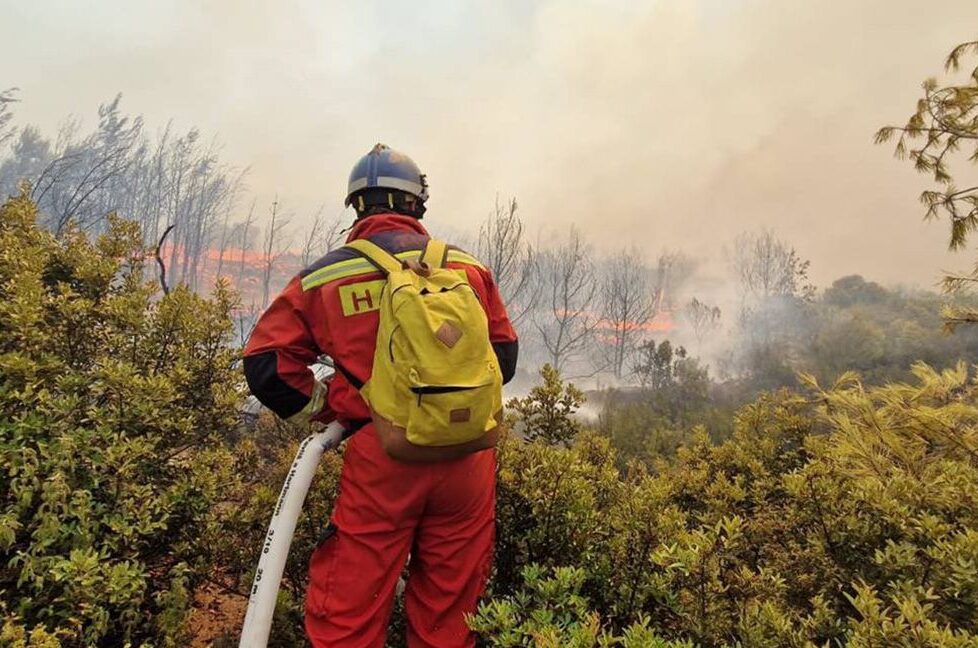
The restriction marks an important step towards the Commission’s goal of minimising PFAS emissions. Fire fighting foams have been a major source of pollution in the EU. Without this restriction, around 470 tonnes of such chemicals would continue to be released into the environment each year, polluting soil and water. In addition, firefighters would also continue to be exposed to PFASs in the foams used.

PFAS-free fire fighting foams are available and the operators concerned need sufficient time to make a smooth transition to PFAS-free alternatives. Therefore, the Commission has proposed specific transition periods for different sectors.

This restriction is based on the scientific assessment of the committees of the European Chemicals Agency and has successfully passed the scrutiny of the European Parliament and the Council.

Next steps

This restriction will formally enter into force 20 days after publication in the Official Journal. It will take effect after transition periods of between 12 months and 10 years, depending on use, allowing time for substitution by safer and more effective alternatives.

Context

PFASs are called “chemicals for life” because they do not break down in the natural environment. They require special attention in view of the large number of cases of contamination of soil and water, including drinking water. Over the last 20 years, the EU has increasingly taken measures to control the risks from exposure to PFASs. Today’s restriction covers this type of chemicals in fire fighting foams, ensuring a complete transition to PFAS-free fire fighting foams in the EU. The proposed restriction will aim to limit contamination and human exposure to these chemicals.

More information: European Commission

Publicaciones relacionadas:

Dibujo de la Tierra en el espacio con motivos y dibujos sobre el cambio climáticoEuropeans view climate action as a priority and support energy independence Commission to cut EU Taxonomy red tape for companies EU regions and cities collaborate with UNEP to accelerate multilevel action on climate and environment New rules to reduce microplastic pollution fondo oceánicoEU takes new step to protect High Seas biodiversity

Climate action,  Environmental Affairs,  EU News actualidad,  chemicals,  chemsitry,  Climate action,  Environment,  European Commission,  European Union,  fire fighter foams,  News,  restriction

“This is a space for debate. All comments, for or against publication, that are respectful and do not contain expressions that are discriminatory, defamatory or contrary to current legislation will be published”.

Reader Interactions

Leave a Reply Cancel reply

Your email address will not be published. Required fields are marked *

This site uses Akismet to reduce spam. Learn how your comment data is processed.

Primary Sidebar

Footer

  • CDE Almería
  • Biblioteca Nicolás Salmerón – Universidad de Almería
  • Planta: 1ª, Despacho: 1.05.0B.
  • Ctra. Sacramento s/n. Almería (Spain)
  • Teléfono: (+34) 950 015266

HOME
NEWS
DOCUMENTATION
EUROPE ON THE NET
ABOUT US

  • LEGAL NOTICE
  • PRIVACY POLICY
  • COOKIE POLICY
  • ACCESSIBILITY
  • SITEMAP

Copyright © 2026 CDE Almería · Creative Commons LicenseThis work is licensed under a Creative Commons Attribution-NonCommercial 4.0 International License.

<p>El Centro de Documentación Europea de la Universidad de Almería utiliza cookies propias y de terceros para facilitar al usuario la navegación en su página Web y el acceso a los distintos contenidos alojados en la misma. Asimismo, se utilizan cookies analíticas de terceros para medir la interacción de los usuarios con el sitio Web. Pinche el siguiente enlace si desea información sobre el uso de cookies y como deshabilitarlas. </p>

Politica de privacidad

El Centro de Documentación Europea de la Universidad de Almería utiliza cookies propias y de terceros para facilitar al usuario la navegación en su página Web y el acceso a los distintos contenidos alojados en la misma. Asimismo, se utilizan cookies analíticas de terceros para medir la interacción de los usuarios con el sitio Web. Pinche el siguiente enlace si desea información sobre el uso de cookies y como deshabilitarlas. <a href="/politica-de-cookies" rel="noopener" target="_blank">Más información</a>

Cookies estrictamente necesarias

Las cookies estrictamente necesarias tiene que activarse siempre para que podamos guardar tus preferencias de ajustes de cookies.

Básicamente la web no funcionara bien si no las activas.

Estas cookies son:

  • Comprobación de inicio de sesión.
  • Cookies de seguridad.
  • Aceptación/rechazo previo de cookies.
Cookies de terceros

Esta web utiliza Google Analytics, Google Tag Manager y Yandex Metrika para recopilar información anónima tal como el número de visitantes del sitio, o las páginas más populares.

Dejar estas cookies activas nos permite mejorar nuestra web.

Política de cookies

Pinche el siguiente enlace si desea información sobre el uso de cookies y como deshabilitarlas. Más información