
As forest fires become larger, more frequent and more destructive, the European Commission is presenting a new integrated approach to forest fire risk management. The strategy covers prevention, preparedness, response and recovery. This holistic approach will improve Europe’s resilience to the growing threat of forest fires and ensure greater protection for Europeans and the environment, as well as for infrastructure and cultural heritage.
In line with the Union’s Preparedness Strategy, today’s Communication provides guidance on how to better prevent, prepare for, respond to and recover from forest fires, with examples and recommendations on how national and regional authorities and other stakeholders can implement this framework.
The size and intensity of forest fires are expected to worsen across the continent. In 2025, Europe experienced its worst forest fire season since records began, with over one million hectares burned. This is due to the intensification of climate change and other factors. Restoring Europe’s nature is therefore key, as healthy ecosystems are more resilient to forest fires.
This is why the Commission places particular emphasis on prevention. It proposes to strengthen its support for ecosystem-based forest fire prevention measures.The aim is to build fire-resilient landscapes and mitigate the risk and impact of forest fires through nature protection and nature restoration. To this end, the Commission has today adopted a guidance document on Natura 2000 and climate change, which provides advice on a structured approach to climate change adaptation for Natura 2000 sites. The guidance also outlines how to promote resilient landscape planning and measures to reduce the risk of forest fires, in line with the conservation objectives of the sites. Furthermore, it clarifies the flexibilities available to Member States in managing Natura 2000 sites in the event of emergencies, such as forest fires, when rapid responses are vital to rescue people and protect biodiversity.
To support long-term planning, the Commission will provide updated risk assessment guidelines that Member States can incorporate into their national reports.
Citizens across Europe are concerned about the growing threat of forest fires. According to a recent survey by the European Environment Agency, half of the citizens surveyed are concerned about this natural phenomenon. The Commission wants to raise public awareness of the risks and involve citizens in forest fire preparedness, in line with the Union’s Preparedness Strategy. It will continue to work to include preparedness in teacher training, promote preparedness in EU youth programmes in this field, and promote exchange and volunteering opportunities in the area of forest fire preparedness. To this end, the Commission has organised a dedicated European citizens’ panel.
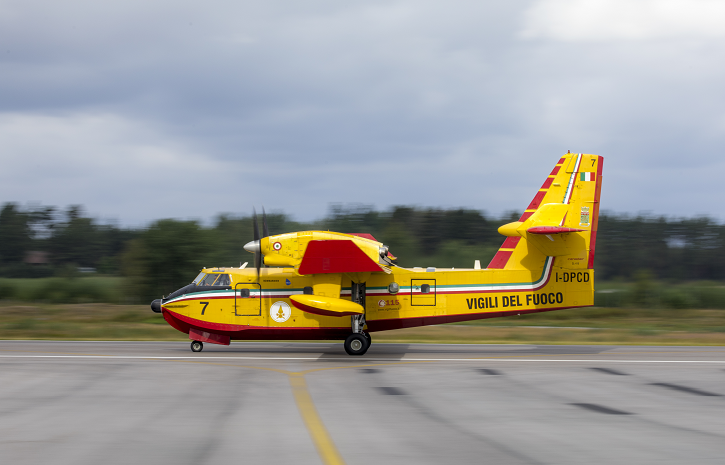
As part of improving preparedness, the Commission will continue to pre-position firefighters in high-risk areas and promote the exchange of firefighting experts. It will also promote the exchange of experiences and greater cooperation with forest fire-prone regions worldwide. Member States and stakeholders will be informed about specific funding opportunities. The Commission will continue to develop the European Forest Fire Information Systemsupported by the Copernicus satellite, improving its early warning and fire monitoring tools. New standardised pan-European risk modelling capabilities will be developed to help identify best practices for reducing fire risks and increasing landscape resilience. The Commission is also continuing to develop AI-assisted forest fire modelling tools to support decision-making.
In addition, the rescEU firefighting fleet will be expanded with the acquisition of 12 firefighting aircraft, as well as five helicopters. The first helicopter in the rescEU fleet, to be delivered to Romania in January 2026, will be ready for the 2026 forest fire season.
The Commission is working on the establishment of a European firefighting centre in Cyprus, which will serve as a regional hub for training, exercises and seasonal preparedness. It will have a dual role: operational, to respond to forest fire emergencies, and capacity building.
The Commission also proposes to collect data to better understand and reduce the long-term health risks faced by firefighters, and their link to exposure to hazardous conditions and toxic substances. Finally, the Commission will promote the exchange of best practices for post-fire recovery methods and support post-disaster restoration towards more climate-resilient ecosystems.
To underpin these efforts, the Commission will present a proposal for a Council Recommendation on integrated forest fire risk management.
Background
Forest fires pose a growing threat to Europe, and climate change is increasing their intensity and frequency.
The EU Civil Protection Mechanism and the EU’s strategic reserve, rescEU, have already proven vital in supporting Member States, with enhanced aerial fire-fighting capabilities and cross-border assistance. These new measures build on existing efforts to create a more resilient, prepared and coordinated Europe in the face of forest fire risks. Today’s measures build on the Union’s Preparedness Strategy adopted exactly one year ago, on 26 March 2025.
The Commission will work closely with Member States, regions, the civil protection community, land managers and other stakeholders to implement these measures, ensuring a whole-of-society and whole-of-government approach. Progress will be reviewed regularly and reported to the European Parliament, the Council, the Economic and Social Committee and the Committee of the Regions.
Healthy and well-managed ecosystems are better able to adapt to climate change and reduce the risk and impacts of extreme events such as floods, droughts and wildfires, whilst delivering co-benefits for biodiversity, local communities and economic resilience.
Further information: European Commission
Publicaciones relacionadas:
 Europe’s health and competitiveness are being undermined by the slow implementation of anti-pollution laws.
 Global ocean conservation treaty enters into force
 Creating a powerful European climate resilience network
 EU takes new step to protect High Seas biodiversity
 Protecting Europe’s Wildlife and Habitats with Natura 2000
Leave a Reply