
The European Commission has approved a €5 billion (DKK 37.6 billion) Danish scheme to support offshore wind energy, in line with the objectives of the Clean Industrial Pact. This measure will contribute to the transition to a net-zero economy and to the achievement ofthe EU-wide 2030renewable energy target. The programme was approvedunder the Clean Industry Pact State Aid Framework(CISAF), adopted by the Commission on 25 June 2025.
The Danish measure
Denmark notified the Commission, under the CISAF, of a €5 billion plan to support the development of offshore wind energy and drive decarbonisation in the EU, in line with the objectives of the Clean Industry Pact. The plan will run for 20 years.
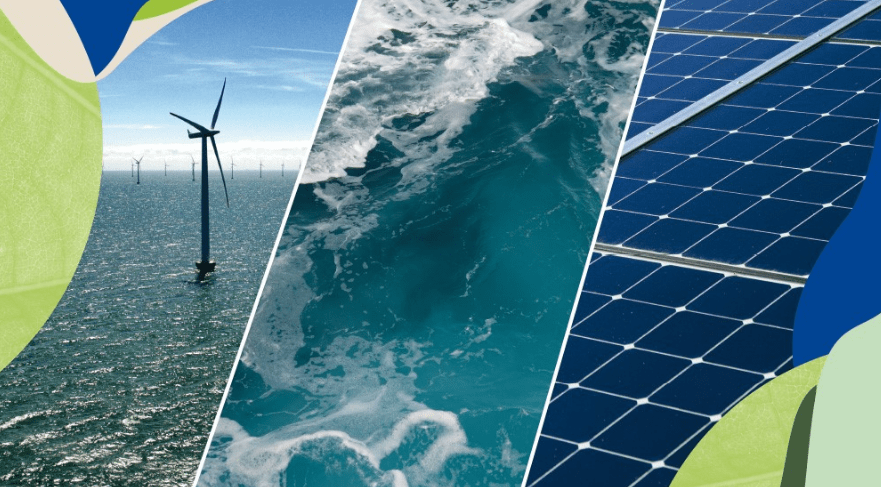
The programme will support the construction and operation of two offshore wind farms: Hesselø and North Sea I Mid. The Hesselø wind farm is expected to have a capacity of at least 0.8 GW and generate around 3.2 TWh per year. The North Sea I Mid wind farm is expected to have a minimum capacity of 1 GW and generate around 4.6 TWh per year. The combined annual output of these two wind farms will represent the equivalent of approximately 25% of Denmark’s total electricity production last year.
Under this scheme, the aid will consist of a variable monthly premium via a contract for difference (CfD). This premium will be calculated by comparing the bid price with a reference market price, weighted by the offshore wind farm’s monthly capacity. Beneficiaries will receive payments when the reference price is lower than the bid price. When the reference price is higher than the bid price, beneficiaries will be required to pay an amount to the Danish authorities.
The Commission found that the Danish scheme meets the conditions of the CISAF (Articles 3 and 4.1.2). Specifically, the aid will be provided asdirect price supportthrough a capacity-based two-way contract for difference, to be awarded via a competitive tendering process. Compensation will be granted for the potential electricity production that the wind farm could have generated, rather than for its actual production. This design ensures the proper functioning of the market and that the scheme does not compensate producers for production during periods when the market value of such production is negative, in accordance with theEUelectricity market designrules.
The Commission concluded that the Danish scheme is necessary, appropriate and proportionate to accelerate the transition to a net-zero economy and to facilitate the development of certain economic activities, which are important for the implementation ofthe Clean Industrial Pact. This is in line withArticle 107(3)(c) of the Treaty on the Functioning of the EUand the conditions set out in the CISAF Agreement.
On this basis, the Commission approved the aid measure under EU state aid rules.
Background
On 25 June 2025, the Commission adopted theCISAFto promote support measures in sectors key to the transition to a net-zero economy, in line with the Clean Industry Pact.
The CISAF allows for the following types of aid, which Member States may grant to accelerate the transition to clean energy:
- Measures to accelerate the deployment of renewable energyand low-carbon fuels (sections 4.1 and 4.2). Member States may establish investment schemes for all renewable energy sources, as well as for energy storage, with simplified tendering procedures. Specific rules are also laid down to accelerate the deployment of low-carbon fuels.
- Measures allowing a temporary reduction in the price of electricityfor energy-intensive users, to ensure the transition to clean, low-cost electricity (section 4.5). Before the decarbonisation of the EU’s electricity system is fully reflected in lower prices, these measures will help to avoid the risk that, due to high costs, industrial activities will relocate outside the EU to regions where environmental and climate regulations are non-existent or less ambitious.
- Measures to facilitate the decarbonisation of industrial processes(section 5). Member States can support investments in the decarbonisation of industrial activities to reduce dependence on imported fossil fuels. This can be achieved through electrification, energy efficiency and the transition to the use of renewable hydrogen and hydrogen produced from electricity, provided it meets certain conditions, with expanded possibilities to support the decarbonisation of industrial processes transitioning to hydrogen-derived fuels.
- Measures to ensure sufficient manufacturing capacity for clean technologies(section 6). Member States may provide investment support for strategic projects in line with theNet-Zero Emissions Industry Act(such as batteries, solar panels, wind turbines, heat pumps, electrolysers and carbon capture, utilisation and storage systems). This also includes the production of key components and the production and recycling of related critical raw materials.
- Measures to reduce the risk of private investmentsnecessary for the deployment of clean energy, industrial decarbonisation, the manufacture of clean technologies, certain energy infrastructure projects and projects supporting the circular economy (section 8).
The non-confidential version of today’s decision will be available under case number SA.118363 in theState aid registeronthe Commission’scompetition websiteonce confidentiality issues have been resolved. New State aid decisions published online and in the Official Journal are listed in theweekly competition e-newsletter.
Further information: European Commission
Publicaciones relacionadas:
 Commission presents measures to increase EU energy independence and affordability
 EU will import 58% of its energy by 2020
 European Commission proposes reform of the EU electricity market set-up
 EU sets new methodology to clarify rules for low-carbon hydrogen and fuels
 EC invests 2.9 billion for zero emission technology projects, six of them in Spain
Leave a Reply