
As of today, 30 July, Japan is officially an associate partner of Horizon Europe. With a population of 123 million, Japan is the most populous country associated with the programme, bringing one of the world’s most advanced research and innovation ecosystems to the European network for scientific cooperation.
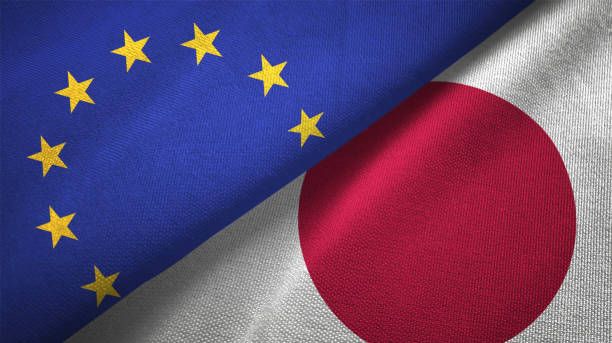
The agreement allows Japanese researchers and organisations to participate in Horizon Europe on an equal footing with those from EU Member States and other associated countries. They will be able to join and lead international research consortia, receive EU funding and collaborate with leading research institutions to help tackle global challenges.
Cooperation in research and innovation with Japan
Negotiations on Japan’s accession were successfully concluded between the European Commission and the Government of Japan in December 2025. Since January 2026, transitional arrangements have already enabled Japanese organisations to apply to participate in calls under Pillar II of Horizon Europe and to be assessed as potential beneficiaries.
Japan’s accession marks an important step in theEU-Japan Strategic Partnershipand underlines the shared commitment to scientific excellence, innovation and open, rules-based international cooperation in research.
The EU and Japan will now expand their cooperation to tackle common global challenges, particularly in the digital transition, health and technologies supporting climate neutrality.
Japan’s participation covers Pillar II of Horizon Europe, which has a budget of €52.4 billion. This pillar funds multinational research and innovation projects addressing major societal challenges related to climate, energy, health and the digital economy. Japan will also contribute financially to the programme’s budget, covering the participation of Japanese organisations.
Furthermore, Japanese participants will continue to have access to other parts of Horizon Europe that are open to third countries, including the‘Excellent Science’ pillar, the‘Innovative Europe’ pillarand theMarie Skłodowska-Curie Actions, which support doctoral training, postdoctoral training and international research collaboration.
Background
With a budget of €93.5 billion for the period 2021–2027, Horizon Europe is the EU’s flagship research and innovation programme. It supports cutting-edge research and innovation to tackle global challenges, accelerate the transitions to clean energy and digitalisation, contribute to the UN Sustainable Development Goals, and strengthen Europe’s competitiveness and growth.
Japan has become the twenty-third country associated with Horizon Europe, joining the other22 countries already associatedwith the programme, whether through their membership of the European Economic Area, the enlargement process, the European Neighbourhood Policy, or as other third countries and territories that meet the programme’s eligibility criteria.
Japan’s association is based on a long-standing and increasingly strategic research and innovation partnership with the EU, which began in 2011 with the agreement on cooperation in science and technology. A recent example of the close collaboration between the EU and Japan is the recommendation made by an EU-Japan expert panel within the framework ofthe enhanced dialogue on advanced materials. This recommendation explores complementarities and synergies in the fields of electronics, mobility, construction, energy and data-driven science, which could benefit both EU and Japanese citizens.
More information: European Commission
Publicaciones relacionadas:
 Republic of Korea joins Horizon Europe programme
 Europe-Japan cooperation in AI-based manufacturing technologies
 The EU and Vietnam are strengthening their cooperation in science, technology and innovation
 EU and Japan reinforce tech and digital partnership
 Egypt becomes second African country to join Horizon Europe
Leave a Reply