
The Council adopted a series of implementing decisions making financial assistance available to eight EU Member States under the SAFE instrument: Belgium, Bulgaria, Cyprus, Denmark, Spain, Croatia, Portugal and Romania.
A second batch of Council Implementing Decisions on financial assistance for Estonia, Greece, Italy, Latvia, Lithuania, Poland, Slovakia and Finland has been authorised by the permanent representatives to the EU and is expected to be formally adopted by the Council on 17 February.
“Decisions show that the EU is not just talking about defence, but that we are delivering results. With the SAFE instrument, we are strengthening our security where it matters most.” Vasilis Palmas, Minister of Defence of Cyprus.
Decision is the result of the European Commission’s positive assessment of Member States’ national defence investment plans. It paves the way for the Commission to release the first tranche of affordable, long-term loans, which will enable participating countries to acquire modern defence equipment and boost their defence readiness.
SAFE is an EU financial instrument that helps Member States wishing to invest in industrial defence production through joint procurement, with an emphasis on priority capabilities.
Agreement with Canada
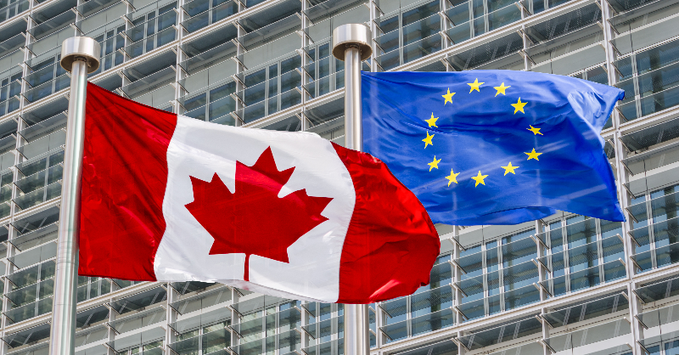
In addition, the Council adopted a decision authorising the EU to sign the bilateral agreement between the EU and Canada on the participation of Canadian companies and products originating in Canada in procurement under the SAFE instrument. Canada will be the first non-European country to participate in the SAFE instrument.
Following negotiations between the parties, the Agreement was provisionally endorsed on 19 December 2025 by the representatives of the Member States in Coreper.
Once signed, the Agreement can be applied provisionally. It will only be formally concluded once the European Parliament has given its approval.
The text of the Agreement will be published shortly in the Official Journal of the EU.
Next steps
Following the adoption of the Implementing Decisions, the Commission will conclude loan agreements with the Member States concerned and proceed with the disbursement of pre-financing payments.
Context
The SAFE Instrument Regulation was adopted on 27 May 2025 as part of the ‘ReArm Europe/Preparedness 2030 Plan’, an ambitious defence package that helps EU Member States obtain the necessary financing to boost defence investment.
SAFE is a new EU financial instrument that helps Member States wishing to invest in industrial defence production through joint procurement, with an emphasis on priority capabilities. It will finance urgent and large-scale investments in the European defence industrial and technological base (EDITB) with the aim of boosting production capacity, ensuring the timely availability of defence equipment and filling existing capability gaps.
Ukraine and the EFTA countries of the EEA will be able to participate in joint procurement under the SAFE instrument, and it will be possible to procure from their industries. Canada is in the same situation, having concluded an agreement under Article 17 of the SAFE Instrument Regulation. Acceding countries, candidate countries, potential candidates and countries that have signed security and defence partnerships with the EU will also be able to participate in joint procurement and contribute to aggregate demand.
Following the adoption of the SAFE instrument, the Commission launched a call for expressions of interest for financial assistance under the instrument, inviting Member States to indicate the minimum and maximum loan amounts. As of 29 August 2025, 19 Member States had expressed their interest.
The Commission approved the first tranche of defence funding for eight Member States on 15 January and a second tranche on 26 January.
More information: Council of the European Union.
Publicaciones relacionadas:
 EU and Chile strengthen a comprehensive political and trade partnership
 EU institutions agree on joint priorities for 2023 and 2024
 New chapter in the cooperation between Europe and Canada
 The Commission proposes a free and secure data circulation zone between the EU and Brazil
 New strategy to strengthen prosperity and security with India
Leave a Reply