
No one can accuse the European Union of a lack of ambition in space. It has one of the largest space budgets in the world. Two of its best-known systems are Copernicus, the EU’s Earth Observation (EO) programme, and Galileo, the EU’s Global Satellite Navigation System (GNSS).
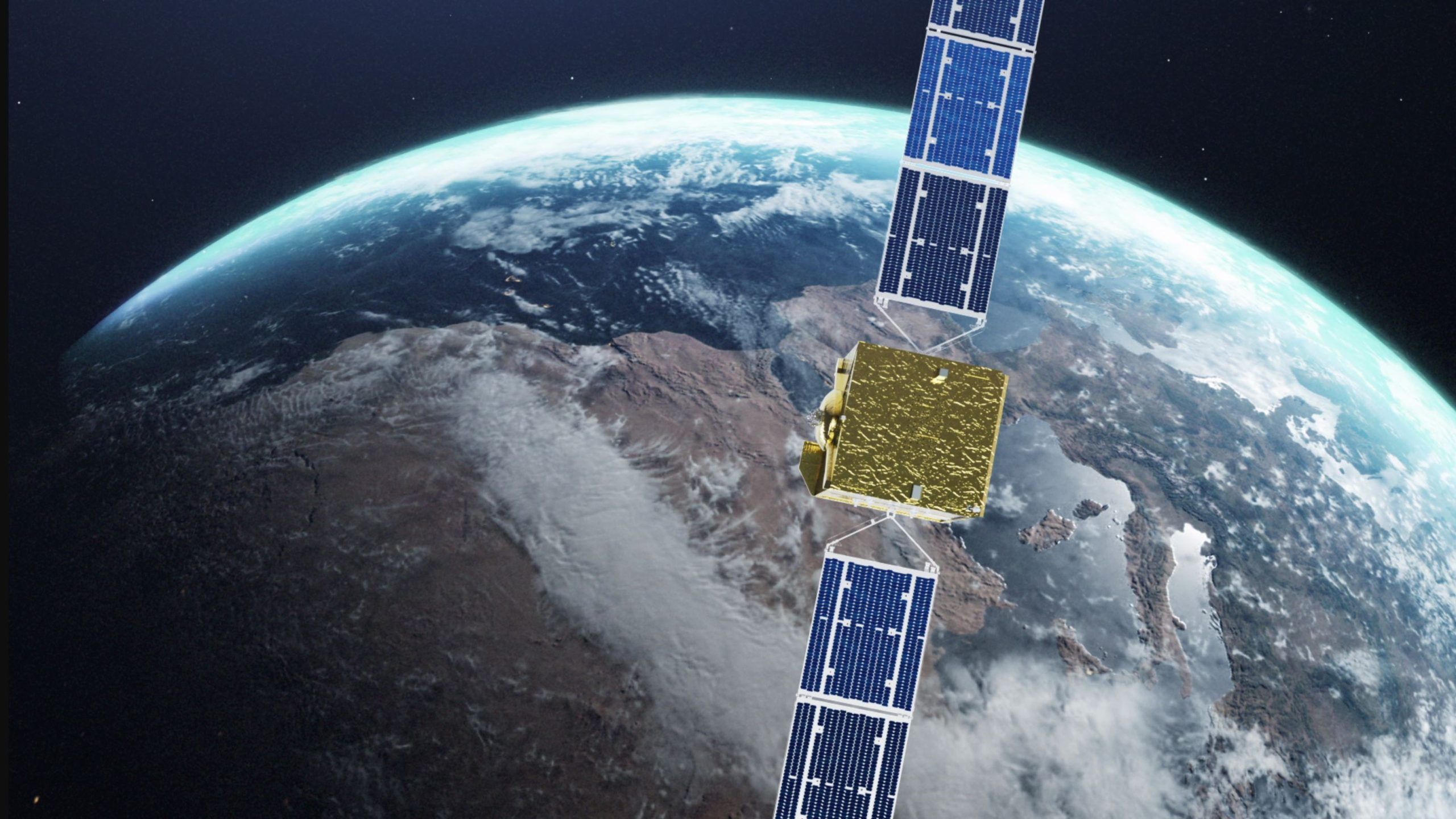
The development of a new communication constellation, called IRIS2 (Infrastructure for Resilience, Interconnectivity and Security by Satellite), is also underway as a new space-based secure system that aims to provide enhanced communication capacities to governmental users and businesses. It will also ensure high-speed internet broadband to cope with connectivity dead zones.
Major powers such as the United States, China and Russia are also investing more and more in space to address national security concerns as well as to bolster economic and technological competitiveness.
The EU is stepping up its efforts to ensure safe and secure use of, and autonomous access to, the space domain.
The latest step, in March, was the ‘European Union Space Strategy for Security and Defence’, a ‘Joint Communication’ presented by the High Representative and the European Commission. It explores how the bloc can further protect national and European space systems and services and enhance the EU’s strategic posture and autonomy in the space domain.
This Joint Communication is one of the main results of the EU’s overarching document approved last year, the ‘Strategic Compass for Security and Defence’. The Compass gives the European Union an ambitious plan of action for strengthening the EU’s security and defence policy by 2030.
The Joint Communication released is laid out over four key areas and seeks the following: a better understanding of, and more coordinated response to, space threats by the EU and its Member States; more resilience and protection of space systems and services in the EU; enhanced use of space for security and defence; and ways to develop international partnerships so that space is used and navigated in a responsible, respectful way.

EU Space Strategy for Security and Defence
|
Across the universe
The need for a space strategy stems from a wider EU effort to strength the bloc’s resilience in a host of areas, from climate change to digitalisation. Space is also an increasingly contested area, in part because allies, adversaries and the private sector are rapidly developing space assets as well as space weapons. While EU-owned and operated space assets are under civil control, there is a pressing need to enhance the security and defence dimensions of the Union in space.
Space is, of course, crucial to warfare on earth, with space services playing a part in all EU missions and operations. The European Defence Agency (EDA) has two of the longest-running projects in that area, which are supporting the Member States and other nations and institutions involved in EU foreign and security policies. EDA operates the EU Satellite Communications (SatCom) Market to provide an efficient option to source commercially available SatCom and communication information services to its members. It also runs GOVSATCOM Pooling and Sharing Demonstration (GSC DEMO), which guarantees secure SatCom capabilities that cannot be obtained on the commercial market.
EDA is also active more broadly in the space domain, focusing on the following areas: the prioritisation and planning in support of space capability development; the capability development and Research & Technology (R&T) activities related to space; and the identification of common military requirements and defence user needs for space-based systems, both for collaborative capability development as well as in the context of wider EU space policy.
In the EU’s defence review, CARD, defence in space is also identified as a ‘Focus Area’, meaning that space is one of the most pressing areas for capability development, as well as for cooperation and future investment. The CARD report recommends that Member States should collaborate to improve access to space services and protect space-based assets. Several Member States have declared their interest in this Focus Area, with France and Spain becoming formal facilitators of the ‘Defence in Space Forum’ in July 2022.
EU adopts space-based connectivity programme
|
Resilence, Protection
Through the newly established ‘Defence in Space Forum’, EDA will play a role in identifying military requirements, defining capability priorities and fostering cooperation in space among Member States.
In addition, in December 2022, the EDA Research and Technology (R&T) Steering Board decided to establish the Capability Technology Group Space (CapTech Space).
The main CapTech objectives are to: coordinate and strengthen R&T for space defence in Europe; overcome shortfalls and support new capabilities in the space domain in defence and security; foster innovative cooperation among EDA Member States in R&T for space defence; act as a bridge between industry and Ministries of Defence; and generate innovative collaborative R&T projects for space defence. The first CapTech Space meeting in government formation took place on 28 March in Vienna, hosted by the Austrian Federal Ministry of Defence, with the participation of 15 Member States.
Some Member States already have strategies governing the way they work in space, while for others the European Union Space Strategy for Security and Defence’ might serve as an inspiration for stronger involvement in the area.
Over the years, EDA has been active in defence capability development and research and development (R&D) in the space domain, with the specific focus on space-based information and communication services such as the aforementioned SatCom, Space Based Earth Observation (SBEO), Positioning, Navigation and Timing (PNT) and Space Situational Awareness (SSA).
More information: European Defence Agency
Publicaciones relacionadas:
 New project (SPICE) to improve military sensor performance
 EDA project aims for multifunctional smart textiles for defence
 EU maritime security: from strategy to action
 EDA Annual Conference to focus on ‘Sustaining European Defence’
 New opportunites for joint military capabilities to overcome fragmented European defence landscape
Leave a Reply