
In the past, innovation in sectors like plastics, textiles and furniture, often took place in silos, optimising for a specific aspect of the product or material. While these innovations have delivered improvements in one domain, they often weakened value creation or retention in other steps in the value chain, mostly downstream.

Specific Challenge
Systemic innovation should create value for the innovator actor and for the system as a whole. However, this potential has been explored only to a limited extent only. Hence, there is a need for designing and piloting circular systems, including business models, products and materials, and covering the entire value chain in scope, to test and demonstrate systemic innovation towards a circular economy in practice. Due to their mostly take-make-dispose products and business models, the plastics, textiles and furniture industries offer a clear potential for the design and piloting of circular systems.
Scope
The objective of this action is to develop and pilot systemic circular economy innovations in plastics, textiles and furniture sectors that take into account value retention throughout the lifecycle of the product or service.
- Proposals are expected to bring together all relevant actors from across the value chain – from design and production, down to collection, sorting and reuse/repair/recycling – to rethink how to address the user’s need through a circular economy lens. Proposals should explore, develop and pilot systemic innovations that take into account value retention throughout the lifecycle of the product or service. Such innovations could cover design of business models, products and materials, industrial symbiosis, assuming the interdependencies and connections to the overall system in which the product/service is offered, are considered and acted upon. The sectors in scope are one of the following three: plastics, textiles and furniture.
- Environmental and other societal benefits should be assessed from a lifecycle perspective and quantified.
- Data and information exchange across the different actors should be deployed, tested and evaluated to ensure value retention throughout the life cycle. The aim of this is to avoid silos of information and obtain a better understanding of the mutual dependencies between the several actors in the system and the changes on all technical and behavioural levels required to fulfil the full potential of systemic innovation.
- This topic is in support of the European Strategy for Plastics in a Circular Economy. Selected projects under this topic as well as projects selected under other topics in H2020 supporting the Plastics Strategy are strongly encouraged to participate in joint activities as appropriate. These joint activities could take the form of clustering of projects, participation in workshops, common exploitation and dissemination etc. The proposals are expected to demonstrate support to common coordination and dissemination activities. Applicants should plan the necessary budget to cover those activities without the prerequisite to define concrete common actions at this stage.
The Commission considers that proposals requesting a contribution from the EU in the range of EUR 7-8 million would allow this specific challenge to be addressed appropriately. Nonetheless, this does not preclude submission and selection of proposals requesting other amounts.
Expected Impact
The project results are expected to contribute to:
- effective use of both primary and secondary resources in Europe, reducing waste generation, environmental pollution and greenhouse gas emissions.
- first-hand insights on how to develop and support systemic innovation towards a circular economy.
- evidence to inform more systemic policy decisions to further facilitate the transition to an effective circular economy in selected sectors.
- systemic knowledge of product service systems and circular design management systems.
- new business opportunities for European industries and SMEs.
- the achievement of climate commitments and specific quantitative targets on resources efficiency, recycling rates or waste disposal quota and gather more information on related greenhouse gas emissions.
- long-term value creation and positive impacts on the environment, health and quality of life of users.
Deadline
13 February 2020 at 17:00 Brussels time
More Information
Publicaciones relacionadas:
 European Social Innovation Competition 2019
 International Fund for Cultural Diversity (IFCD)
 Interreg Europe: RETRACE: Systemic Design for Circular Policymaking
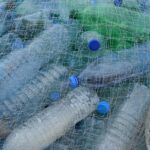 H2020. Climate action, environment, resource efficiency and raw materials: Improving the sorting, separation and recycling of composite and multi-layer materials
 HORIZON EUROPE: Research infrastructures services enabling the development of materials for a circular economy
Leave a Reply