
The EU-funded HYScale project team is redefining green hydrogen production. It has successfully developed high-performance materials that reduce dependence on critical feedstocks and synthetic chemicals called perfluoroalkyl and polyfluoroalkyl substances (PFASs).
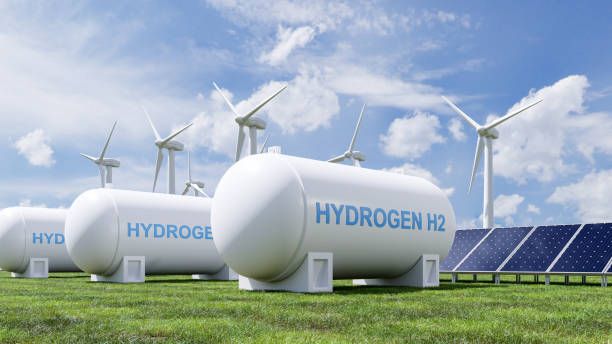
Green hydrogen is a sustainable and versatile energy source that can play a crucial role in the decarbonisation of Europe’s energy-intensive sectors. However, several hurdles such as cost, durability, efficiency and resource scarcity need to be overcome before it can be widely adopted.
The HYScale team has taken up this challenge. As described in an article on the project website: “HYScale is scaling up innovative, high-performance materials that reduce dependence on scarce resources, without compromising performance or efficiency. The project has replaced the fundamental raw materials and PFASs traditionally used in anion exchange membrane (AEM) water electrolysers, a technology used in hydrogen production. Instead, a more economical and environmentally friendly alternative is being developed: the first 100 kW single cell AEM electrolyser prototype.
Tests have shown that the new materials developed at HYScale can be scaled up without compromising performance. “Large-scale applications now offer results that match those obtained in small-scale single-cell laboratory tests, a crucial milestone on the road to real-life application,’ the paper reports. In doing so, the project is ‘one step closer to integrating the battery into a fully functional electrolyser system’. The HYScale team is aiming for a capital expenditure of EUR 400/kW and is moving towards industrial validation.
Getting to this point
To scale up to a complete electrolyser system, the HYScale team first had to optimise the individual cell components. They worked to refine the catalysts, membranes and porous transport layers of the small-area cells to ensure the efficiency, durability and long-term operation of each component.
The Italian National Research Council (CNR), a project partner, investigated the influence of the substrate used for the electrode. They also analysed the type of porous transport layer, designed and manufactured by Belgian project partner Bekaert. The project coordinator, CENmat, provided catalyst-coated substrates using high-performance non-core raw material catalysts. The CNR and its German partner DLR conducted extensive tests to assess the performance and stability of the components.
To meet scalability goals, the project team also developed a large-area cell. The design incorporates specialised solutions for the frames and the sealing and transport layers, and has been optimised to minimise machining steps.
A flow-field-free design was also adopted. CNR researcher Nicola Briguglio explains: “The decision was driven by the need to simplify the architecture of the AEM short stack and reduce manufacturing complexity. In addition, the elimination of the flow field reduces the overall thickness of the stack and facilitates a more compact and lightweight design, which is beneficial for system integration and scalability.
Testing is already underway as part of the short stack phase. The HYScale team(HYSCALE – Economic Green Hydrogen Production at Scale via a Novel, Critical Raw Material Free, Highly Efficient and Low-CAPEX Advanced Alkaline Membrane Water Electrolysis Technology) is working to integrate the stack into a fully functional electrolyser system, which will lay the foundation for more efficient electrolyser systems that will bring Europe closer to its climate targets.
More information: CORDIS.
Publicaciones relacionadas:
 In a first, the EU produced more energy from renewables than fossil fuels in 2020
 Greek island Tilos picks up award for clean energy transition
 Greenhouses join plants in the energy conversion business
 UAL bets on renewable energies and green hydrogen
 How much have different countries contributed to climate change since 1850?
Leave a Reply