
The College of Commissioners approved the 2025 Annual Management and Performance Report (AMPR). The AMPR highlights the vital role played by the EU budget in tackling the multiple crises of that year and demonstrates that it continued to benefit European citizens. The EU budget boosted the Union’s competitiveness, reduced strategic dependencies and improved security and defence, facilitating cooperation between Member States. The budget contributed to the EU’s unwavering support for Ukraine and helped to secure its global standing.
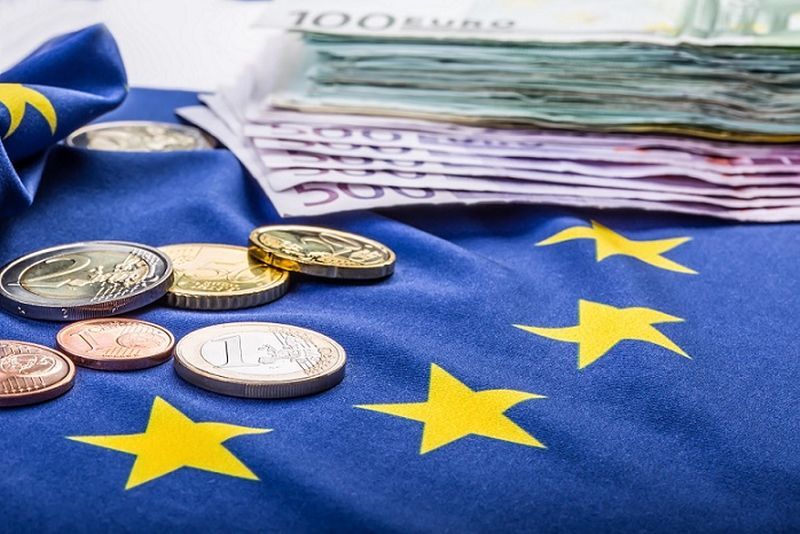
The EU budget was essential to delivering on the EU’s political priorities.
The AMPR shows that in 2025, the EU budget continued to support the EU’s political priorities:
- The EU budget boosted competitiveness by funding research and innovation throughHorizon Europe, and by supporting start-ups and small and medium-sized enterprises through theEuropean Innovation Council.
- It boosted investment in sustainable innovation throughInvestEUguarantees, which by the end of 2025 had supported more than 90,000 SMEs. It expanded innovation through theInnovation Fundand channelled resources into critical clean, digital and biotechnology sectors via theStrategic Technologies for Europe Platform(STEP).
- In 2025, the EU also strengthened its security and defence policy:
- The newSecurity ActionProgrammefor Europewill provide up to 150,000 million euros in loans to Member States. In 2025, around 400 million euros were allocated to support defence innovation.
- Sixty-three projects were launched with a total budget of over 1,000 million euros under theEuropean Defence Fund, whilst theAmmunition Production Support Actbacked 31 projects, providing over 500 million euros to improve European defence production capabilities.
- The STEP programmewas expanded to include defence technologies and further strengthen European defence.
- Cohesion policycontinued to improve living conditions across the EU. By the end of 2025, it had provided support in the form of grants, equity, guarantees, loans and advice to more than 130,000 small and medium-sized enterprises, funding 1,434 megawatts-hour of additional renewable energy generation capacity, ultra-high-speed broadband access for more than 335,000 households and more than 1,000 kilometres of new, upgraded or modernised roads. Furthermore, in 2025, more than 15,000 million euros of cohesion policy funds were reallocated to competitiveness.
- TheCommon Agricultural Policycontinued to support farmers’ livelihoods and productivity, as well as promoting dynamic rural economies, benefiting a total of 5.5 million farmers and 311,000 young farmers. In 2025 alone, it created more than 270,000 jobs.
- Support for Ukraineremained steadfast, with €10,700 million provided through theMechanism for Ukraineas part of the Plan for Ukraine.
UnderNextGenerationEU, the European Commission disbursed €87,300 million to Member States through theRecovery and Resilience Facility, thereby contributing to the EU’s clean and digital transitions. Highlights for 2025 include:
- Annual energy consumption fell by 37.6 million megawatt-hours, equivalent to the average annual consumption of nearly 2 million EU households.
- Around 20 million additional households gained access to very high-capacity internet networks;
- Approximately 60.2 million people will benefit from new healthcare facilities or the modernisation of existing ones.
- Some 30.7 million people took part in education and training programmes, and nearly 3.5 million were in employment or actively seeking work.
- Approximately 4.9 million businesses received support, either in cash or in kind.
By combining the EU budget with support from Member States and private capital, theGlobal Gateway initiativewas instrumental in underpinning the EU’s international partnerships. For example:
- At the G20 Summit held in South Africa, the Global Gateway platform’s ‘Scaling up renewable energy in Africa’campaignmobilised €15,500 million for clean energy and access to electricity across the continent.
- In 2025, a Team Europe Global Gateway investment package mobilised €12,000 million for Central Asia, and at the firstEU-Pacific Business Forum, the Commission announced nearly €300 million in Global Gateway investments dedicated to the entire Pacific region.
- The European Fund for Sustainable Development Pluscontributed to the expansion of the Global Gatewayby sharing the risks of development finance partners when they mobilise their own resources. In 2025, the EU budget provided cover for European Investment Bank loans totalling approximately 4,000 millones de euros, which are expected to attract a total investment of 14,000 millones de euros.
The EU budget continued to fund objectives relating to climate, biodiversity, digitalisation and gender equality:
- 33% of the combined EU budget andNextGenerationEUfundingwas allocated to climate objectives;
- 7.8% supported biodiversity;
- 10.1% supported the digital transition;
- and 19% of the EU budget contributed directly or indirectly to advancing gender equality.
Further information on these achievements and on the EU’s financial programmes is set outin the Programme Performance Reports.
Despite these achievements, the number and scale of unforeseen challenges that have arisen since the start of the current programming period have tested the limited flexibility of the EU budget. The Commission has therefore proposed amore flexible long-term budget for the period 2028–2034, capable of adapting as needs and priorities evolve, whilst still providing the predictability necessary for long-term investment.
The EU budget remains well managed and safeguarded.
The Commission attaches great importance to making the best possible use of taxpayers’ money. This report demonstrates the ongoing effort to protect the EU budget against errors, fraud or breaches of the principles of the rule of law.
To this end, the Commission has robust tools at its disposal, including:
- theConditionality Regulation, which appliesin cases of breaches of the rule of law in a specific Member State that threaten the EU’s financial interests;
- a robustinternal control frameworkdesigned to provide reasonable assurance regarding the achievement of the Commission’s objectives, including the effectiveness and efficiency of operations, the reliability of reporting, the safeguarding of assets, and the prevention, detection, correction and follow-up of irregularities, including fraud, and compliance with applicable rules;
- AstrengthenedFinancial Regulation, including improvements for beneficiaries of EU funding, ensuring preparedness to respond in the event of a crisis, and a better-protected and more transparent EU budget.
In 2025, the Commission also launched areview of the EU’s anti-fraud architecture, complementing its work on the next EU budget for the period 2028–2034. Its aim is to ensure stronger and more effective protection of the Union’s financial interests.
Background
The AMPR is an accountability and communication tool. Through this document, the Commission assumes overall political responsibility for the management of the EU budget, setting out the results achieved, including an overview of the Commission’s internal control and financial management.
The report is published as partof the Integrated Financial and Accountability Reports package, which also includes the annual report on the follow-up to the discharge, the Commission’s report on internal audits carried out in 2025, the cash flow forecast and the consolidated annual accounts. The report constitutes the Commission’s contribution to the 2025 discharge procedure, in which various stakeholders examine the implementation of the EU budget. In this case, the European Parliament grants discharge on the basis of a recommendation from the Council. By granting discharge for the way in which the European Commission, in cooperation with the Member States, has implemented the EU budget in a given year, the European Parliament formally closes the financial year in question.
The Commission works closely with the Member States and other partners to ensure that the EU budget is spent efficiently, free from fraud and irregularities, and in line with the EU’s policy objectives, so as to benefit citizens and deliver tangible results.
More information: European Commission.
Publicaciones relacionadas:
 First EIC COVID-19 Response certificates
 The Commission announced the 10 best candidates in its Digital Innovation Challenge
 Conference on the Future of Europe: launch of the multilingual digital platform
 The EU and Armenia strengthen their ties at their first summit held in Yerevan
 The EU and Japan are stepping up cooperation on AI, data, quantum computing and chips
Leave a Reply