• Skip to primary navigation
  • Skip to main content
  • Skip to primary sidebar
  • Skip to footer
  • Bluesky
  • Facebook
  • Instagram
  • Twitter
  • YouTube
CDE Almería – Centro de Documentación Europea – Universidad de Almería

CDE Almería - Centro de Documentación Europea - Universidad de Almería

Centro de Documentación Europea de la Universidad de Almería

  • HOME
  • WHAT´S ON
    • EU NEWS
    • Activities
    • EU Calls and Awards
    • Radio Program «Europe with You»
  • DOCUMENTATION
    • EU Media Collection
      • Web Space
      • MEDIATHEQUE REPOSITORY
  • Europe on the net
    • Institutions
    • EU Representation in Spain
    • European information network of Andalusia
  • ABOUT US
    • Presentation
    • Services
    • People
    • Contact
  • Spanish
  • English

Europol signs an agreement with France to work with the host country of the 2024 Olympic and Paralympic Games.

Inicio » EU News » Defence & Security » International Safety and Defence Politics » Europol signs an agreement with France to work with the host country of the 2024 Olympic and Paralympic Games.

13 de November de 2023

Europol has signed an agreement with France to support the host country of the 2024 Olympic and Paralympic Games in strengthening security at this major global event. With this agreement, Europol will further facilitate operational information exchange and international law enforcement cooperation during the games.
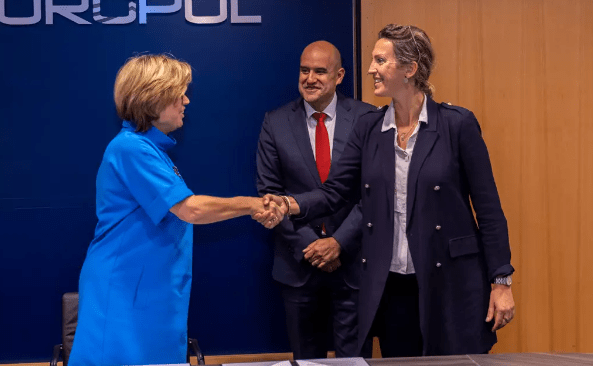
The agreement covers several important arrangements designed to ensure the security and success of the event. This includes increasing operational preparedness, developing special channels for swift cooperation during the event, and enhancing strategic foresight to anticipate and confront complex situations quickly and efficiently.

During the event, Europol will deploy a special team to assist with security arrangements at the Paris 2024 Olympic and Paralympic Games. Europol’s experts will work in close cooperation with the Central Section for Operational Police Cooperation (SCCOPOL) of the Department for International Operational Cooperation within the French Ministry of the Interior, as well as with experts from INTERPOL also specially deployed to step up security at the event.

Law enforcement cooperation is crucial for ensuring safety at major international events. Europol’s Operational Centre has provided support to a number of major international events, including the G20 Summit in Germany (2017), the G7 Summit in Taormina, Italy (2017), Amsterdam Gay Pride (2017), the 2020 UEFA European Football Championship, the FIFA World Cup 2022 and the Rugby World Cup 2023 in France. The Operational Centre manages the constant flow of data between Europol and its partners on a 24/7 basis, making it the gateway of all operational information and intelligence channelled through the Agency.

SOURCE: Press release – Europol

Publicaciones relacionadas:

Smuggling Network Connected to four deaths at sea dismantled in Spain CJEU: Belgian courts cannot refuse to execute a European Arrest Warrant and upholds Llarena’s ruling Seminar “Fight against disinformation: National Security in the framework of the EU strategy”. el rey visita satcenThe King of Spain visits the European Union Satellite Centre bandera españa europaSeptember infringement proceedings package concerning Spain: main decisions

Defence & Security,  EU News,  Institutional Affairs,  International Safety and Defence Politics Europol,  France,  Olympics games,  Paralympic games,  sign agreement,  Spain

“This is a space for debate. All comments, for or against publication, that are respectful and do not contain expressions that are discriminatory, defamatory or contrary to current legislation will be published”.

Reader Interactions

Leave a Reply Cancel reply

Your email address will not be published. Required fields are marked *

This site uses Akismet to reduce spam. Learn how your comment data is processed.

Primary Sidebar

Footer

  • CDE Almería
  • Biblioteca Nicolás Salmerón – Universidad de Almería
  • Planta: 1ª, Despacho: 1.05.0B.
  • Ctra. Sacramento s/n. Almería (Spain)
  • Teléfono: (+34) 950 015266

HOME
NEWS
DOCUMENTATION
EUROPE ON THE NET
ABOUT US

  • LEGAL NOTICE
  • PRIVACY POLICY
  • COOKIE POLICY
  • ACCESSIBILITY
  • SITEMAP

Copyright © 2026 CDE Almería · Creative Commons LicenseThis work is licensed under a Creative Commons Attribution-NonCommercial 4.0 International License.

<p>El Centro de Documentación Europea de la Universidad de Almería utiliza cookies propias y de terceros para facilitar al usuario la navegación en su página Web y el acceso a los distintos contenidos alojados en la misma. Asimismo, se utilizan cookies analíticas de terceros para medir la interacción de los usuarios con el sitio Web. Pinche el siguiente enlace si desea información sobre el uso de cookies y como deshabilitarlas. </p>

Politica de privacidad

El Centro de Documentación Europea de la Universidad de Almería utiliza cookies propias y de terceros para facilitar al usuario la navegación en su página Web y el acceso a los distintos contenidos alojados en la misma. Asimismo, se utilizan cookies analíticas de terceros para medir la interacción de los usuarios con el sitio Web. Pinche el siguiente enlace si desea información sobre el uso de cookies y como deshabilitarlas. <a href="/politica-de-cookies" rel="noopener" target="_blank">Más información</a>

Cookies estrictamente necesarias

Las cookies estrictamente necesarias tiene que activarse siempre para que podamos guardar tus preferencias de ajustes de cookies.

Básicamente la web no funcionara bien si no las activas.

Estas cookies son:

  • Comprobación de inicio de sesión.
  • Cookies de seguridad.
  • Aceptación/rechazo previo de cookies.
Cookies de terceros

Esta web utiliza Google Analytics, Google Tag Manager y Yandex Metrika para recopilar información anónima tal como el número de visitantes del sitio, o las páginas más populares.

Dejar estas cookies activas nos permite mejorar nuestra web.

Política de cookies

Pinche el siguiente enlace si desea información sobre el uso de cookies y como deshabilitarlas. Más información