
#CoRplenary agenda: European Council’s president, three European commissioners and Kyiv Mayor Vitaliy Klitschko to participate in first session of new mandate.
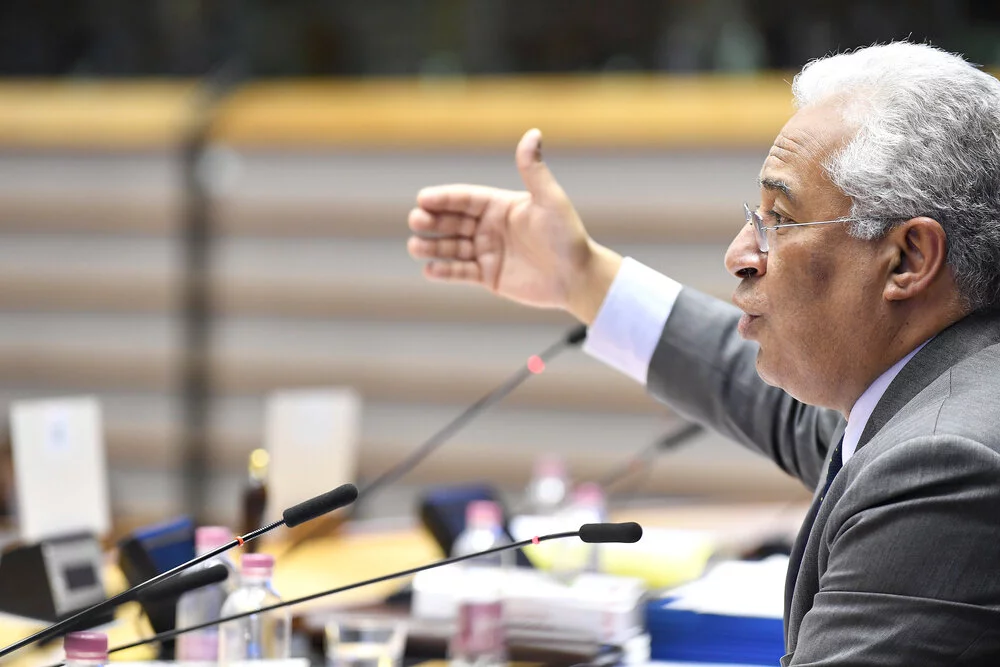
António Costa, the President of the European Council, will on 19 February address the European Committee of the Regions at the inaugural session of the assembly’s five-year mandate.
The plenary session will see the election of a new president of the European Committee of the Regions as well as debates on the EU’s regional-development policy with Raffaele Fitto, Executive Vice-President of the European Commission for Cohesion and Reforms, and on housing with Dan Jørgensen, European Commissioner for Energy and Housing. Marta Kos, the European Commissioner for Enlargement, will join the plenary session to confer the Mayor Paweł Adamowicz Award on Vitaliy Klitschko, the mayor of Kyiv.
The largest political group in the CoR, the European People’s Party (EPP), has nominated Juan Manuel Moreno Bonilla, President of the Spanish region of Andalucia, to serve as the assembly’s president. The candidate of the second-largest group, the Party of European Socialists (PES), is Kata Tüttő, a member of Budapest City Council who has previously served for five years as the Hungarian capital’s deputy mayor. Other members can still put forward their candidacy.
The election will take place on Thursday, 20 February, in the morning. The newly elected President and First Vice-President will set out their vision for the role of the assembly and of the EU’s cities and regions for the future mandate.
Over the course of the three-day plenary, members will also elect the 25 other members of the CoR’s political leadership – the bureau – as well as the chairs and deputy-chairs of the assembly’s six policy commissions and its Commission for Financial and Administrative Affairs. The commissions will convene for the first time on Friday, 21 February.
Three sets of legislative recommendations that will be discussed and adopted by returning and incoming members of the European Committee of the Regions, including on a topic that has been elevated in the EU’s new political cycle – the development of the European defence industry.
KEY MOMENTS:
- 19 February, 2.00 p.m.: Opening of the session and statement by the President of the European Committee of the Regions, Vasco Alves Cordeiro.
- 19 February, 2.30 p.m.: Debate with the President of the European Council António Costa. President Costa is a former member of the CoR.
- 20 February, 9.00 a.m.: Election of a new President and First Vice-President of the European Committee of the Regions, and elections to the CoR’s bureau.
- 20 February, 2.55 p.m.: Debate on ‘Local and regional authorities at the heart of a renewed cohesion policy’, with Raffaele Fitto, Executive Vice-President of the European Commission for Cohesion and Reforms. Vice-President Fitto, a former member of the CoR, will provide his perspective on reforms of cohesion policy – the EU’s principal investment tool and the basis for economic convergence across the Union.
- 20 February, 4.20 p.m.: Debate on ‘Local and regional authorities tackling the housing crisis’, with Dan Jørgensen, European Commissioner for Energy and Housing. European voters in 2024 identified housing as one of their principal concerns and regions and cities have been calling for a more coordinated approach across the Union to housing issues. Commissioner Jørgensen will set out how the EU intends to support the work of national and sub-national governments.
- 20 February, 5.20 p.m.: Mayor Paweł Adamowicz Award ceremony, with European Commissioner for Enlargement Marta Kos. The award was created to honour the life and legacy of the late Paweł Adamowicz, a CoR member, who was murdered in 2019 while carrying out his duties as Mayor of Gdańsk. Vitaliy Klitschko, Mayor of Kyiv, will be recognised for his work to protect human rights and develop his city’s resilience and capacity for innovation in the face of Russia’s invasion. A Palestinian, Bassam Aramin, and an Israeli, Rami Elhanan, will be honoured for their efforts to build bridges between their communities.
More information European Committee of the Regions.
Publicaciones relacionadas:
 The Broadband Platform discusses ways to improve digital cohesion in Europe
 International Women’s Day 2020: Beijing Declaration 25 years after
 EU-UK future relations: crucial to ensure EU leverage and unity
 Statement of the Foreign Affairs Council about the crisis in Idlib and the situation at the EU external borders with Turkey
 Efficient contact tracing applications to support the lifting of confinement measures
Leave a Reply