
The Foreign Affairs Council discussed the Russian aggression against Ukraine, after an intervention by Ukraine’s Minister of Foreign Affairs Dmytro Kuleba who joined EU Foreign Ministers in person. He briefed EU ministers on the latest developments on the ground, and highlighted how Ukraine is currently committed on two fronts: the military front – as Putin tries to create a new momentum in his war ahead of winter and to promote his presidential candidature – and its EU accession path.
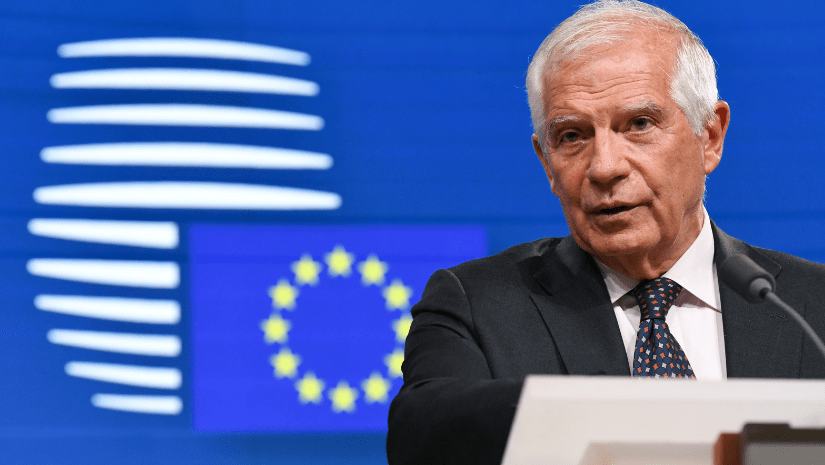
The High Representative confirmed that he had already launched the dialogue and expert consultations with Ukraine on future security commitments, underlining the need for the EU not only to provide operational military support to Ukraine, but also to work on a predictable long-term funding.
The European Council is expected to give guidance on security commitments at its December meeting.
The High Representative informed the Council about the work carried out together with the European Commission on revenues coming from Russian immobilised assets. Proposals will be submitted in the coming days to the Council.
Situation in Israel and in the region
The Foreign Affairs Council held a discussion on the situation in Israel and in the region, against the background of the resumption of hostilities and their extension to Southern Gaza.
Ministers discussed the catastrophic situation of civilians in Gaza and the unacceptable holding of hostages by terrorists.
In this context the High Representative underlined that the human suffering in Gaza constitutes an unprecedented challenge to the international community. Civilian casualties are between 60% and 70% of the overall deaths and 85% of the population – around 1.9 million people – is internally displaced.
Against this background, the EU reaffirmed that its financial support to the Palestinian Authority must continue. The High Representative reported that ministers made very clear to the Commission that the EU annual funding to the Palestinian Authority should be released swiftly, following the review of EU assistance, which found no evidence of breach of EU rule, nor of funding terrorism or fuelling hatred and antisemitism.
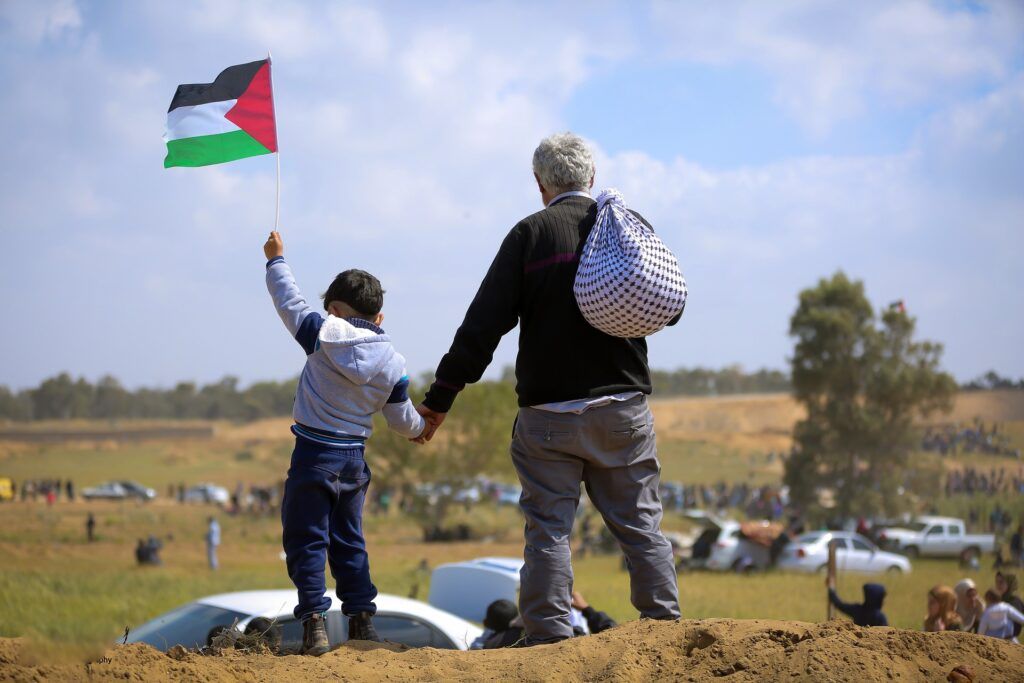
EU announces €125 million in initial humanitarian aid for Palestinians for 2024
|
The High Representative proposed to the Foreign Affairs Council a set of elements to guide EU action:
a) no forced displacement of the civilian population of Gaza, nor occupation of the strip by Israel
b) continued action against Hamas, including through restrictive measures
c) work towards imposing restrictive measures against extremist settlers in the West Bank, following the example of the United States
d) effective use of EU CSDP missions on the ground – EUPOL COPs and EUBAM Rafah.
The High Representative will work in close cooperation with the EU Special Representative for the Middle East Peace Process to submit to the Council proposals on how to pursue the political process, ensure governance in Gaza and work on the two-state solution.
The Sahel
The Foreign Affairs Council held a discussion on the Sahel where the situation is deteriorating in terms of security and governance. The military juntas are strengthening their hold on power while restricting freedoms and dismantling the democratic institutions, and getting closer to Russia.
The Council took note of the results of the Summit of the Economic Community of West African States (ECOWAS) that took place on 10 December and confirmed its continued support for its mediation efforts.
Ministers agreed on a number of guiding principles based on which the EU action in the region will be redefined and EU instruments adapted.
Furthermore the Council officially launched a new Common Security and Defence Policy (CSDP) initiative in support of the West African countries of the Gulf of Guinea (Côte d’Ivoire, Ghana, Togo and Benin) based on their demand and in agreement with them.
Council conclusions
The Council approved conclusions on civilian Common Security and Defence Policy (CSDP).
Informal breakfast with the Minister of Foreign Affairs of Armenia
EU Foreign Affairs Council held an informal exchange of views with the Minister of Foreign Affairs of Armenia Ararat Mirzoyan and discussed how to strengthen EU-Armenia relations, EU support to Armenia and the prospects for Armenia-Azerbaijan normalisation.
As a first step of this enhanced cooperation the EU will strengthen its civilian CSDP mission in Armenia, increasing its presence on the ground from 138 to 209 staff, and thereby showing the EU’s commitment to the stability of the border between Armenia and Azerbaijan.
More information: Council of the EU
Publicaciones relacionadas:
 EU leaders agreed to start accession talks with Ukraine and Moldova
 European Parliament condemns Hamas attack, calls for humanitarian truce
 Political agreement for the 7th military support tranche to Ukraine with additional € 500 M
 Foreign affairs ministers discuss situation in Israel and the region
EU coordinating 6 new humanitarian aid flights for Gaza
Foreign affairs ministers discuss situation in Israel and the region
EU coordinating 6 new humanitarian aid flights for Gaza
Leave a Reply