
Honduras is the first Latin American country to sign a VPA-FLEGT agreement with the European Union.
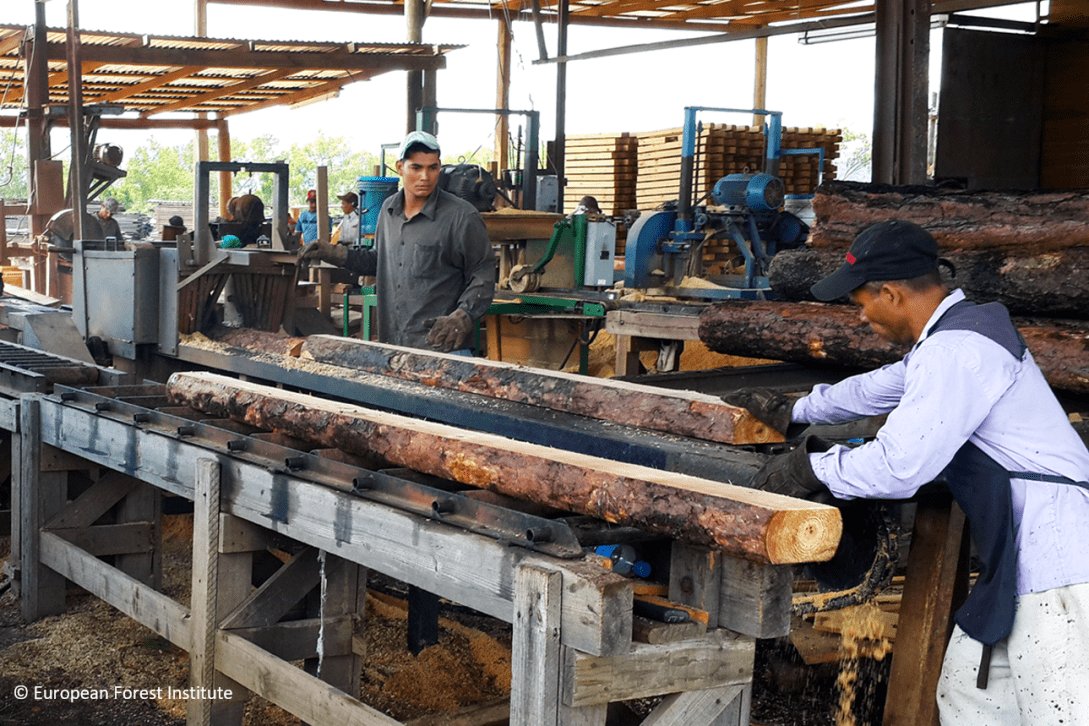
September 1st marked the entry into force of the EU–Honduras voluntary partnership agreement (VPA) on forest law enforcement, governance and trade (FLEGT). This trade agreement aims to provide a legally binding framework that ensures that all timber and relevant timber products imported from Honduras to the EU are legally sourced. It also aims to strengthen the enforcement of forest law, governance, accountability and transparency in Honduras.
Commissioner for International Partnerships Jutta Urpilainen said: This agreement is another step in our global fight against deforestation, biodiversity loss and climate change in line with the international commitments of the EU. Following already considerable efforts to address illegal logging, this agreement, stronger forest governance and consequently, increased legal timber exports, will enable Honduras to boost its economy, preserve nature, and further protect and support local communities. This will have a major impact on the daily life of the Honduran population, including the indigenous and afro-descendant peoples.
Honduras will set up a timber legality assurance system to assess that timber products for all stages of the supply chain have been produced in accordance with national legislation. The system will build on already existing national initiatives to strengthen forest governance, and when it is fully operational, Honduras will start issuing FLEGT licenses. Honduran products with this license will automatically meet the EU timber regulation requirements, and more easily meet equivalent market requirements beyond the EU.
The agreement also aims to improve community forest livelihoods, land tenure, the mitigation of climate change impacts, and the recognition of the right to free, prior and informed consent.
Study on illegal logging and timber trade flows. Legal and administrative aspects, implementation and enforcement |
Background
Almost 60% of the territory of Honduras is covered by forests, half of them tropical rainforests. From 1990 to 2020, the country lost 9% of its forest coverage due to the effects of climate-related hazards, forest fires, pest and disease, deforestation and forest degradation, and illegal logging.
The forest sector has been an important contributor to the Honduran economy, but in the past years the country’s exports have been decreasing due to stricter timber market requirements and stronger attention to the legality of harvesting and forest governance. With the VPA, Honduras can change this trend, enable the forest sector to regain its place in the international timber markets, provide rural jobs, and boost its national income.
Honduras was the first Latin American country to sign in February 2021 a VPA with the EU under the FLEGT Action Plan. It is the first-ever VPA to feature a broad and inclusive consultation process involving all stakeholders, including indigenous and afro-descendant peoples as a distinct group alongside government, civil society, and the private sector.
One of the main goals of the FLEGT Action Plan, endorsed by the Council in 2003 – is the establishment of partnerships between the EU and timber-producing countries to stop illegal logging. The first VPA to be signed was with Ghana, followed by the Republic of the Congo, Cameroon, Indonesia, the Central African Republic, Liberia and Vietnam.
Source: Delegation of the European Union to Honduras, European External Action Service
Publicaciones relacionadas:
 European Green Deal: Commission proposes to strengthen the protection of the environment through criminal law
 Complex network of European and global developments impacts sustainability
 Europe’s resilience: halting biodiversity loss and building a healthy and sustainable food system
 Air pollution affects brain development
 Car emissions: MEPs set end on gap between lab and real driving emission tests
Leave a Reply