
The European Union and the Republic of Korea held the first Digital Partnership council in Seoul, Republic of Korea. The council was co-chaired by Commissioner for the Internal Market, Thierry Breton, and by Korean Minister for Science and ICT, Mr Lee Jong-Ho.
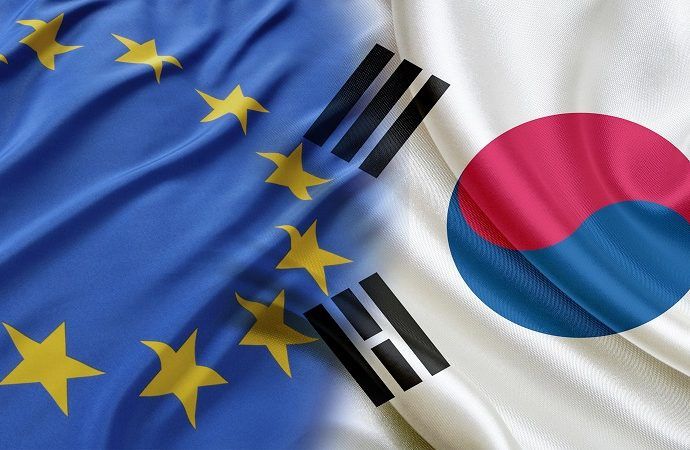
On the occasion of the ministerial meeting, the EU and the Republic of Korea agreed on key outcomes to advance cooperation for an inclusive and resilient digital transformation. Both partners agreed to work on semiconductors, High Performance Computing (HPC) and Quantum technology, 5G and beyond, platform economy, artificial intelligence (AI) and cybersecurity.
Key outcomes of the first Digital Partnership council
The EU and the Republic of Korea committed to cooperate on emerging technologies that were recently put forward in the EU economic security strategy.
The EU and the Republic of Korea have leading capabilities in the area of semiconductors. They decided to establish a ROK-EU Forum for Semiconductor Researchers that intends to promote research in complementary areas. In the area of High Performance Computing (HPC), both partners agreed to join forces to develop applications for use in cases of common interest such as extreme weather events or material science. To achieve these objectives, the EU and the Republic of Korea will seek to facilitate researchers’ access to respective HPC infrastructures. A Quantum expert group will also be established to work on standards and research.
Both partners will define a common vision for 6G, building on their leadership in 5G technologies. They will also increase cooperation around Artificial Intelligence and establish a permanent dialogue to allow a regular update from each side on initiatives for a trustworthy AI, including on large models of generative AI and support common approaches in international standards bodies related to AI.
EU and Republic of Korea launch Green Partnership |
Besides, as strategic like-minded partners, EU and Korea took steps to bolster their cooperation for an inclusive and resilient digital transformation. Both partners share the same vision for a fair and secure online environment that harmoniously balances innovation, safety, and fairness. They agreed to enhance cooperation on cybersecurity, notably through information exchange and industrial collaboration, and will continue implementing the principles of the Declaration for the Future of Internet.
Next Steps
Concerning future work, both sides agreed to exchange information on the semiconductor supply chain and to expand their cooperation in the future on secure digital connectivity infrastructure links including submarine cables; digital skills and capacity-building; and exchange of best practices on digital start-ups.
The next Digital Partnership Council is planned for early 2024, in Brussels, to review progress and make further steps to deepen the EU-Republic of Korea digital partnership.
More information: European Commission
Publicaciones relacionadas:
 MEPs back creation of an EU-wide digital purse
 Commission starts testing interoperability gateway service for national contact tracing and warning apps
 EU and Singapore step up cooperation as strategic partners and launch Digital Partnership
 EU and India form Trade and Technology Council
 Extension of deadline calls due to Covid-19
Leave a Reply