
Last June 10, the EU and the Republic of Korea signed a landmark Digital Trade Agreement (DTA) during the EU-Republic of Korea Summit held in Brussels. This DTA demonstrates the shared commitment to promote open, transparent, and rules-based trade. It is also in line with the EU’s broader commitment to establishing future-oriented digital trade rules with trusted, like-minded partners in a time of increasing global tensions and economic fragmentation.
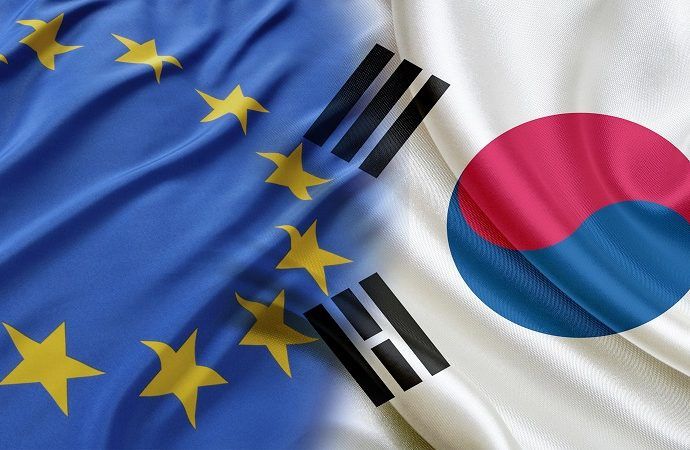
The DTA complements the EU-Republic of Korea Free Trade Agreement – in place since 2011 – with binding high-standard digital trade rules. These include, for instance, recognising the legal validity and enforceability of electronic contracts and enabling the use of electronic signature. The Agreement will bring new opportunities for consumers and businesses, notably for micro, small and medium enterprises.
The Agreement will also enhance consumer safety and confidence in the digital economy, through robust online consumer protection rules. A trusted digital environment is essential for digital trade to function and, importantly, prosper.
In addition, the agreement facilitates cross-border data flows and prohibits the mandatory transfer of source code. At the same time, both the EU and Republic of Korea will maintain their respective high levels of protection for personal data and privacy, as well as the regulatory space for pursuing legitimate policy objectives.
Next steps
Following signature of the DTA by EU Commissioner for Trade and Economic Security Maros Šefčovič and Korean Trade Minister Yeo Han-koo, the EU and Republic of Korea will follow their respective procedures for the ratification of the agreement. On the EU’s side, the ratification will require the consent of the European Parliament. The agreement will subsequently be formally concluded by the Council.
Background
Republic of Korea is a key partner of the EU in the Indo-Pacific region. In 2023 more than one third of the total trade in services between the EU and Korea was digitally delivered (€11 billion).
The Digital Trade Agreement is an important complement to the EU-Republic of Korea Free Trade Agreement, which has ensured, since its entry into force in 2011, long-established and sturdy economic ties between the European Union and Republic of Korea. It is the second stand-alone Digital Trade Agreement that the EU has signed so far and complements the EU-Republic of Korea Digital Partnership, launched in November 2022. The first standalone bilateral digital trade agreement was signed between the EU and Singapore.
The DTA sets high standards for digital trade rules in the Indo-Pacific region, and beyond. It reflects the EU’s approach for digital and data policies that puts people and their rights at the centre. It supports the development and implementation of policies required to address new challenges posed by the digital economy. Over 60% of global GDP is now considered linked to digital transactions. Businesses and consumers are increasingly buying goods and services online.
For more information: European Commission
Publicaciones relacionadas:
 EU and Canada launch negotiations for a Digital Trade Agreement
 Package agreed at EU-United Kingdom Summit
 Commission advances on the modernisation of EU-Switzerland relations
 EU and Ukraine reach agreement in principle on a modernised trade relationship
 EU and Moldova forge deeper ties at historic first Summit in Chișinău
Leave a Reply