• Skip to primary navigation
  • Skip to main content
  • Skip to primary sidebar
  • Skip to footer
  • Bluesky
  • Facebook
  • Instagram
  • Twitter
  • YouTube
CDE Almería – Centro de Documentación Europea – Universidad de Almería

CDE Almería - Centro de Documentación Europea - Universidad de Almería

Centro de Documentación Europea de la Universidad de Almería

  • HOME
  • WHAT´S ON
    • EU NEWS
    • Activities
    • EU Calls and Awards
    • Radio Program «Europe with You»
  • DOCUMENTATION
    • EU Media Collection
      • Web Space
      • MEDIATHEQUE REPOSITORY
  • Europe on the net
    • Institutions
    • EU Representation in Spain
    • European information network of Andalusia
  • ABOUT US
    • Presentation
    • Services
    • People
    • Contact
  • Spanish
  • English

EU allocates more than €26 million in additional humanitarian aid to East Africa

Inicio » EU News » Institutional Affairs » International Politics and Cooperation » EU allocates more than €26 million in additional humanitarian aid to East Africa

6 de November de 2023

The Horn of Africa and the Great Lakes regions continue to face multiple and overlapping humanitarian crises, aggravated by conflict and climate-related disasters.
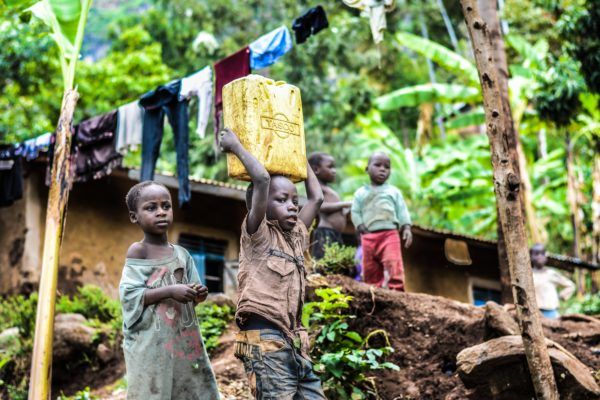
To help mitigate the consequences, the Commission has allocated additional humanitarian funding of €26.7 million to South Sudan, Uganda, Somalia and the Democratic Republic of the Congo, primarily to support newly displaced people fleeing conflicts and climatic events.

In South Sudan, where around 2,000 people arrive daily from neighbouring Sudan, the additional funding of €6.4 million will support humanitarian response in the border areas. Out of the new arrivals – refugees and South Sudanese returnees – 70% are women and children, and 1 in 5 are malnourished.

Food security in Horn of Africa: EU steps up support to drought-affected countries

In Somalia, around 2 million people will require emergency humanitarian assistance as a result of conflict, floods and cholera outbreak before the end of 2023. The additional €5.5 million will support the overall humanitarian response in the country.

€1.5 million will strengthen food security in Uganda, for a refugee population of more than 1.5 million – with over 220,000 new arrivals since January 2022.

In the Democratic Republic of the Congo, €13.3 million will support the scale-up of the humanitarian response amidst escalating violence and a deteriorating humanitarian situation.

The humanitarian consequences of the conflict in Sudan are enormous, not only for the country itself, but for its neighbours and the region. Hundreds of thousands are seeking safety across borders – including in South Sudan, which was already grappling with a severe humanitarian crisis prior to April 2023. In the East Africa and Great Lakes region, food insecurity – due to conflict or climate-induced disasters – is rising. The emergency humanitarian aid allocated by the EU aims at alleviating the suffering of the most vulnerable, in close cooperation with our humanitarian partners on the ground. – Janez Lenarčič, Commissioner for Crisis Management – 06/11/2023

Source: Press release – European Commission

Publicaciones relacionadas:

Coronavirus: EU Humanitarian Airlift to Iraq and New Funding BEuropean Union supports families affected by floods in La Mojana EU steps up humanitarian aid in Colombia by €24 million Conclusions adopted by the European Council on October 20 and 21, 2009. centroamérica mexicoEuropean Commission announces €11 million in humanitarian aid to Central America and Mexico

EU News,  Institutional Affairs,  International Politics and Cooperation climate-related disasters,  Democratic Republic of Congo.,  East Africa,  Food security,  Horn of Africa,  Humanitarian Aid,  regional conflict,  Somalia,  South Sudan,  Uganda

“This is a space for debate. All comments, for or against publication, that are respectful and do not contain expressions that are discriminatory, defamatory or contrary to current legislation will be published”.

Reader Interactions

Leave a Reply Cancel reply

Your email address will not be published. Required fields are marked *

This site uses Akismet to reduce spam. Learn how your comment data is processed.

Primary Sidebar

Footer

  • CDE Almería
  • Biblioteca Nicolás Salmerón – Universidad de Almería
  • Planta: 1ª, Despacho: 1.05.0B.
  • Ctra. Sacramento s/n. Almería (Spain)
  • Teléfono: (+34) 950 015266

HOME
NEWS
DOCUMENTATION
EUROPE ON THE NET
ABOUT US

  • LEGAL NOTICE
  • PRIVACY POLICY
  • COOKIE POLICY
  • ACCESSIBILITY
  • SITEMAP

Copyright © 2026 CDE Almería · Creative Commons LicenseThis work is licensed under a Creative Commons Attribution-NonCommercial 4.0 International License.

<p>El Centro de Documentación Europea de la Universidad de Almería utiliza cookies propias y de terceros para facilitar al usuario la navegación en su página Web y el acceso a los distintos contenidos alojados en la misma. Asimismo, se utilizan cookies analíticas de terceros para medir la interacción de los usuarios con el sitio Web. Pinche el siguiente enlace si desea información sobre el uso de cookies y como deshabilitarlas. </p>

Politica de privacidad

El Centro de Documentación Europea de la Universidad de Almería utiliza cookies propias y de terceros para facilitar al usuario la navegación en su página Web y el acceso a los distintos contenidos alojados en la misma. Asimismo, se utilizan cookies analíticas de terceros para medir la interacción de los usuarios con el sitio Web. Pinche el siguiente enlace si desea información sobre el uso de cookies y como deshabilitarlas. <a href="/politica-de-cookies" rel="noopener" target="_blank">Más información</a>

Cookies estrictamente necesarias

Las cookies estrictamente necesarias tiene que activarse siempre para que podamos guardar tus preferencias de ajustes de cookies.

Básicamente la web no funcionara bien si no las activas.

Estas cookies son:

  • Comprobación de inicio de sesión.
  • Cookies de seguridad.
  • Aceptación/rechazo previo de cookies.
Cookies de terceros

Esta web utiliza Google Analytics, Google Tag Manager y Yandex Metrika para recopilar información anónima tal como el número de visitantes del sitio, o las páginas más populares.

Dejar estas cookies activas nos permite mejorar nuestra web.

Política de cookies

Pinche el siguiente enlace si desea información sobre el uso de cookies y como deshabilitarlas. Más información