• Skip to primary navigation
  • Skip to main content
  • Skip to primary sidebar
  • Skip to footer
  • Bluesky
  • Facebook
  • Instagram
  • Twitter
  • YouTube
CDE Almería – Centro de Documentación Europea – Universidad de Almería

CDE Almería - Centro de Documentación Europea - Universidad de Almería

Centro de Documentación Europea de la Universidad de Almería

  • HOME
  • WHAT´S ON
    • EU NEWS
    • Activities
    • EU Calls and Awards
    • Radio Program «Europe with You»
  • DOCUMENTATION
    • EU Media Collection
      • Web Space
      • MEDIATHEQUE REPOSITORY
  • Europe on the net
    • Institutions
    • EU Representation in Spain
    • European information network of Andalusia
  • ABOUT US
    • Presentation
    • Services
    • People
    • Contact
  • Spanish
  • English

Enhancing EU resilience: A step forward to identify critical entities for key sectors

Inicio » EU News » Enhancing EU resilience: A step forward to identify critical entities for key sectors

28 de July de 2023

The Commission has adopted a list of essential services in the eleven sectors covered by the Critical Entities Resilience Directive (CER), which entered into force on 16 January 2023. Critical entities provide essential services in upholding key societal functions, supporting the economy, ensuring public health and safety, and preserving the environment.
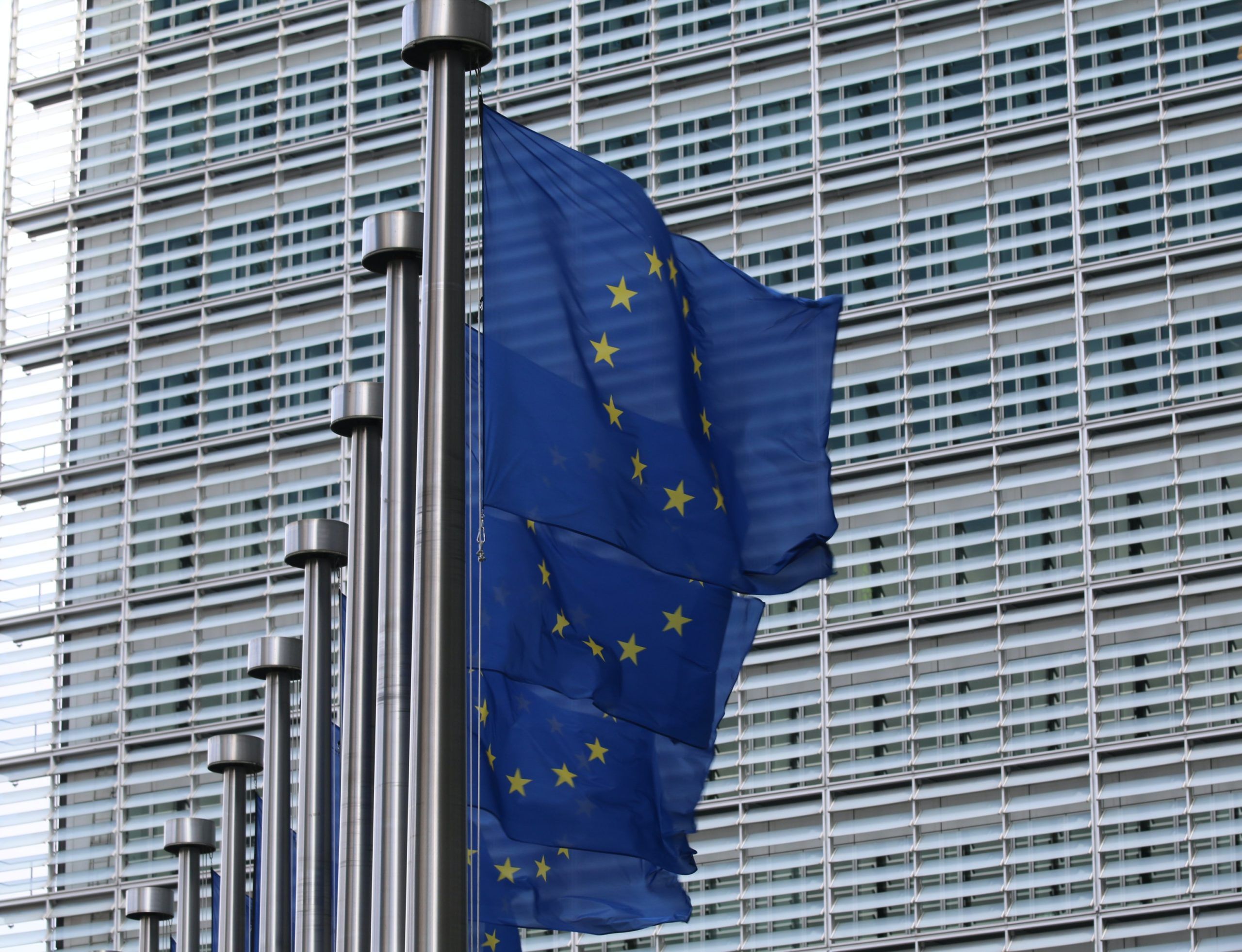
bandera de europa

Member States will have to identify the critical entities for the sectors set out in the CER Directive by 17 July 2026. They will use this list of essential services to carry out risk assessments and to then identify the critical entities. Once identified, the critical entities will have to take measures to enhance their resilience.

List of essential services

The Commission has proposed a non-exhaustive list of services that are crucial for the maintenance of vital societal functions, economic activities, public health and safety, or the environment, for the eleven sectors and subsectors covered by the Directive, as follows:

  1. Energy sector, with services such as the electricity production and energy storage;
  2. Transport sector, with services such as management and maintenance of airport or railways infrastructure;
  3. Banking sector, with essential services such as taking deposits and lending;
  4. Financial market infrastructure sector, with services such as the operation of trading venue and of clearing systems;
  5. Health sector, with distribution, manufacturing, provision of healthcare, and medical services;
  6. Drinking water sector, with drinking water supply and drinking water distribution;
  7. Waste water sector, with waste water collection, treatment and disposal services;
  8. Digital infrastructure sector, with services such as the provision and operation of internet exchange point service, domain name system, top-level domain, cloud computing and data centre;
  9. Public administration sector services;
  10. Space sector, with the operation of ground-based infrastructure services;
  11. Production, processing and distribution of food sector, with the large-scale industrial food production and processing, food supply chain services and food wholesale distribution services.

Next steps

The delegated act adopted by the Commission will enter into force only if no objection has been expressed either by the European Parliament or by the Council within a period of two months of its notification or if, before the expiry of that period, the European Parliament and the Council have both informed the Commission that they will not object. That period can be extended by two months at the initiative of the European Parliament or of the Council.

Background

In 2020 the Commission proposed a significant upgrade to the EU’s rules on the resilience of critical entities and the security of network and information systems. On 16 January, two key directives on critical and digital infrastructure entered into force with the purpose of strengthening the EU’s resilience against online and offline threats, from cyberattacks to crime, risks to public health or natural disasters – the Directive on the resilience of critical entities (CER Directive) and the Directive on measures for a high common level of cybersecurity across the Union (NIS 2 Directive), which entered into force on 16 January 2023.

More Information: European Commission

Publicaciones relacionadas:

bandera de europaEurobarometer: Europeans show more optimism regarding economy premio nobel medallaMeet the 2021 Nobel Prize Laureates Primer informe anual sobre la situación del Estado de Derecho en la UEEuropean Commission to issue EU SURE bonds of up to €100 billion as social bonds Ursula Von der LeyenAn EU approach to enhance economic security cambio climáticoEU proposes comprehensive new on Climate-Security nexus

Agriculture, Livestock Farming and Fisheries,  Defence & Security,  Education and Culture,  Environmental Affairs,  EU News,  Institutional Affairs,  Market,  Social Affairs EU resilience,  European Commission,  key sectors

“This is a space for debate. All comments, for or against publication, that are respectful and do not contain expressions that are discriminatory, defamatory or contrary to current legislation will be published”.

Reader Interactions

Leave a Reply Cancel reply

Your email address will not be published. Required fields are marked *

This site uses Akismet to reduce spam. Learn how your comment data is processed.

Primary Sidebar

Footer

  • CDE Almería
  • Biblioteca Nicolás Salmerón – Universidad de Almería
  • Planta: 1ª, Despacho: 1.05.0B.
  • Ctra. Sacramento s/n. Almería (Spain)
  • Teléfono: (+34) 950 015266

HOME
NEWS
DOCUMENTATION
EUROPE ON THE NET
ABOUT US

  • LEGAL NOTICE
  • PRIVACY POLICY
  • COOKIE POLICY
  • ACCESSIBILITY
  • SITEMAP

Copyright © 2026 CDE Almería · Creative Commons LicenseThis work is licensed under a Creative Commons Attribution-NonCommercial 4.0 International License.

<p>El Centro de Documentación Europea de la Universidad de Almería utiliza cookies propias y de terceros para facilitar al usuario la navegación en su página Web y el acceso a los distintos contenidos alojados en la misma. Asimismo, se utilizan cookies analíticas de terceros para medir la interacción de los usuarios con el sitio Web. Pinche el siguiente enlace si desea información sobre el uso de cookies y como deshabilitarlas. </p>

Politica de privacidad

El Centro de Documentación Europea de la Universidad de Almería utiliza cookies propias y de terceros para facilitar al usuario la navegación en su página Web y el acceso a los distintos contenidos alojados en la misma. Asimismo, se utilizan cookies analíticas de terceros para medir la interacción de los usuarios con el sitio Web. Pinche el siguiente enlace si desea información sobre el uso de cookies y como deshabilitarlas. <a href="/politica-de-cookies" rel="noopener" target="_blank">Más información</a>

Cookies estrictamente necesarias

Las cookies estrictamente necesarias tiene que activarse siempre para que podamos guardar tus preferencias de ajustes de cookies.

Básicamente la web no funcionara bien si no las activas.

Estas cookies son:

  • Comprobación de inicio de sesión.
  • Cookies de seguridad.
  • Aceptación/rechazo previo de cookies.
Cookies de terceros

Esta web utiliza Google Analytics, Google Tag Manager y Yandex Metrika para recopilar información anónima tal como el número de visitantes del sitio, o las páginas más populares.

Dejar estas cookies activas nos permite mejorar nuestra web.

Política de cookies

Pinche el siguiente enlace si desea información sobre el uso de cookies y como deshabilitarlas. Más información