
The European Commission’sJoint Research Centrerecently published its latest edition of the Atlas of Migration. This reference work provides an overview of global migration trends and constitutes a solid knowledge base for policymakers, stakeholders, businesses and the general public, compiling information from numerous official sources, such as Eurostat, UN agencies, the World Bank and the International Labour Organisation.
TheMigration Atlas 2025illustrates the latest data on migration by country, continent and region, with a particular focus on the EU. This edition delves deeper into the analysis of the links between conflict and displacement in the context of escalating humanitarian crises and forced displacement driven by violence and systemic instability.
Key figures and global trends
In mid-2024, the number of international migrants worldwide was estimated at 304 million. This figure has grown steadily since the beginning of the century, representing more than double (75%) the global population (34%).
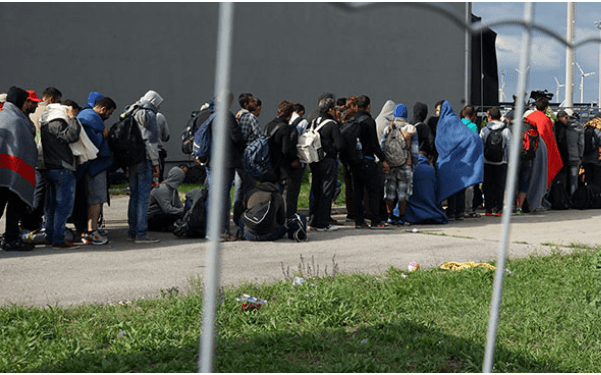
Over the past twenty years, the global number of refugees has nearly tripled. In mid-2012, there were 15.3 million, and by mid-2025, there were more than 42.5 million.
Around 18% of these refugees are in the EU: 7.7 million, including approximately 4.4 million displaced persons from Ukraine. Around 22% are displaced in Africa (9.2 million) and twice as many in Asia (around 15 million). However, in the last five years, the EU has experienced the largest relative increase in the number of refugees, with a 200% increase compared to 54% in America and approximately 30% in Africa and Asia.
Migration to the EU
The number of new residence permits issued by EU Member States in 2024 fell from 3.8 million in 2023 to 3.5 million, interrupting continuous growth that lasted for more than ten years and was only halted during the COVID-19 pandemic. Around 60% of new residence permits issued in 2024 were for work and family reasons: 32% and 27%, respectively.
In 2024, Spain, Germany and Poland together issued almost half (1.6 million) of the first residence permits to non-EU citizens in the EU (3.5 million). In relative terms, Malta and Cyprus issued the highest number of new permits, with 52 and 42 new permits per thousand inhabitants, respectively, compared to an EU average of eight.
In 2024, first-time asylum applications in the EU fell by 13%, from over 1 million in 2023 to around 913,000 in 2024. The downward trend continued in 2025, as the total number of first-time applications in the first eight months of 2025 (approximately 449,000) is much lower than in the same period in 2024 (around 613,000).
Conflict-related displacement
The number of forcibly displaced persons has increased dramatically over the past 15 years. According to the United Nations, more than 51 million people were in need of international protection at the end of 2024. The number of armed conflicts has also increased, exceeding 180 in 2024.
Large-scale displacement situations globally, including in Myanmar, Palestine, Syria, Sudan, Ukraine and Venezuela, differ in multiple dimensions: from the evolution of displacement patterns over time to the proportion of internal and external displacement in relation to the population or to each other.
A better understanding of the dynamics and circumstances that trigger large-scale displacement is essential to support situation awareness, early warning, anticipation and preparedness actions, and can underpin EU policy responses in various areas.
More information: European Commission.
Publicaciones relacionadas:
 Commission adds €3 billion for the Pact on Migration and Ukrainian refugees.
 Commission launches first Annual Migration Management Cycle under the Pact on Migration and Asylum
 Commission proposes a Resettlement and Humanitarian Admission Plan for 2026-2027
 Europeans see strong benefits from EU membership and call for a more assertive Union
 European Parliament extends exemption to EU privacy rules that makes it easier to detect child sexual abuse content on the internet until 2026
Leave a Reply