
On Wednesday, Parliament gave the green light to two agreements that pave the way for strengthening political relations and expanding trade between the European Union and Mexico.
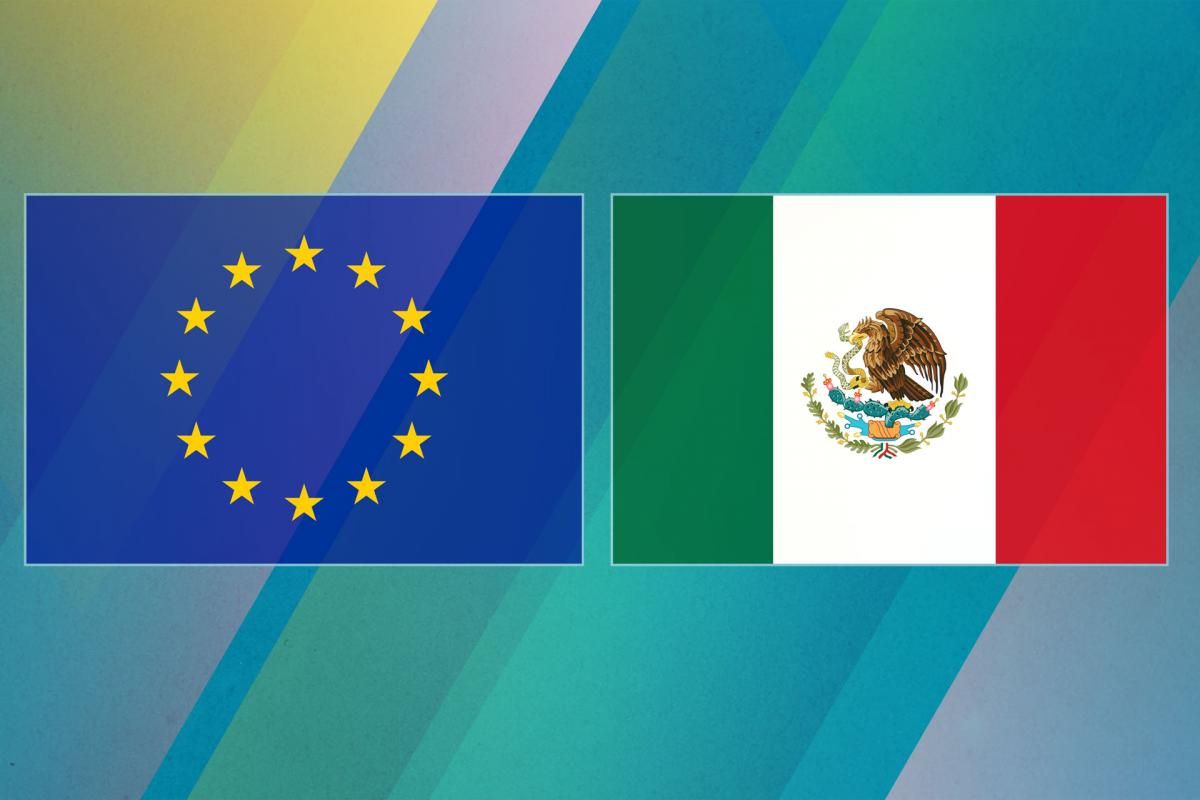
The Modernised Comprehensive Agreement between the EU and Mexico will replace the current framework, which has been in force since 2000, with the aim of promoting new business opportunities and strengthening areas such as sustainable development and the fight against corruption. The Parliament approved the Modernised Comprehensive Agreement by 479 votes in favour, 119 against and 65 abstentions.
The interim trade agreement, approved by 474 votes in favour, 131 against and 60 abstentions, covers the trade provisions of the Comprehensive Agreement that fall within the exclusive competence of the European Union, such as customs duties, the protection of innovations and traditional European products, and access to Mexican public procurement tenders. It will enable the new trade provisions to be applied sooner, without having to wait for all EU Member States to ratify the Modernised Comprehensive Agreement.
The interim trade agreement will expire and be replaced by the Modernised Comprehensive Agreement once the latter enters into full force.
Tariff reductions and protection of European agri-food products
In the resolution accompanying the Modernised Comprehensive Agreement, adopted by 388 votes in favour, 161 against and 120 abstentions, MEPs highlight that, under the most ambitious scenario, total EU exports of goods and services could increase by 75 per cent, whilst European businesses could save up to 100 million euros a year in customs duties. They also point out that the agreement removes virtually all remaining tariffs, benefiting European farmers and agri-food exporters in particular, as Mexican tariffs on products such as cheese and pork currently stand at up to 45 per cent.
MEPs also welcome the fact that 568 EU geographical indications for traditional agri-food products will be protected in Mexico, making it illegal to market imitations of European regional food and drink specialities.
Rule of law, democratic governance and human rights
In an increasingly fragmented geopolitical context, MEPs consider the strategic partnership between the EU and Mexico to be essential for upholding the rules-based international order and promoting multilateralism.
They emphasise that the Modernised Comprehensive Agreement includes a binding commitment to democratic principles, the rule of law and fundamental human rights. The agreement strengthens institutional dialogue on the protection of civil society actors, journalists and human rights defenders. It also strengthens cooperation to reinforce judicial independence, promote good governance and increase transparency. Furthermore, it sets out joint actions to combat corruption, money laundering and organised crime.
Public procurement
MEPs state that the agreement provides European companies with unprecedented access to public procurement markets in 14 Mexican states, as well as to a greater number of public contracts. They call for efforts to be stepped up to facilitate European companies’ access to public procurement markets in all Mexican states and welcome the fact that contracting authorities may take environmental and social criteria into account throughout the procurement process.
Statements
You can read the statements by the Chair of the Committee on Foreign Affairs, David McAllister (EPP, Germany); the Chair of the Committee on International Trade, Bernd Lange (S&D, Germany); and the rapporteurs for the Committee on Foreign Affairs, Javi López (S&D, Spain), and the Committee on International Trade, Borja Giménez Larraz (EPP, Spain).
Press conference
Following the vote, Javi López and Borja Giménez Larraz will hold a press conference at 14:00 CET.
Next steps
Following the European Parliament’s approval, the Council can formally conclude the Modernised Comprehensive Agreement. The text must then be ratified by all EU Member States and by Mexico before it enters into force in full. The Council must also approve the interim trade agreement, which will enter into force on the first day of the second month following the date on which the European Union and Mexico have notified each other of the completion of their internal procedures.
Background
Mexico is the European Union’s second-largest trading partner in Latin America. In turn, the EU is Mexico’s third-largest trading partner and its second-largest export market, behind only the United States.
Trade relations between the two parties are currently governed by the trade pillar of the Economic Partnership, Political Coordination and Cooperation Agreement between the European Union and Mexico (known as the ‘Comprehensive Agreement’).
On 22 May 2026, the European Union and Mexico signed both the Modernised Global Agreement (MGA) and the Interim Trade Agreement (iTA).
More information: European Parliament.
Publicaciones relacionadas:
 The EU is studying the investment needed to improve trade routes between Europe and Central Asia via the Caucasus.
 Parliament approves the EU’s renewed trade instrument for development
 European Parliament gives the green light to the trade agreement with the United States
 Negotiations on the future EU-Mexico trade agreement
Provisional agreement reached to make international trade easier
Negotiations on the future EU-Mexico trade agreement
Provisional agreement reached to make international trade easier
Leave a Reply