
The Council formally adopted the first EU-wide list of safe countries of origin, as well as a revision of the concept of safe third country. These two legislative acts aim to better harmonise the EU’s migration and asylum framework and increase its efficiency.
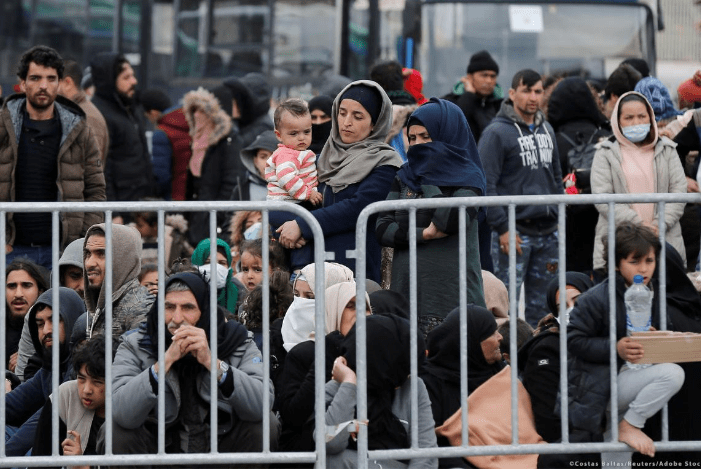
The EU-wide list of safe countries of origin will help Member States to process applications for international protection from nationals of those countries more efficiently.
The revised concept of safe third country will give Member States more flexibility to reject asylum applications that are considered inadmissible.
“This first common EU list of safe countries of origin and the revised concept of safe country will help to increase the speed and consistency of asylum procedures. They contribute to the realisation of the Pact on Migration and Asylum and are a concrete step towards its implementation. We are determined to deliver on it in a timely manner.”
Nicholas A. Ioannides, Deputy Minister of Migration and International Protection of the Republic of Cyprus
The measures are important for the implementation of the EU Pact on Migration and Asylum, the EU programme that aims to manage migration more effectively and establish a common asylum system to ensure efficient and more uniform procedures and a fair distribution of the burden among Member States.
EU list of safe countries of origin
According to the list, the following countries are considered safe countries of origin in the EU: Bangladesh, Colombia, Egypt, India, Kosovo, Morocco and Tunisia.
EU candidate countries are also listed as safe countries of origin, unless:
- there is a situation of international or internal armed conflict in the candidate country;
- the EU has adopted restrictive measures against the candidate country in relation to fundamental rights and freedoms; or
- the percentage of positive decisions by Member State authorities on applications for international protection from citizens of the candidate country is higher than 20%.
The common EU list will ensure greater consistency among Member States when assessing applications from countries designated as safe countries of origin and will help to speed up the processing of applications.
Member States may continue to have their own national lists with other third countries they consider safe.
Concept of a safe third country
The concept of safe third country allows EU Member States to reject an asylum application as inadmissible (without examining its merits) when the applicant could have applied for and, if eligible, obtained international protection in a non-EU country that is considered safe for that person. The legislation expands and clarifies the grounds for declaring applications inadmissible on the basis of this concept.
Member States may choose to apply the concept in three cases:
- if there is a connection between the asylum seeker and the safe third country; however, the connection will no longer be a mandatory criterion for applying the safe third country concept;
- if the applicant has transited through the safe country before arriving in the EU;
- or if there is an agreement or arrangement with a safe country.
Next steps
With the exception of certain rules whose application may be brought forward, the EU list of safe countries of origin and the amendments to the concept of safe third countries will apply from 12 June 2026, at the same time as the rest of the Pact on Migration and Asylum.
Context
The Asylum Procedures Regulation provides for the creation of an EU list of safe countries of origin. At the request of many Member States, the Commission proposed such a list before the Pact entered into force.
The concept of safe third countries is already part of the EU’s asylum and migration rules. Under a review clause in the Pact, the Commission was asked to re-examine the current rules with a view to achieving greater harmonisation across the EU.
The term “Kosovo” is understood without prejudice to positions on its status and is in line with United Nations Security Council Resolution 1244 (1999) and the Opinion of the International Court of Justice on Kosovo’s declaration of independence.
More information: European Council.
Publicaciones relacionadas:
 The Commission adopts the Visa Strategy and a new recommendation to attract talent for innovation
 Council gives green light to single work and residence permit for third-country nationals
 Public consultation on the European Research Area Act concludes with strong stakeholder participation
 Commission proposes Action Plan to address challenges
The Council and the European Parliament reach breakthrough in reform of EU asylum and migration system
Commission proposes Action Plan to address challenges
The Council and the European Parliament reach breakthrough in reform of EU asylum and migration system
Leave a Reply