
The provisional application of the Agreement on International Trade (AIT) will create new opportunities, boosting exports of industrial goods, services and agri-food products to Argentina, Brazil, Paraguay and Uruguay. It will eliminate or drastically reduce tariffs on key exports such as cars and pharmaceuticals, and provides for an initial tariff reduction for most agri-food products, such as wine, spirits and olive oil, thereby creating new export opportunities for EU farmers.

Benefits for exporters of goods and services.
Exporters of goods will benefit from an immediate reduction in tariffs from 1 May, when the first tariff cuts come into effect.
Furthermore, EU companies can begin bidding for public and government contracts in Mercosur on an equal footing with local companies. The agreement removes most of the preferences granted to domestic companies in government contracts, at both federal and state levels, thereby simplifying and increasing the transparency of tendering procedures.
Service exporters will also benefit immediately from new opportunities, thanks to the implementation of clear licensing rules, non-discriminatory procedures and the free movement of workers.
1 May also marks the start of the removal of non-tariff and technical barriers to trade, with the application of rules on conformity assessment, labelling and compliance with international standards. This will ensure that EU companies can operate more easily and quickly, reaping immediate commercial benefits.
Benefits for farmers and agri-food exporters
The provisional application of the agreement creates a better and more competitive environment for EU agri-food producers to export their products to the four Mercosur countries.
The EU is the world’s largest exporter of food and drink, and its high-quality products are internationally recognised. The agreement is expected to generate a 50% increase in EU agri-food exports to the Mercosur region. From 1 May, the EU will have access to the first tranche of tariff quotas, whilst the first round of tariff reductions for most agri-food products will immediately create new export opportunities for EU farmers.
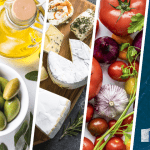
Last but not least, Mercosur countries will begin protecting 344 EU Geographical Indications (GIs) from 1 May, prohibiting imitations as well as misleading terms, symbols, flags or images. Only authentic products, such as Roquefort cheese produced in Roquefort, France, will be allowed to bear the designation of origin.
The agreement also provides for an unprecedented set of measures to protect sensitive agri-food sectors and ensure a level playing field and reciprocity, including carefully calibrated tariff quotas, a robust safeguard mechanism and strengthened controls.
Background
Provisional application follows the European Council’s decision in January to authorise the Commission to provisionally apply the agreement from the moment of the first ratification by a Mercosur country. On27 February, the President of the European Commission, Ursula von der Leyen, announced that the EU would proceed with provisional application. This application allows the EU to benefit immediately from the agreement, whilst ensuring full respect for the democratic process and sensitivities.
More information: European Commission.
Publicaciones relacionadas:
 The Commission welcomes the historic agreement to reform the EU Customs Union
 Substantial agreement reached on the EU–Philippines trade agreement
 EU exports under Free Trade Agreements surpass €1 trillion
 New import surveillance tool to help EU prevent harmful trade diversion
 Competitive EU agri-food sector achieves high level of diversification in trade
Leave a Reply