
The Representation of the European Commission in Spain has presented the main results of the Autumn Standard Eurobarometer (EB 104) for Spain, conducted between October and November 2025. The survey reflects the views of Spanish citizens on the European Union and the main national and European challenges.
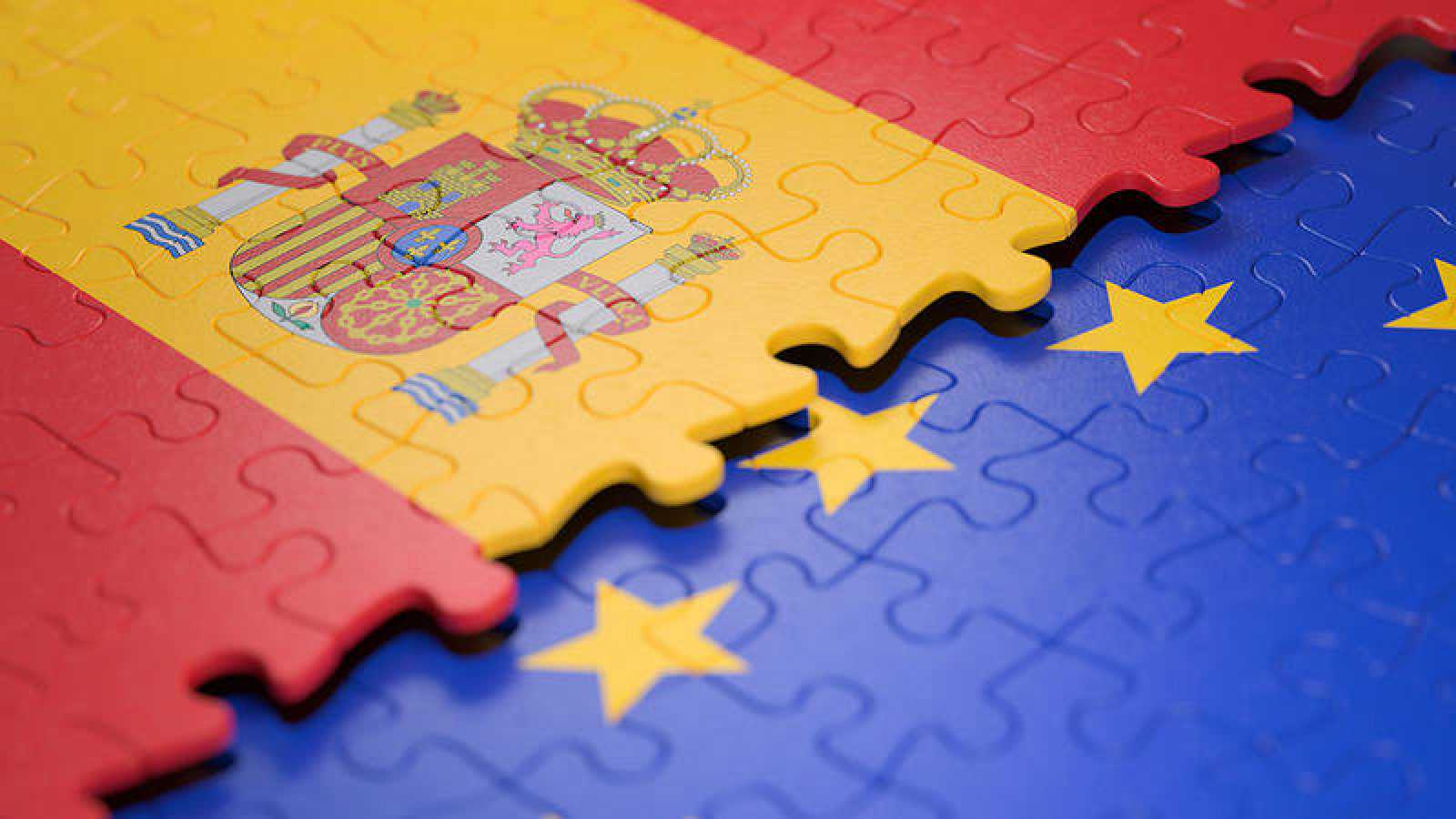
The survey shows that 74% of Spaniards believe that the country can face the future better inside the EU than outside it, a figure that improves by five percentage points compared to the spring 2025 survey (EB 103). This is six points above the European average (68%). In addition, 77% believe that more decisions should be taken at EU level. This is much higher than the figure for European citizens as a whole ( 59%).
During the presentation, Daniel Calleja, Director of the European Commission Representation in Spain, highlighted a particularly symbolic fact: “In less than a month it will be 40 years since Spain joined the EU. The fact that almost three out of four citizens consider that our country faces its future better within the Union than outside demonstrates the positive impact of these four decades of shared history”
Calleja also stressed that this confidence is not rhetorical, but measurable: “The Eurobarometer we are presenting today reveals that 77% of Spaniards believe that more decisions should be taken at European level. This is a clear sign that citizens are committed to a stronger and more integrated Europe.”
Commenting on satisfaction with democracy, Carlos Moreno Blanco, Secretary General for the European Union stressed that “this Eurobarometer comes at a symbolic moment, when we celebrate 40 years of Spain’s accession to the then European Communities: four decades that have transformed our country and consolidated our place in Europe.
The data confirm that citizens share this vision: three out of four Spaniards believe that Spain faces its future better within the EU than outside, and an overwhelming majority are in favour of more decisions being taken at the European level. These results reflect a strong Europeanism and a clear expectation that the EU will continue to provide solutions to the big challenges facing citizens, Member States and the Union – from the international situation to housing, from the cost of living to the resilience of our democratic systems”
Main concerns at national level: Housing and inflation
While the vast majority of Spaniards are satisfied with their daily lives: 9 out of 10 (91 %), housing is the main concern at the national level, followed by inflation and immigration and the economic situation:
- Housing: For 36% of Spaniards, the main problem facing the country is housing, with a significant growth of ten percentage points compared to the previous EB Standard 103 Spring 2025 wave. In comparison, this problem is not as worrying for European citizens as a whole (13 %).
- Rising prices: The second concern is inflation, with 23% of mentions, which is little changed compared to the EB 103 wave (24%). For Europeans as a whole, inflation is the main concern, with 31% of mentions.
- Immigration and the economic situation: Spanish citizens cite immigration and the economic situation as their third concern, in this case at the same level, both cited by 17% (15% and 19%, respectively, for Europeans as a whole).
The destination of the European budget for Spaniards
- For most Spaniards, the EU budget should be spent on employment, social services and public health (63%), two points above the spring 2025 EB 103 wave. This would also be the first choice for Europeans, although it is mentioned by a smaller proportion (42%).
- In second place, Spaniards indicate housing (52%), seven points higher than in the EB 103 wave measurement.
- In third place, 46 % of Spaniards point to education, training, youth, culture and media (46 %), three points above the EB 103 wave, compared to 36 % of Europeans.
The measures for Spaniards where the EU could have a positive impact in the short term:
- First, creation of more job opportunities (36 %), although this falls by four points compared to the spring 2025 EB 103 wave. This would be the second most important measure in this respect for Europeans as a whole (26%).
- In second place, ensuring peace and stability, cited by 35% of Spaniards, a stable figure compared to EB wave 103 (only one point lower). In comparison, this would be the top measure for Europeans as a whole, with 42% of mentions.
- In third place, improving access to housing in the EU (34%), three points above the EB 103 wave. In contrast, this measure is not as relevant for Europeans as a whole (16%).
Main problems the EU needs to address:
- With the same level of mentions, (25 %), both the invasion of Ukraine by Russia, as well as the international situation, is the main problem the EU is facing according to Spanish citizens. However, both concerns lose relevance compared to the spring wave of 2025, with four and five percentage points less respectively. For Europeans as a whole, the main concern is Russia’s invasion of Ukraine (26 %), while the international situation is the third concern for them, with 19 % of mentions.
- Immigration is the second most important problem for Spaniards (21 %), with an increase of six percentage points compared to EB 103.
- For 17% of Spanish citizens, the conflict in the Middle East is the third most important problem facing the EU today, while only 9% of Europeans as a whole mention this issue.
Satisfaction with democracy and trust in the media
Regarding satisfaction with democracy, 51% of Spaniards feel satisfied with the functioning of the country’s democracy. This figure is similar to that of the previous survey EB 103 in spring with 50 %.
On trust in the media:
- traditional media are preferred when it comes to trusting the information they receive. Radio, with 59%, is the most trusted, followed by the press (47%) and television (43%).
- On the other hand, digital media, such as websites and social networks, generate lower levels of trust: websites are mentioned as trustworthy by 36% of Spanish citizens, while social networks barely reach 22% (a drop of four points compared to the previous year’s figure).
About the Eurobarometer
The Eurobarometer is the European Union’s tool for measuring the state of public opinion in EU countries, candidate countries and some of our neighbouring countries.
More information: Representation in Spain of the European Commission
Publicaciones relacionadas:
 Eurobarometer: Europeans back social economy and call for more support
 Europeans continue to view democracy and economic power as EU’s main strengths, according to latest Flash Eurobarometer survey
 Eurobarometer: record trust in EU and strong support for euro and defence policy.
 Citizens call for greater protection from the European Union
 Eurobarometer: Digital skills need equal priority in schools alongside reading, maths, and science
Leave a Reply