• Skip to primary navigation
  • Skip to main content
  • Skip to primary sidebar
  • Skip to footer
  • Bluesky
  • Facebook
  • Instagram
  • Twitter
  • YouTube
CDE Almería – Centro de Documentación Europea – Universidad de Almería

CDE Almería - Centro de Documentación Europea - Universidad de Almería

Centro de Documentación Europea de la Universidad de Almería

  • HOME
  • WHAT´S ON
    • EU NEWS
    • Activities
    • EU Calls and Awards
    • Radio Program «Europe with You»
  • DOCUMENTATION
    • EU Media Collection
      • Web Space
      • MEDIATHEQUE REPOSITORY
  • Europe on the net
    • Institutions
    • EU Representation in Spain
    • European information network of Andalusia
  • ABOUT US
    • Presentation
    • Services
    • People
    • Contact
  • Spanish
  • English

Do you know what the European Tree of the Year is? Vote for your favorite!

Inicio » Noticias UE » Cultura y Educación » Culture » Do you know what the European Tree of the Year is? Vote for your favorite!

25 de February de 2022

About the contest

The European Tree of the Year contest was established in 2011 as a continuation of the popular Tree of the Year contest, which has long been organized in the Czech Republic by the Alliance Foundation (Nadace Partnerství). At the end of the national competitions, the winners participate in the European competition.

Every year, online voting for the European Tree of the Year is organized by the Environmental Partnership Association (EPA), of which the Czech Environmental Partnership Foundation is a member.

The aim of the European Tree of the Year is to highlight interesting old trees as an important natural and cultural heritage that we should cherish and protect. In the European Tree of the Year, unlike other competitions, it is not the beauty, size or age that is important, but the history and connection to people. We are looking for trees that have become an integral part of the wider community.

The first European vote was organized in 2011. Since then, the number of countries involved in the contest has grown from 5 to 15. We are now helping to establish the contest in countries outside Europe.

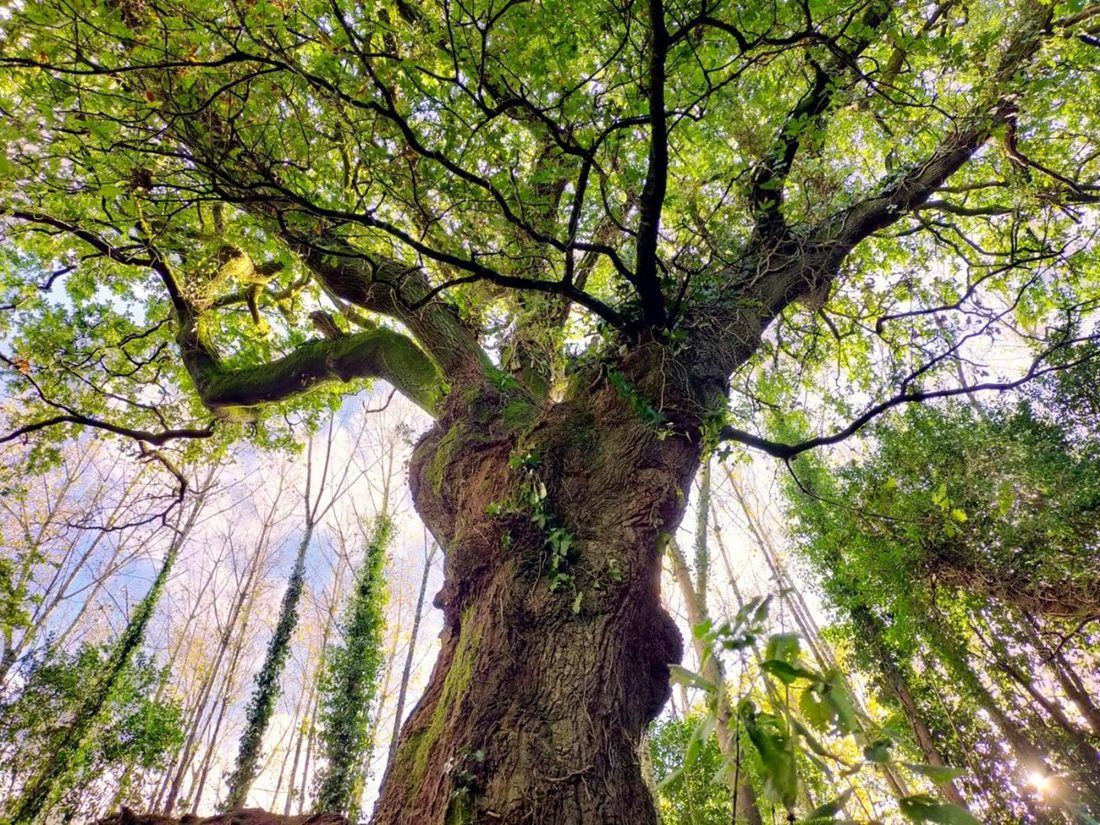
Spanish Candidate: The Tree of Freedom

This historic carballo was born with the Enlightenment. It witnessed in 1856 the Democratic Banquet of Conxo, a revolutionary act that claimed the ideals of the new Europe: Liberty, Equality and Fraternity. It was defended by Rosalía de Castro in a pioneering ecological denunciation in Spain. And the forest that houses it, at the foot of the Portuguese Pilgrimage Route, is today a botanical treasure chest, opened to the public in 2018 (with a great popular festival) after remaining inaccessible for more than a century.

¡Vote!

Publicaciones relacionadas:

Children’s story book released to help children and young people cope with COVID-19 Support to the EU cultural sector during the COVID-19 pandemic 101 Arrested And 19,000 Stolen Artefacts Recovered In International Crackdown On Art Trafficking Establishing a culture of research integrity with innovative educational methods Promoting Europe’s cultural heritage and diversity



Culture,  Education and Culture,  EU News Contest,  EU,  Tree

“This is a space for debate. All comments, for or against publication, that are respectful and do not contain expressions that are discriminatory, defamatory or contrary to current legislation will be published”.

Reader Interactions

Leave a Reply Cancel reply

Your email address will not be published. Required fields are marked *

This site uses Akismet to reduce spam. Learn how your comment data is processed.

Primary Sidebar

Footer

  • CDE Almería
  • Biblioteca Nicolás Salmerón – Universidad de Almería
  • Planta: 1ª, Despacho: 1.05.0B.
  • Ctra. Sacramento s/n. Almería (Spain)
  • Teléfono: (+34) 950 015266

HOME
NEWS
DOCUMENTATION
EUROPE ON THE NET
ABOUT US

  • LEGAL NOTICE
  • PRIVACY POLICY
  • COOKIE POLICY
  • ACCESSIBILITY
  • SITEMAP

Copyright © 2026 CDE Almería · Creative Commons LicenseThis work is licensed under a Creative Commons Attribution-NonCommercial 4.0 International License.

<p>El Centro de Documentación Europea de la Universidad de Almería utiliza cookies propias y de terceros para facilitar al usuario la navegación en su página Web y el acceso a los distintos contenidos alojados en la misma. Asimismo, se utilizan cookies analíticas de terceros para medir la interacción de los usuarios con el sitio Web. Pinche el siguiente enlace si desea información sobre el uso de cookies y como deshabilitarlas. </p>

Politica de privacidad

El Centro de Documentación Europea de la Universidad de Almería utiliza cookies propias y de terceros para facilitar al usuario la navegación en su página Web y el acceso a los distintos contenidos alojados en la misma. Asimismo, se utilizan cookies analíticas de terceros para medir la interacción de los usuarios con el sitio Web. Pinche el siguiente enlace si desea información sobre el uso de cookies y como deshabilitarlas. <a href="/politica-de-cookies" rel="noopener" target="_blank">Más información</a>

Cookies estrictamente necesarias

Las cookies estrictamente necesarias tiene que activarse siempre para que podamos guardar tus preferencias de ajustes de cookies.

Básicamente la web no funcionara bien si no las activas.

Estas cookies son:

  • Comprobación de inicio de sesión.
  • Cookies de seguridad.
  • Aceptación/rechazo previo de cookies.
Cookies de terceros

Esta web utiliza Google Analytics, Google Tag Manager y Yandex Metrika para recopilar información anónima tal como el número de visitantes del sitio, o las páginas más populares.

Dejar estas cookies activas nos permite mejorar nuestra web.

Política de cookies

Pinche el siguiente enlace si desea información sobre el uso de cookies y como deshabilitarlas. Más información