• Skip to primary navigation
  • Skip to main content
  • Skip to primary sidebar
  • Skip to footer
  • Bluesky
  • Facebook
  • Instagram
  • Twitter
  • YouTube
CDE Almería – Centro de Documentación Europea – Universidad de Almería

CDE Almería - Centro de Documentación Europea - Universidad de Almería

Centro de Documentación Europea de la Universidad de Almería

  • HOME
  • WHAT´S ON
    • EU NEWS
    • Activities
    • EU Calls and Awards
    • Radio Program «Europe with You»
  • DOCUMENTATION
    • EU Media Collection
      • Web Space
      • MEDIATHEQUE REPOSITORY
  • Europe on the net
    • Institutions
    • EU Representation in Spain
    • European information network of Andalusia
  • ABOUT US
    • Presentation
    • Services
    • People
    • Contact
  • Spanish
  • English

Council greenlights partial negotiating mandate for strategic technologies

Inicio » Noticias UE » Investigación e Innovación » Technology » Council greenlights partial negotiating mandate for strategic technologies

15 de January de 2024

Member states’ EU ambassadors agreed on the Council’s partial negotiating mandate on the proposed Strategic Technologies for Europe Platform (STEP).
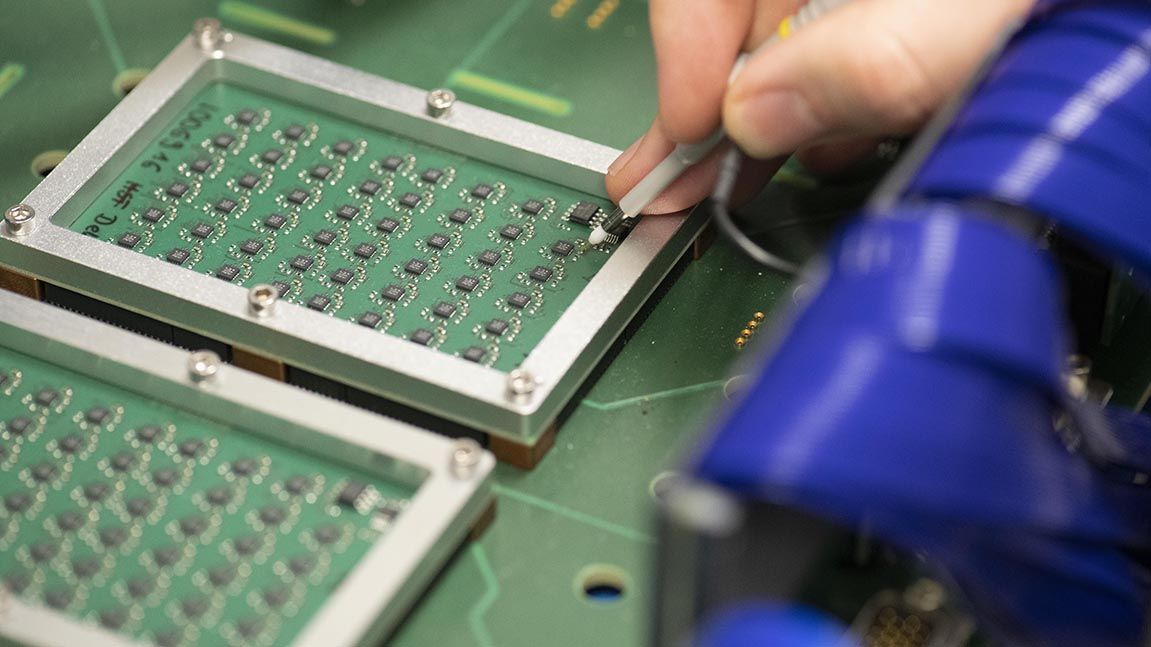
An employee of Bosch tests sensors on a testing conductor board in the development section of the sensor production site of German car supplier Bosch in Reutlingen, southern Germany, on February 11, 2022.

The platform will support investments in critical technologies in the fields of digital and deep tech, clean tech and biotech in the EU. It will reduce the EU’s strategic dependencies and enhance its long-term competitiveness.

The Council’s negotiating mandate is partial, because its position on additional financial support for STEP will depend on the final outcome of the horizontal negotiations on the mid-term revision of the multiannual financial framework for 2021-2027.

Main elements of the Council’s mandate

In its mandate, the Council clarifies the objectives and scope of STEP, and confirms its support for the proposed sovereignty seal and sovereignty portal for STEP-related investments.

To facilitate the use of available funding and create synergies among funding instruments for investments in critical technologies, the Council supports identifying resources which would support STEP objectives within a range of existing EU programmes and funds, including the InvestEU, Horizon Europe, European Defence Fund, Innovation Fund, Recovery and Resilience Facility and cohesion policy funds.

The Council also agrees to the Commission proposal to apply a 100 % co-financing rate and a 30 % pre-financing for STEP priorities under the 2021–2027 programming period for cohesion policy funds, as well as to the proposal to enable investments in large enterprises.

Considering the continued budgetary pressure in member states, the Council has also agreed to apply retroactively a 100 % co-financing rate to the 2014-2020 cohesion programmes in the final accounting year, whilst extending the deadline for submitting payment applications by 12 months.
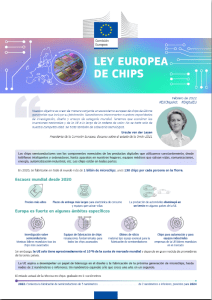
Ley Europea de Chips

In addition, the Council has included in its mandate some other provisions to reduce administrative burden for the member states and facilitate the reprogramming of funds towards STEP objectives.

Next steps

The partial mandate agreed today will serve as a basis for negotiations on STEP with the European Parliament. Once an agreement with the Parliament is reached, the regulation will need to be formally adopted by the Council and the European Parliament.

Background

The Commission proposed the creation of a Strategic Technologies for Europe Platform on 20 June 2023 as part of its package of proposals related to the mid-term revision of the multiannual financial framework 2021-2027.

More information: Council of the EU

Publicaciones relacionadas:

medio ambiente /economía circularNew plan to support green and digital transition and EU recovery European Commission lays the groundwork to make gigabit connectivity available to all citizens and businesses across the EU innovaciónEU companies doubled R&D investment growth in 2022 How do Europeans feel about self-driving cars? inteligencia artificialCouncil approves Data Governance Act


EU News,  Research and Innovation,  Technology European Council,  European Union,  STEP,  Unión Europea,  Unión Europea

“This is a space for debate. All comments, for or against publication, that are respectful and do not contain expressions that are discriminatory, defamatory or contrary to current legislation will be published”.

Reader Interactions

Leave a Reply Cancel reply

Your email address will not be published. Required fields are marked *

This site uses Akismet to reduce spam. Learn how your comment data is processed.

Primary Sidebar

Footer

  • CDE Almería
  • Biblioteca Nicolás Salmerón – Universidad de Almería
  • Planta: 1ª, Despacho: 1.05.0B.
  • Ctra. Sacramento s/n. Almería (Spain)
  • Teléfono: (+34) 950 015266

HOME
NEWS
DOCUMENTATION
EUROPE ON THE NET
ABOUT US

  • LEGAL NOTICE
  • PRIVACY POLICY
  • COOKIE POLICY
  • ACCESSIBILITY
  • SITEMAP

Copyright © 2026 CDE Almería · Creative Commons LicenseThis work is licensed under a Creative Commons Attribution-NonCommercial 4.0 International License.

<p>El Centro de Documentación Europea de la Universidad de Almería utiliza cookies propias y de terceros para facilitar al usuario la navegación en su página Web y el acceso a los distintos contenidos alojados en la misma. Asimismo, se utilizan cookies analíticas de terceros para medir la interacción de los usuarios con el sitio Web. Pinche el siguiente enlace si desea información sobre el uso de cookies y como deshabilitarlas. </p>

Politica de privacidad

El Centro de Documentación Europea de la Universidad de Almería utiliza cookies propias y de terceros para facilitar al usuario la navegación en su página Web y el acceso a los distintos contenidos alojados en la misma. Asimismo, se utilizan cookies analíticas de terceros para medir la interacción de los usuarios con el sitio Web. Pinche el siguiente enlace si desea información sobre el uso de cookies y como deshabilitarlas. <a href="/politica-de-cookies" rel="noopener" target="_blank">Más información</a>

Cookies estrictamente necesarias

Las cookies estrictamente necesarias tiene que activarse siempre para que podamos guardar tus preferencias de ajustes de cookies.

Básicamente la web no funcionara bien si no las activas.

Estas cookies son:

  • Comprobación de inicio de sesión.
  • Cookies de seguridad.
  • Aceptación/rechazo previo de cookies.
Cookies de terceros

Esta web utiliza Google Analytics, Google Tag Manager y Yandex Metrika para recopilar información anónima tal como el número de visitantes del sitio, o las páginas más populares.

Dejar estas cookies activas nos permite mejorar nuestra web.

Política de cookies

Pinche el siguiente enlace si desea información sobre el uso de cookies y como deshabilitarlas. Más información