
The return of the wolf to EU regions where it has been absent for a long time is increasingly leading to conflicts with local farming and hunting communities, especially where measures to prevent attacks on livestock are not widely implemented.
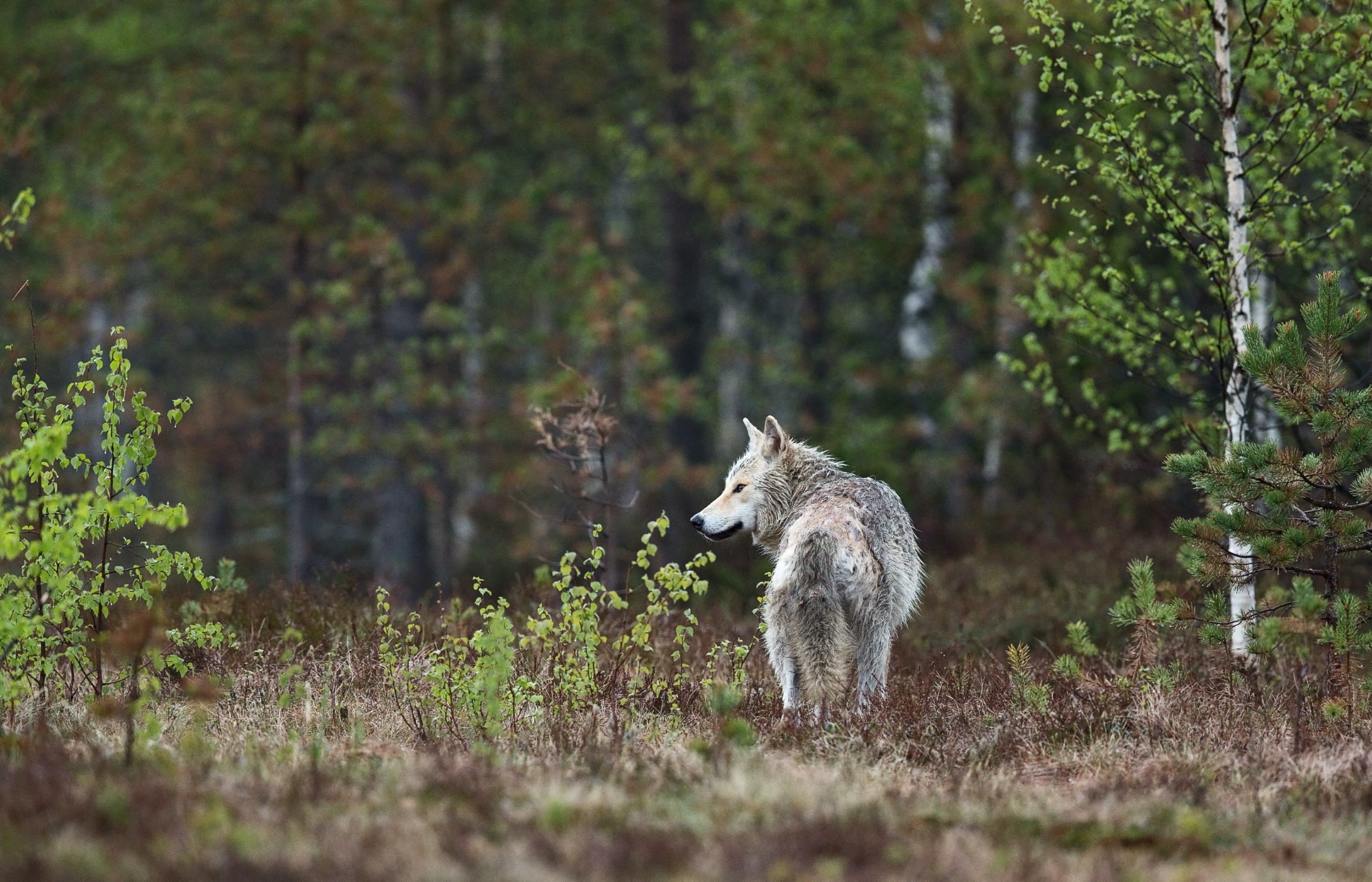
President von der Leyen said: “The concentration of wolf packs in some European regions has become a real danger for livestock and potentially also for humans. I urge local and national authorities to take action where necessary. Indeed, current EU legislation already enables them to do so.”
The Commission is launching a new phase in its work on addressing the challenges related to the return of wolves.
The Commission is today inviting local communities, scientists and all interested parties to submit up-to-date data by 22 September 2023 on wolf population and their impacts. They are invited to use the following email address (active from this afternoon): EC-WOLF-DATA-COLLECTION@ec.europa.eu.
On the basis of the data collected, the Commission will decide on a proposal to modify, where appropriate, the status of protection of the wolf within the EU and to update the legal framework, to introduce, where necessary, further flexibility, in the light of the evolution of this species.
This will complement current possibilities under the EU legislation for local and national authorities to take action where necessary, and significant EU funding provided for these measures, as detailed in a joint letter sent by Commissioner Sinkevičius and Commissioner Wojciechowski to all EU Ministers for Agriculture and Environment in November 2021. Some measures have proven effective in preventing or significantly reducing predation risks when properly implemented and tailored to the specific context in which they are applied.
Commission acts to accelerate phasing out of animal testing |
The Commission’s review of scientific data on the wolf in the EU forms an integral part of the in-depth analysis the Commission is conducting in response to the European Parliament Resolution of 24 November 2022. In April 2023, the Commission started collecting data from expert groups and key stakeholders, as well as the data reported by national authorities under the existing EU and international legislation. However, this data still does not provide a full picture sufficient for the Commission to design further actions and the Commission is today broadening this consultation.
Background
The Commission is aware that the return of the wolf to EU regions where it has been absent for a long time may lead to conflicts with local farming and hunting communities, especially where measures to prevent attacks on livestock are not widely implemented.
As a native species, the wolf is an integral element of Europe’s natural heritage and plays an important role in its ecosystems. Under the Habitats Directive, most wolf populations in Europe enjoy strict protection, with derogation possibilities. This regime implements the requirements under the international Bern Convention on the Conservation of European Wildlife and Natural Habitats, to which the EU and Member States are parties.
EU and regional platforms on coexistence allow stakeholders to promote ways to minimize conflicts between human interests and the presence of large carnivore species, by exchanging knowledge and by working together in an open-ended, constructive and mutually respectful way. Furthermore, under the Habitats Directive, Member States may, under certain conditions, derogate from the prohibitions of the strict protection regime, including in order to protect socio-economic interests.
More information: European Commission
Publicaciones relacionadas:
 Doubling the renovation rate to cut emissions, boost recovery and reduce energy poverty
 Building urban resilience to climate change
 Spain wins the Environment category of the LIFE Awards
 Accelerated rates of change in Earth’s vegetation go back thousands of years
 First LIFE Call for Proposals 2021 opened
Leave a Reply