
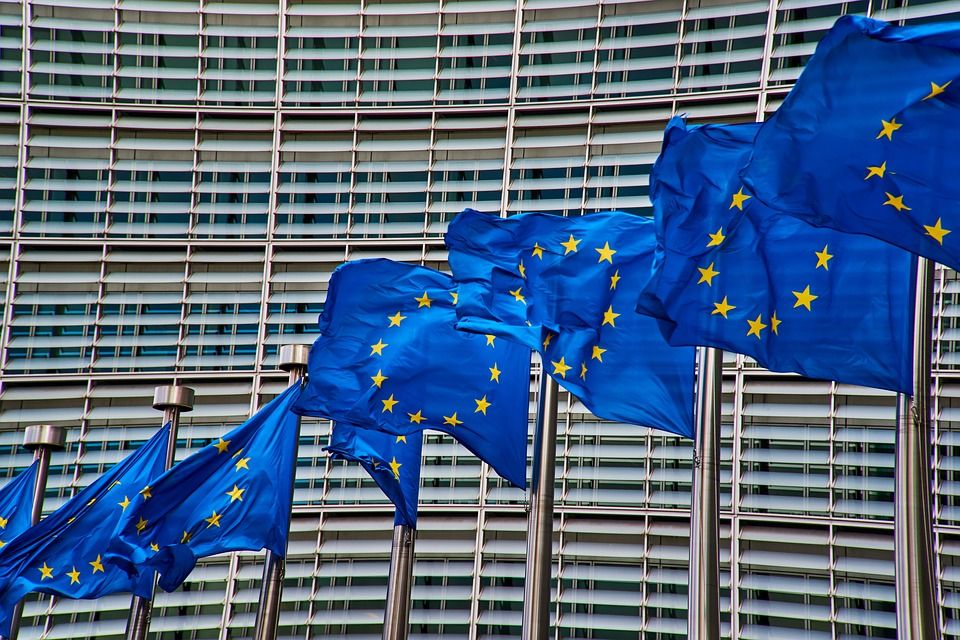
The European Commission adopted on November 26th the 2026 European Semester Autumn Package, setting out economic and employment policy priorities to boost competitiveness. In an increasingly challenging geopolitical environment, the Commission calls for coordinated action to strengthen productivity, innovation and investment, in line with the Competitiveness Compass. The Autumn Package launches the 2026 European Semester cycle, which will improve its analytical basis, strengthen dialogue between Member States and stakeholders, and reinforce the focus on implementation.
The 2026 European Semester Spring Package will provide policy recommendations to tackle the main country-specific challenges identified in the Country Reports, building on a comprehensive set of 2025 country-specific recommendations.
This package builds on the Autumn 2025 Economic Forecast, which shows that the EU economy remains resilient with moderate growth mostly driven by robust domestic demand and investment, a solid labour market and easing inflation. At the same time, the EU is confronted with several strategic vulnerabilities and continues to face structural challenges, including low productivity, demographic pressures, and increasing demands on public finances linked to defence and the transition to a decarbonised and digital economy. Strengthening competitiveness and maintaining sound public finances will therefore be essential to unlock Europe’s growth potential and safeguard stability.
The Semester is reinforced with a new EU27 recommendation on human capital in view of the urgent need to increase productivity, boost talent and develop a future proof labour market.
Assessment of Member States’ Compliance with the EU fiscal framework
Under this Semester Package, the Commission has assessed all Member States’ compliance with the EU fiscal framework and provided guidance to ensure that their fiscal policy in 2026 is aligned with the relevant Council Recommendations: either those endorsing Member States’ medium-term plans, or, for Member States under an excessive deficit procedure (EDP), recommendations aiming to bring an end to the EDP.
The Commission’s assessment focuses on the growth of net expenditure, the single operational indicator in the reformed economic governance framework. For the 16 Member States for which the Council has activated the national escape clause, the assessment takes into account the flexibility for increases in defence expenditure.
In particular, the Commission adopted Opinions on the Draft Budgetary Plans (DBPs) for 2026 of 17 euro area Member States:
- 12 DBPs are assessed compliant and Member States are therefore invited to continue implementing fiscal policies in 2026 as planned: Cyprus, Estonia, Finland, France, Germany, Greece, Ireland, Italy, Latvia, Luxembourg, Portugal, Slovakia.
- 3 DBPs are assessed at risk of non-compliance and Member States are therefore invited to take the necessary measures within their national budgetary process to ensure that fiscal policy in 2026 is in line with the Council Recommendation: Croatia, Lithuania and Slovenia.
- 2 DBPs are assessed at risk of material non-compliance and Member States are therefore invited to take the necessary measures within the national budgetary process to ensure that fiscal policy in 2026 is in line with the Council Recommendation: Malta and the Netherlands.
The Commission has also assessed the fiscal developments and prospects in the other Member States.
- 7 Member States are assessed as compliant: Austria, Belgium, Czechia, Denmark, Sweden, Poland, and Romania.
- 3 Member States are assessed as being at risk of non-compliance: Bulgaria, Hungary, and Spain.
Developments on Excessive Deficit Procedures
For the nine Member States in excessive deficit procedure, Austria, Belgium, France, Hungary, Italy, Malta, Poland, Romania, and Slovakia, the procedure is held in abeyance. In concrete terms, this means that no further procedural steps are taken at this stage but that the ongoing procedure remains open (i.e. the deficit has not been durably brought below 3% of GDP), and the Member States remain bound by the respective Council recommendation. The Commission will reassess the situation next spring, when outturn data for 2025 becomes available.
The Commission also prepared a Report under Article 126(3) of the Treaty on the Functioning of the EU to assess compliance with the Treaty’s deficit criterion for two Member States, Germany and Finland. In light of the assessment contained in the report, opening of an excessive deficit procedure is warranted for Finland. Therefore, after taking into account the opinion of the Economic and Financial Committee, the Commission will consider proposing to the Council to open an excessive deficit procedure for Finland and propose to the Council a recommendation to put an end to the excessive deficit situation.
Recommendation for euro area economic policy for 2026
This recommendation presents tailored policy advice to euro area Member States on topics that affect the functioning of the euro area as a whole. This year, the focus of the recommendation is on policy action to boost productivity and strengthen economic security, while maintaining the sustainability of public finances.
More specifically, the recommendation calls on euro area Member States to:
- Safeguard fiscal sustainability by respecting the net expenditure paths recommended by the Council, including, where applicable, the flexibility granted for defence spending. This would result in an overall neutral fiscal stance in 2026 for the euro area. Members States are also recommended to reprioritise budgets to accommodate the necessary spending on strategic investments.
- Address defence industry bottlenecks and promote joint procurement.
- Complete the implementation of their Recovery and Resilience Plans by 31 August 2026, ensuring full absorption of EU funds.
- Strengthen labour markets by boosting skills, improving education outcomes, increasing participation, supporting job quality and addressing poverty and housing affordability, while ensuring wage growth remains aligned with productivity.
- Promote investments in innovation and strategic sectors, as well as enhance the functioning of the Single Market through regulatory simplification and the removal of barriers, in order to boost efficiency and scale.
- Take steps to develop a European Savings and Investment Union to mobilise capital, advance the creation of a digital euro, strengthen the international role of the currency, and monitor macro-financial stability risks.
Recommendation on Human capital
For the first time, the Commission proposed a Council recommendation on human capital.
The new Recommendation is addressed to all 27 Member States and calls for urgent actions to tackle human capital related structural challenges that can damage our competitiveness.
The recommendation therefore calls on Member States to prioritise education and skilling needed in strategic sectors for the EU economy, from clean transition, circular economy and industrial decarbonisation, health and biotech, agriculture and bioeconomy, to defence industry and space. It thus calls for stronger science, technology, engineering and mathematics (STEM) programmes.
It calls to reverse the negative trend in basic skills. This is essential to grow a future labour force with strong foundations to work and be trained in new tech and competitive industries.
Investment is a joint responsibility for businesses and public authorities alike. The Recommendation calls for public and private mobilization of resources to be invested in people. This is to the benefit of society, business, and people alike.
It finally calls for the importance of good quality, timely data and analysis that keeps pace with the evolution of economy and is able to anticipate emerging professions of the future so that our policies can answer the need of today and tomorrow rather than the ones of yesterday.
Alert Mechanism Report
The Alert Mechanism Report (AMR) serves as the EU’s annual screening tool to facilitate an early identification of potential macroeconomic imbalances that may affect the economy of individual Member States, the euro area, or the EU as a whole. It identifies Member States which require in-depth reviews to assess whether they are affected by imbalances requiring policy action. The AMR is the starting point of the annual macroeconomic imbalance procedure (MIP) cycle.
This year’s AMR calls for in-depth reviews to be prepared for the seven Member States already identified in the previous annual cycle as experiencing imbalances: Greece, Hungary, Italy, the Netherlands, Slovakia, and Sweden, as well as for Romania, which was assessed as having excessive imbalances in 2025.
The reviews will take place in the first half of 2026, and the Commission’s decisions on imbalances will be presented as part of the European Semester Spring Package.
European Macroeconomic Report
The newly introduced European Macroeconomic Report in this Semester cycle underpins both the Euro Area Recommendation and the Alert Mechanism Report. It provides an overview of the euro area and EU economies in a rapidly evolving global environment, analysing key risks and opportunities. Key areas of focus include productivity challenges, vulnerabilities within the EU, and actions to strengthen Europe’s long-term competitiveness by boosting innovation, deepening the Single Market and mobilising private investment.
The report also examines Europe’s high saving rate in the context of fragmented capital markets and the potential benefits of a Savings and Investment Union to channel capital more effectively within the Union. In addition, it analyses the macroeconomic impact of higher defence spending, and looks at the impact of different types of defence expenditure, with a focus on domestic investment and R&D. The report further explores ways to reinforce Europe’s industrial capacity, such as through coordinated procurement.
Post-programme surveillance
The Commission published post-programme surveillance reports for Ireland, Greece, Spain, Cyprus and Portugal, assessing their economic, fiscal and financial situation with a focus on their repayment capacity following their financial assistance programmes. The reports conclude that all five Member States retain the capacity to service their debt.
Proposal for a Joint Employment Report
The Commission’s proposal for a Joint Employment Report (JER) shows that labour markets remain robust overall. However, several structural weaknesses pose a risk to the EU’s global competitiveness and to social cohesion. This includes labour productivity, which shows a slow growth, and considerable labour and skills shortages.
The Joint Employment report includes the first-stage country analysis of the Social Convergence Framework, based on the Social Scoreboard. The analysis identifies risks to upward social convergence in nine Member States that are identified for a deeper analysis in spring 2026: Bulgaria, Greece, Spain, Italy, Lithuania, Lativa, Luxembourg, Romania, and Finland.
Next steps
The Eurogroup and the Council will now discuss the documents presented in the European Semester Autumn Package, with the view to endorsing the guidance offered.
The Commission will engage in constructive dialogue with the European Parliament on the contents of this package, as well as on each subsequent steps in the European Semester cycle.
More information: European Commission
Publicaciones relacionadas:
 European Commission signs agreement with ICO to invest €150 million in sustainable infrastructure in Spain
 Savings and investments union: better financial opportunities for EU citizens and businesses
 Make Europe your base for startup success
Commission requests information for European savings and investment accounts scheme
Make Europe your base for startup success
Commission requests information for European savings and investment accounts scheme
 An ambitious budget for a stronger Europe: 2028-2034
Leave a Reply