
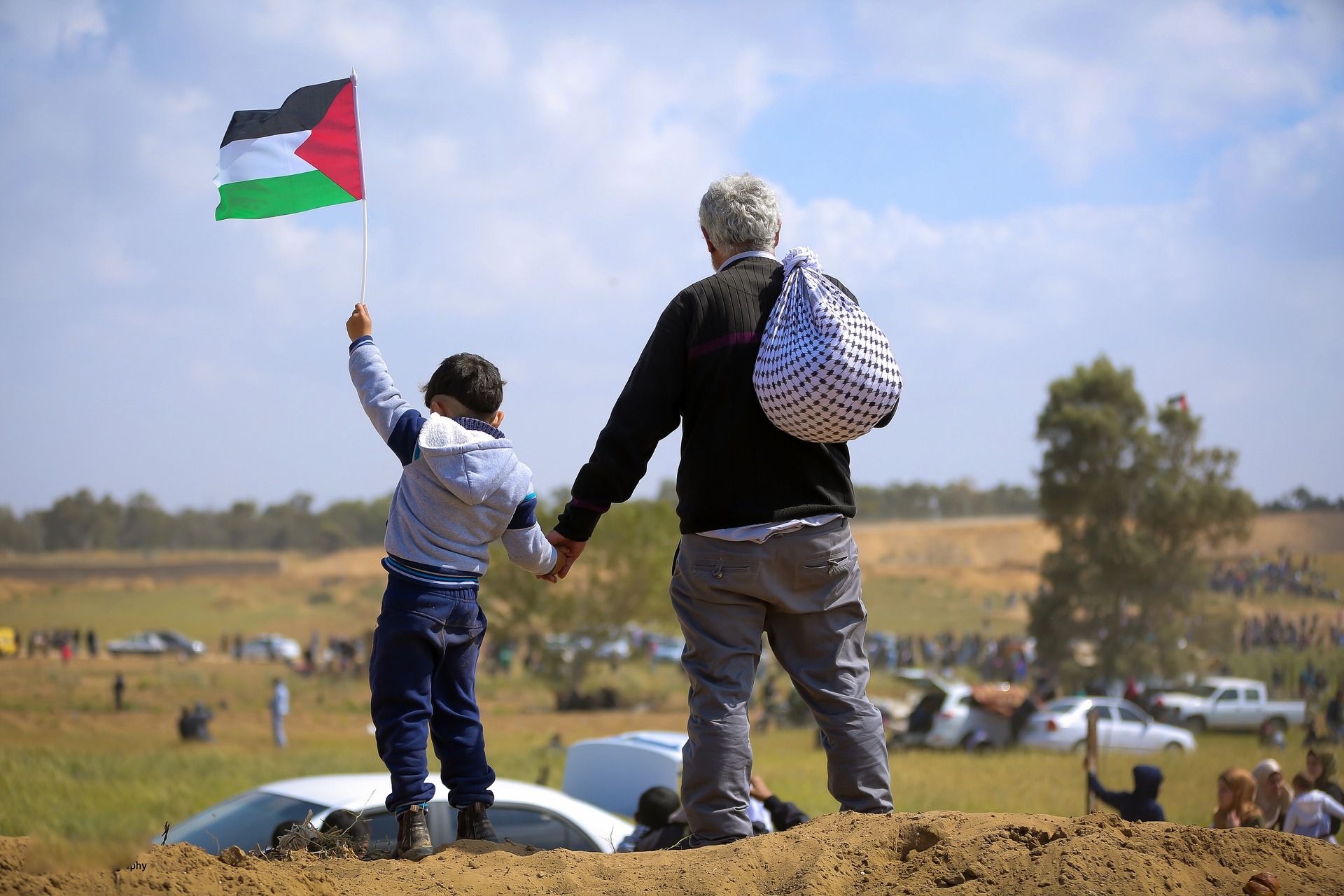
On April 14, at the occasion of the first ever High-Level Political Dialogue between the European Union and the Palestinian Authority, the Commission is proposing a multiannual Comprehensive Support Programme worth up to €1.6 billion, to foster Palestinian recovery and resilience.
With this Programme, the EU reiterates its unwavering support for the Palestinian people and its commitment to a lasting and sustainable peace based on the Two-State solution.
It will cover the period from 2025 to 2027 and is structured around three pillars:
- Support to services for Palestinian people
Around €620 million in grants of direct assistance to the budget of the Palestinian Authority (PA). This is an increase compared to previous years. It will support the PA to address the most urgent needs of the public administration. The funds will also help the Palestinian Authority to continue delivering services to its people.
Most of EU disbursements will be linked to the Palestinian Authority’s progress on key reforms in fiscal sustainability, democratic governance, private sector development and public infrastructure and services; contributing to sustainable state-building across Palestinian territories. The EU and the Palestinian Authority have identified these reforms in the Reform Matrix, agreed in November 2024. The EU will disburse its direct financial assistance via the EU mechanism PEGASE to guarantee the necessary controls and existing safeguards regarding the final recipients of the EU support.
- Support to recovery and stabilization of the West Bank and in Gaza
Around €576 million in grants are proposed to support concrete projects on the ground to foster economic recovery and resilience in the West Bank, East Jerusalem and in Gaza, once the situation on the ground allows. Thanks to an integrated approach the focus will be on different sectors including, water, energy, infrastructure. As part of this pillar to increase resilience, we are proposing to allocate €82 million per year to provide services to Palestine refugees via the United Nations Relief and Works Agency for Palestine Refugees in the Near East (UNRWA), both in the occupied Palestinian territories and the wider region. This will enable UNRWA to continue playing its crucial role both as a humanitarian and a development actor.
- The support for the private sector
As part of the Multiannual Comprehensive Programme for Palestine 2025-2027, the Commission will support with loans for up to €400 million by the European Investment Bank (EIB) to new finance to the Palestinian private sector, subject to approval of EIB’s Governing Bodies.
Mobilising international support via a dedicated Donor Platform
In addition, the Commission will launch a dedicated Palestine Donor Platform. The Platform will offer a forum for the Palestinian Authority to present the implementation of its Reform Agenda and will ensure full transparency in the implementation of the Programme. This Platform will also allow for discussions on key elements for future engagement on Gaza and coordinate international efforts for its recovery and reconstruction, once conditions allow.
Background
On 19 July 2024, the EU and the Palestinian Authority have signed a Letter of Intent which has set out a strategy for addressing the critical budgetary and fiscal situation of the Palestinian Authority and the Palestinian economy.
The Letter of Intent put forward a two-step approach:
- An emergency financial support of €400 million to the Palestinian Authority that has been disbursed between July 2024 and February 2025.
- The Programme, which has been presented today.
The EU Comprehensive Programme for Palestine 2025-2027 is the Commission’s proposal resulting from further discussions with the Palestinian Authority and various partners. It can be flexibly adjusted to the conditions on the ground according to needs.
The EU is the biggest provider of external assistance to the Palestinians with a bilateral allocation amounting to indicatively €1.36 billion for 2021-2024, of which over €1.043 billion have already been allocated.
*This designation shall not be construed as recognition of a State of Palestine and is without prejudice to the individual positions of the Member States on this issue.
More information: European Commission
Publicaciones relacionadas:
 Hamas and Palestinian Islamic Jihad: Council extends restrictive measures by one year
 EU pledges €2.5 billion to support Syria and the region
 EU organises ninth international conference to support transition in Syria
 Third payment of close €3.5 billion to Ukraine has been approved by the Council
 MEPs and Ukrainian parliamentarians discussing a common European future
Leave a Reply