
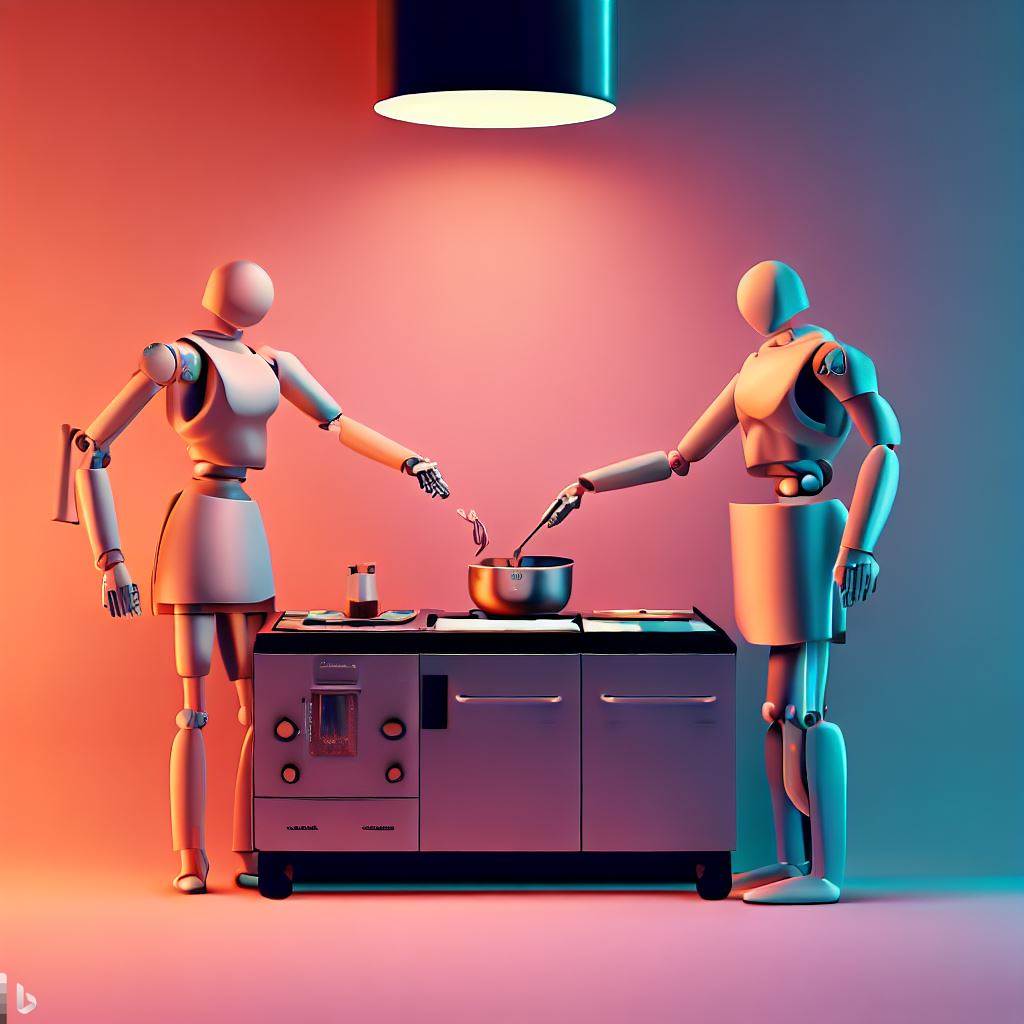
It is not only paid work that is important. Experts in the UK and Japan are divided on the impact of automation on unpaid domestic work. Technological advances are changing the nature of work as we know it. In the coming decades, jobs such as cashier and taxi driver will disappear to make way for new ones.
But what does the future hold for unpaid domestic work and the time we spend on it? To answer this question, researchers supported by the EU-funded projects FAMSIZEMATTERS and GenTime asked 65 AI experts from Japan and the United Kingdom (UK) to estimate how automatable housework and child and elder care tasks are. Their findings are published in the open-access journal ‘PLOS ONE’.
The experts predicted that 39 % of the time we currently spend on domestic tasks could be automated within the next 10 years. “The estimates varied significantly between tasks,” write the authors. “The most automatable task was seen to be grocery shopping, of which 59 percent was considered automatable within ten years; the least automatable task was physical childcare, at 21 percent. In general, care work was predicted to be more difficult to automate, with an average estimate of 28 percent in ten years, while housework was seen as more readily automatable, at 44 percent.”
Interestingly, the reasons most experts cited for why care work was more difficult to automate were not technical in nature. Instead, they spoke about how socially acceptable it was to delegate childcare to machines, how it affected a child’s development and its privacy implications. They also noted that it is household budgets that determine the kinds of technologies that are developed and marketed, since most manual tasks are automatable. The “real bottleneck,” according to one expert, is the “cost of that automation.”
Different views depending on the country
While British and Japanese AI experts generally agreed on which tasks were more or less amenable to automation, there were variations, to some extent related to their backgrounds. Japan and the UK may be equally advanced industrialised countries today, but their technological and economic histories are quite different. A higher percentage of UK experts (42%) believe that automation could replace more household tasks in 10 years, compared to Japanese experts (36%). According to the authors, this could be because “in the UK, technology is more associated with labour substitution”.
This divergence between countries was also evident in the predictions between experts of both genders. Although in the overall sample they do not differ significantly from each other, a more detailed analysis of each country gives a different picture. “In the UK, men were significantly more optimistic about technological potential than women, which is consistent with the finding that men tend to be more optimistic about technology in general. In Japan, however, the situation was the opposite: male experts were less optimistic than female experts.” The authors cite Japan’s marked gender disparities as a possible reason, as Japanese professionals tend to have little personal experience with household chores, which are often left to their wives.
The projects FAMSIZEMATTERS (Family size matters: How low fertility affects the (re)production of social inequalities) and GenTime (Temporal structures of gender inequalities in Asian and Western welfare regimes) are sponsored by the University of Oxford. The forecasts made with the support of the two projects not only anticipate the future of unpaid work, but may also play a role in shaping it.
More information
Publicaciones relacionadas:
 Artificial Intelligence: Turbocharging European industry
 Artificial Intelligence: Joint quest for future defence applications
 Artificial intelligence: threats and opportunities
 What can we expect from science in 2023?
 New project to improve biological detection, identification & monitoring equipment
Leave a Reply