
Last March 25th, the Council and the European Parliament reached a provisional political agreement on the update of the driving licence directive. This update of the directive will have an important impact on the issuing of driving permits throughout the EU, updating the minimum requirements related to fitness of drivers across the EU, harmonising rules regarding probationary periods for novice drivers and creating a scheme for accompanied driving with a licence obtained at the age of 17.
Several key elements will be introduced by the update of the driving licence directive.
First, by the end of 2030, a uniform mobile driving licence will be available for all EU citizens, placed in the future European Digital Identity Wallet.
The digital driving licence will be recognised in all EU member states. At the same time, road users will have the right to request a physical driving licence. Both versions, physical and digital, will be valid to drive passenger cars and motorcycles for longer than currently the case, namely 15 years from the date of issuing, except from when the driving licence is used as an ID card (10 years).
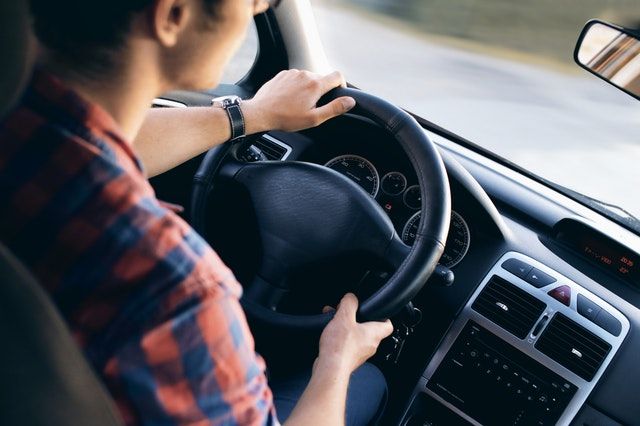
Improving road safety
To improve road safety, a step will be taken towards harmonising medical screening processes applied in the member states. When issuing driving licences, all member states will either request a medical examination or a screening based on a self-assessment.
Rules regarding probationary periods for novice drivers will also be harmonised: a probationary period for a minimum of two years will be established. During this probationary period, stricter rules or sanctions for driving under the influence of alcohol or drugs should apply, without prejudice to the member states’ competences to regulate drivers’ behaviour.
Accompanied driving scheme
To tackle the problem of driver shortage in the professional categories and at the same time improve road safety, a scheme for accompanied driving with a (C) licence will be introduced.
Such a scheme provides the possibility for applicants to acquire driving licences in the relevant categories before the required minimum age limit is reached, while at the same time being accompanied by an experienced driver. The scheme will be offered in all member states for passenger cars. Member states can also offer this possibility for vans and trucks.
Finally, adjustments will also be made to make it easier for citizens to acquire a passenger car license when living in a different member state than their member state of citizenship. It will be possible to take tests and to get a licence issued in the member state of citizenship, should there be no possibility to take tests in one of the official languages of the member state of citizenship.
Training on phone usage and driving in dangerous conditions
MEPs managed to insert new requirements so that drivers are better prepared for real driving situations and develop sufficient risk awareness of pedestrians, children, cyclists and other vulnerable road users. To qualify for a licence, a driver will have to learn about safe phone usage while driving, blind spot risks, driver-assistance systems, the safe opening of doors, and driving in snow and slippery conditions.
Mobile driving licence
A digital driving licence, available on a smartphone with EU-wide digital wallet technology, will become the main format in the EU, under the new rules. Member states will have five years and six month following the entry into force of the new rules to implement this. However, MEPs made sure drivers will continue to have the right to request a physical driver’s licence.
Two-year probation for new drivers, alcohol limit
For the first time, EU rules will set a probationary period of at least two years for new drivers. Novice drivers will be subject to stricter rules and sanctions for driving under the influence of alcohol and driving while not using safety belts or child-restraint systems. MEPs secured an encouragement in the text for EU countries to pursue a zero tolerance policy on alcohol and drugs, that would ban consumption for all drivers.
Lowering the eligibility age for professional licences, introduction of accompanying drivers
To mitigate a shortage of professional drivers, the minimum age whereby a driver can obtain a truck licence will be lowered from 21 to 18, and for a bus driving licence from 24 to 21, provided the applicant holds a certificate of professional competence. EU countries may allow 17-years-old to drive a truck or van on their territory only, if accompanied by an experienced driver. This system of accompanied drivers will apply more widely across the EU for car drivers.
Validity and health checks
Negotiators agreed that driving licences should be valid for 15 years for motorcycles and cars. EU countries may reduce this period to 10 years if the licence can be used as a national ID, while truck and bus licences will have to be renewed every five years. EU countries can shorten the validity of driving licences of older drivers (65 years and older).
Before they are issued with first licence, a driver should pass a medical check, including of their eyesight and cardiovascular condition. However, for car drivers or motorcycle riders EU countries may opt to substitute the medical check by self-assessment forms or, in case of driving licence renewal, other alternative measures. At the initiative of MEPs, national authorities will be encouraged to enhance the public awareness of minimum standards of physical and mental fitness for driving.
Next steps
The preliminary deal still needs to be approved by Council and Parliament. EU countries will have four years to transpose new provisions into national law and prepare for its implementation.
Background
Revised EU driving licence rules are part of a road safety package presented by the Commission in March 2023, which aims to improve safety for all road users and to move as close as possible to zero fatalities in EU road transport by 2050 (“Vision Zero”). The same package also contains driving disqualification rules on which Parliament and Council negotiators are working to find an agreement.
More information: Council of the European Union and European Parliament
Publicaciones relacionadas:
 LGBTIQ rights in Hungary: debate with Council and Commission
 Non-transposition of EU legislation: Commission takes action to ensure complete and timely transposition of EU directives
 European Commission publishes April infringement proceedings package for Spain
 European Commission opens investigation to assess whether Renfe has abused its dominant position on the Spanish market
 Spain amends tax law to improve European tax cooperation
Leave a Reply