
A new generation of Europe Direct centres is available to all citizens.
On 29 and 30 January, Europe Direct centres and European Documentation Centres met to address the challenges of communicating European issues to citizens in our country.
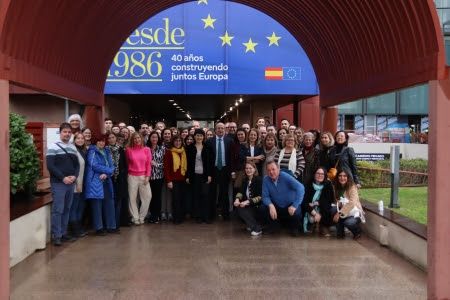
Madrid, 2 February 2026.- The new generation of EUROPE DIRECT centres is now up and running. A total of 37 centres throughout Spain will be responsible for bringing the European Union, its policies and its values to every corner of the country until the end of 2030.
In the words of Daniel Calleja, Director of the European Commission Representation in Spain, “The role of the EUROPE DIRECT network is to connect the EU institutions and citizens. Its role ranges from explaining how Europe is responding to the challenges of strengthening our competitiveness and security in a complex geopolitical context to helping citizens identify how the Union contributes to improving our quality of life on a daily basis.”
The European Union is present among Spanish citizens thanks to the EUROPE DIRECT centres distributed throughout the country. These local centres act as the main point of contact between the EU and the population, offering information, assistance and active listening on issues related to the European Union, always taking into account the local context and needs.
The EUROPE DIRECT centres are open to anyone who wants to resolve queries, learn more about European policies or find out about the opportunities offered by the Union, from funding and mobility programmes to European citizenship rights.
Managed by professionals specialising in European affairs, EUROPE DIRECT centres carry out extensive information and dissemination work. Their main functions include providing general information on EU policies, activities, legislation and programmes; organising conferences, debates and events to raise awareness of the role of the European Union; and collaborating with local partners and multipliers such as authorities, educational centres and social entities. The centres also provide content on European affairs to the local media.
Each year, the EUROPE DIRECT network of centres handles more than one million enquiries from citizens across Europe. These interactions are a valuable source of information for European institutions, enabling them to gain first-hand knowledge of citizens’ concerns, needs and worries.
Alongside this network, the European Documentation Centres (EDCs) play a key role in the academic sphere. The EDCs contribute to teaching and research on European integration by making a wide range of specialised documentation available to students, teachers and researchers and by promoting academic debate on the present and future of Europe.
The EUROPE DIRECT network of centres and the European Documentation Centres thus reinforce the European Union’s commitment to close, accessible and transparent communication at the service of its citizens. With this objective in mind, the network has met in Madrid in recent days to explore ways of cooperation and good practices in information and communication on European issues.
More information: European Commission.
Publicaciones relacionadas:
 12 August: International Youth Day
 Commission launches new Culture Compass for Europe
 Commission publishes first ever European Media Industry Outlook
 The Monastery of San Jerónimo de Yuste receives the European Heritage Label
 European Commission offers young people 35 500 free DiscoverEU travel vouchers
Leave a Reply